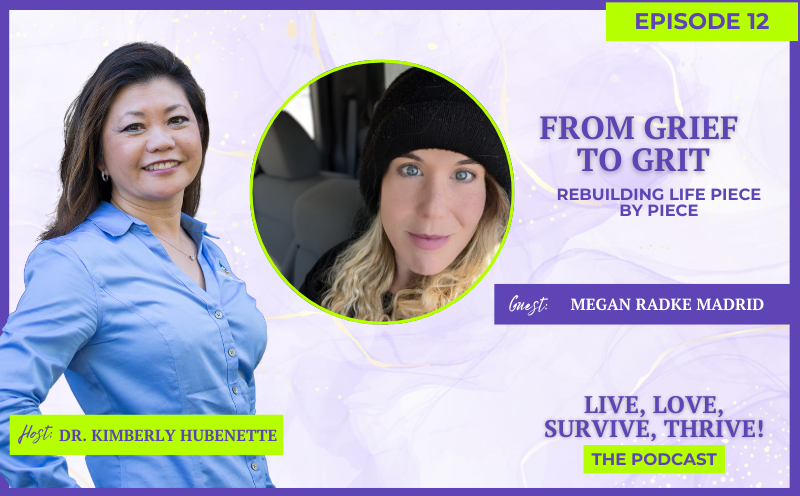
In this conversation, ordained minister, spiritual healer, and author Megan Radke Madrid shares how she went from homelessness with three dogs and the loss of her husband to building a new life, career, and spiritual foundation. Her story shows how small daily choices, faith, and honesty about pain can slowly move us from surviving to thriving.
Press play to hear a real and practical take on rebuilding after loss, including:
- Losing a spouse, navigating a medical crisis, and sudden homelessness
- How Megan went from homeless to homeowner with three dogs by her side
- The role of faith, spirituality, and signs from loved ones in grief
- Moving from emotional hoarding to letting go of belongings with intention
- Simple habits that helped her shift from numbness to genuine joy
- Recovering from addiction and rewriting a personal identity after trauma
- Redefining what it means to be rich, successful, and at peace after loss
Episode Highlights:
05:49 Husband’s Medical Journey: Heart Failure, Diabetes, Dialysis & Blood Clot
09:11 Eviction, Default Judgment & the Slide into Homelessness
13:15 Emotional Support Dog Chica, Lost Luggage & Greyhound Nightmare
17:35 Dogs and Grief
23:25 Timeline: How Long It Took to Start Thriving Again
27:32 Recognizing If You’re Stuck in Grief
33:41 From Addict to Sober Entrepreneur
39:22 From Homeless to Homeowner
42:50 Ending on Laughter and Lightness
Resources:
Read Megan’s Book: Adventures of Chica and Meg Grayhound Bus
Books
📖Grid: Once in a Lifetime You Get to Start Over by Dr. Kimberly Hubenette
📖Live, Love, Survive, Thrive! by Dr. Kimberly Hubenette (COMING SOON)
📖Get Megan’s Book: How I Lost Everything and Everyone but Found Myself in the End
Thank you for listening.
To keep my podcast alive,
Wanna buy my dog Dakota a bone?
Quotes:
19:46 “We all grieved. That was the first time I noticed that even animals grieved just like humans. They looked for him, they mourned his loss, just like I did. But we helped each other, all of us got through it, and they still helped me to this day.” —Megan Radke Madrid
20:55 “At first, I didn’t want to let go of anything. I was emotionally attached to it, because it was all I had… And then I realized I don’t have to keep a hold of those things to still have a hold of the memory and the love that we shared.” —Megan Radke Madrid
25:56 “Everybody’s different, and that’s okay as long as you don’t get stuck in the dwelling. What helped was that I processed my feelings, I acknowledged how I felt, I allowed myself to feel them, and then I moved forward.” —Megan Radke Madrid
28:15 “First, you have to acknowledge what is going on and what the problem is, or what the loss is, before you can come up with a solution.” —Megan Radke Madrid
30:19 “Our loved ones don’t want us to keep grieving them. They want us to celebrate them. They want us to remember them, not be stuck in dwelling in loss and sorrow.” —Megan Radke Madrid
32:01 “Having and giving gratitude started allowing me to see that just because things didn’t work out how I thought they should and how I wanted them to didn’t mean that they were wrong.” —Megan Radke Madrid
35:04 “I never gave up hope, knowing that it was not gonna always be like that forever.” —Megan Radke Madrid
39:10 “Acknowledge what you’re going through, reach out, and get help if you need. Take that moment, pause and respond instead of react, and then you can move forward.” —Megan Radke Madrid
39:44 “You could be rich in life, you could really be rich in emotions, you can be rich monetarily. Rich in life could mean so many things.” —Dr. Kimberly Hubenette
Meet Megan:
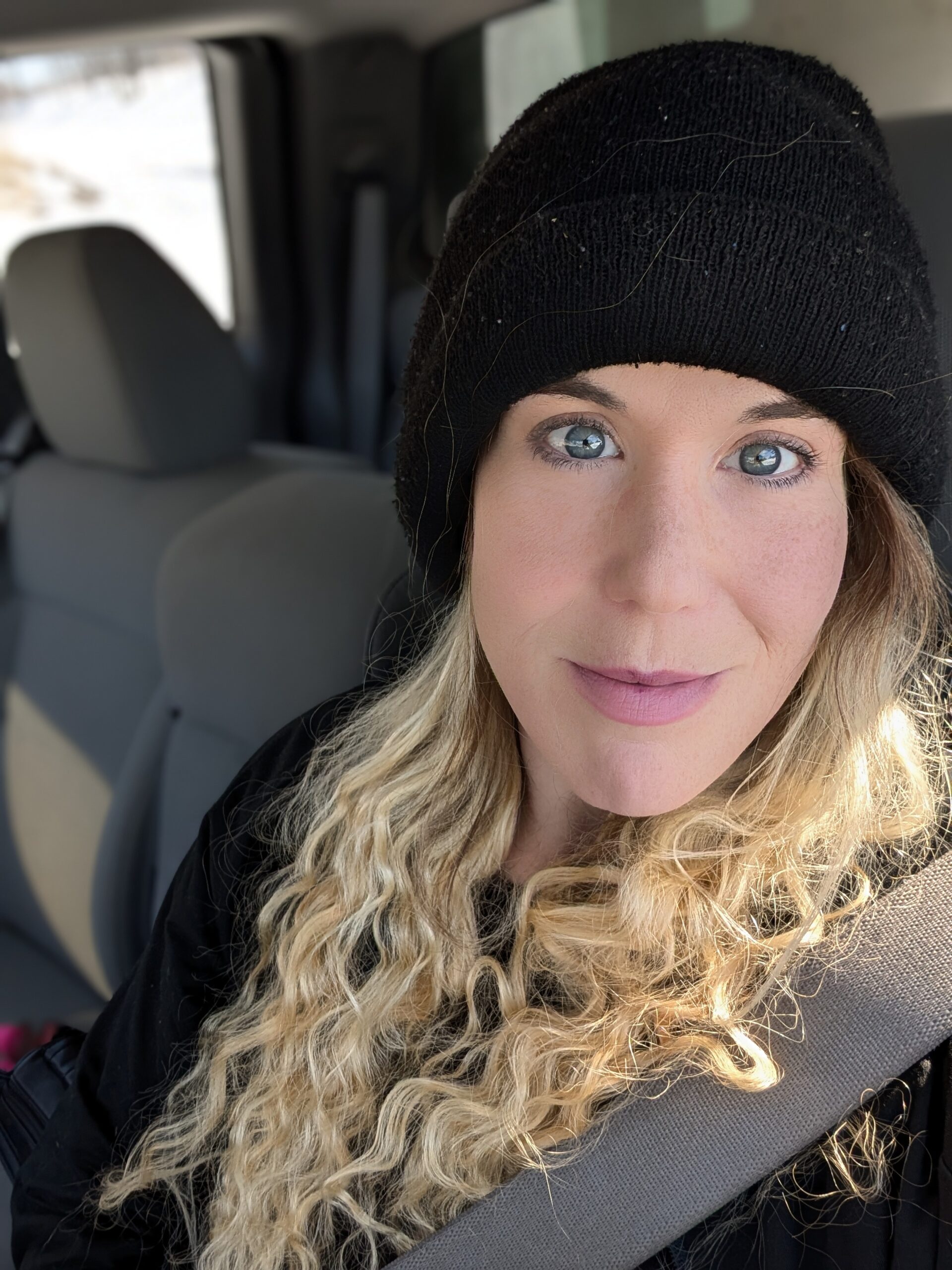
Through her company Divinely Guided LLC, Megan blends spiritual insight, lived experience, and creativity to inspire and support others on their healing journeys. She has self‑published two books, including How I Lost Everything and Everyone, But in the End Found Myself, and The Adventures of Chica and Meg and the Greyhound Bus, and is currently seeking a publisher for her third book.
As a brand ambassador and promotional model, Megan has collaborated with more than 26 brands, and her work has been featured in Fashion Republic Magazine and in film and runway projects. A devoted advocate for people and animals, she has continued her philanthropy work even during her hardest seasons, including feeding the homeless while she herself was unhoused.
Grounded in faith, resilience, and gratitude, Megan now uses her story, speaking, and creative work to help others move from merely surviving to truly thriving.
Transcript:
Dr. Kimberly Hubenette: Welcome everybody to the next episode of Live, Love, Survive, Thrive!. I’m Dr. Kimberly Hubenette, and I am so happy to see everybody today. I have a special guest today. Her name is Megan Radke Madrid, and I met her through a possibility of social media links. And she actually is in a women’s group that I just joined as well, and we just realized that we’re in the same group. Her name is Megan Madrid, and she’s an ordained minister, spiritual healer, artist, author, brand ambassador, reviewer, model and actress, entrepreneur, philanthropist, and she calls herself a maverick of sorts. So with that being said, I’m going to let her explain what these things are because it’s a mouthful, and I don’t want to spoil it for you guys. So Megan, can you introduce yourself and tell us a little bit about what it is that all of these things that you do?
Megan Radke Madrid: Hi, thank you, Doctor. And hi, everybody. Thank you for listening. I’m Megan Radke Madrid. I am an ordained minister, spiritual healer, artist, author, brand ambassador, reviewer, model, actress, entrepreneur and philanthropist. That’s why I say maverick of sorts because it is a vast variety of different things that I do and anything that I put myself to my mind to achieve, and I believe everybody is capable of that.
Dr. Kimberly Hubenette: When you were first attracted to my Live, Love, Survive, Thrive! podcast, I looked at your profile and I was thinking, wow, that’s a lot of things. And what attracted me was your story of your behind how it is that you survived. And what caught my eye was about your life losing your husband of 23 years, and then you became homeless with your three dogs?
Megan Radke Madrid: Yes. I became homeless with my three dogs before my husband passed away. And with his medical conditions and everything, it was best for the hospital to keep him. And so then I stayed close by, either in my vehicle that I had at the time, or eventually we were freestyle camping in a tent close by so if they needed me, I could be there. It wasn’t until after high tide washed away the tent that he begged me to please go to Oklahoma where I had family. And that way, he knew I was going to be safe. And so I took me and the three dogs, and we stayed with some family for a little while, while he was still in the hospital trying to get better.
Dr. Kimberly Hubenette: And where were you guys at? Again, you were living somewhere, then you moved to Oklahoma.
Megan Radke Madrid: Houston, Texas.
Dr. Kimberly Hubenette: I see. So that means you didn’t get to see him.
Megan Radke Madrid: I didn’t get to see him very often. No, when I was homeless and staying close by, I would go visit him once a day, and the dogs would stay in the car. They would have the windows down, water, food, everything. And I would make my trips in and out very quick. And he knew the reason why I couldn’t stay very long before I went to Oklahoma. I did stop and see him, and I spent a little bit of time with him. And then I was able to come back and pick him up before he passed away, and spend one great day with him before he ended up passing away. Me and all three of the dogs came down from Oklahoma to pick him up because we had a plan, and we were going to get him stronger, healthier, happier back on his feet because he was a double amputee with prosthetics, and so we had goals that we were going to do, and we never got to meet them.
Dr. Kimberly Hubenette: Is it okay to ask you prior to him being, was it a chronic illness that he died from? Or what transpired?
Megan Radke Madrid: Oh, he had heart failure, diabetic, had high blood pressure, and had high cholesterol. He was also a kidney failure patient and had dialysis. We were at his dialysis center the day that he passed. And what eventually took him was a blood clot went to his heart.
Dr. Kimberly Hubenette: So as a double amputee, was it because of diabetes or something? Kidney problems? How did that happen?
Megan Radke Madrid: The first amputation happened because he was wearing shoes that his work had recommended him to get, and they caused a sore on his foot. This happened back in 2017, and so we ended up taking him to the hospital because his doctor had run samples on that and she was like, wait a minute, this is septic. You need to come into the hospital. So we got him to the hospital. While he was in the hospital in 2017, I had just dropped off my niece to school that I was taking care of, and I got a call from the hospital saying, hey, we need you to sign papers. He needs a blood transfusion. And I was like, okay, I’m in the parking lot. I’ll be up in a minute. I came in and signed the papers. Unfortunately, if you get a blood transfusion and you’ve never had a blood transfusion before, a possible side effect is heart attack. That happened. When that happened, it shut his whole body down. He coded five times and had to get rushed from the hospital. He was sent to a different hospital because they did not have the machinery to keep him alive at the hospital he was at.
So in 2017, when that happened, he was in a coma for 11 days. Because he was in a coma, they had to put what they call a D shield on him. Because while you’re in a coma, you still have bowel movements and things of that nature, but they improperly inserted it and tore his colon. So waking up from a coma, he’s bleeding and having to have multiple blood transfusions. He’s got an infection on his leg. He just had a heart attack that they need to repair. The doctors don’t know what to do. They’re arguing back and forth about what to do. I finally step in and tell them, find the bleeding, fix the bleeding, take care of the infection so it doesn’t go any farther. Then address the heart. And then after that, he went into physical therapy and had to relearn how to live, how to walk, how to talk. He knew I looked familiar when he woke up from the coma, but he wasn’t exactly sure who I was.
Dr. Kimberly Hubenette: Wow. And you had been married for 23 years.
Megan Radke Madrid: Not at that point. In 2017 when that happened, we had only been married for a few years. When he passed away in 2024, that was the 23 year mark.
Dr. Kimberly Hubenette: Got it. Got it. Is it because of the medical bills that you had to become homeless with all of the things that happened to you?
Megan Radke Madrid: When we were homeless in Houston, we had come up to Oklahoma to visit family around Thanksgiving, and our apartment knew that we were out of state. I was in contact with that manager. He got sick while he was here. And because he was a dialysis patient, he had to go to the hospital to get dialysis, and they kept him because his health wasn’t going to let him be discharged. I contacted the apartments that we were at, and I told them our situation. She told me everything would be okay, not to worry about it.
She’d work with me while we were gone. They got a default judgment and evicted us. Posted it on our front door even though she knew we were not in the state and we’re not going to get that. We did not get to go to the court hearing, so they got a default judgment against us. When we finally got discharged from the hospital in Oklahoma and went back down, they allowed us to clear out our stuff from the apartment. They wouldn’t take payment. And with a default eviction notice on our record, nobody would rent to us. So then, we were going and staying at extended stays, things like that. We exhausted our savings. And then when I couldn’t afford any more of the extended stays, I had let the hospital know our situation to try and get a social worker to help us to see what we could do. When they found that out, they were like, okay, we cannot release your husband because of his health. And I said, I completely understand that. And then that’s when I did what I could with the three dogs. Staying in the car, staying nearby, staying in a tent, and still reaching out to services, trying to get anything that we could. Nobody was helping. We were getting told that even though he was in the hospital, since he was technically still working, or classified as still working even though he wasn’t, he technically made too much for us to get assistance. And about the only people that would help were food banks. They would give us groceries. But if you’re homeless in your car or in a tent and you don’t have a way to cook that food, store that food, a lot of it is useless unless it is ready to eat. No refrigeration needed.
Dr. Kimberly Hubenette: The things that you’ve accomplished over the past few years then, had you already had all these businesses before this happened? So this pulled to you to get all of this?
Megan Radke Madrid: It was when I was in the tent before he passed away, and the girls were cuddled up around me. I was praying and thinking, okay, there’s got to be a rhyme and a reason, a purpose for all of this. And then that’s when I was like, okay, just start writing about your experiences, what you’ve gone through. Get your story out there. People need to hear it, and maybe it will help somebody. So I started writing. I didn’t become an author until recently I’ve self published two books. I just finished my third, and I’m looking for publishers to see about getting that out to the world. But my first two books, I’ve self published, and they’re out there. One’s on Amazon and it is called How I lost everything and everyone, but found myself in the end. It’s on Amazon for 999. Unless you have a Kindle, then it’s free. And then the first book was The Adventures of Chica and Meg and the Grayhound bus. It’s free, and it’s on my LinkedIn profile. Anybody that wants to read that can.
Dr. Kimberly Hubenette: What’s that one about? Who’s Chica and Meg?
Megan Radke Madrid: I’m Meg, and Chica is my service animal. She’s a blue nose pit. I’m her second owner, and she goes and does pretty much everything with me. We took a Grayhound bus adventure from Tulsa, Oklahoma to Boston, and that is talking about everything that happened during that, and how we managed to get through it because it was not an easy, breezy, beautiful vacation work thing that it was supposed to be. It was actually some trials and tribulations that happened during it. But it talks about how they lost all of my belongings and her belongings, what they put us through, how they treated us, how we ended up having to get police help. Really stand strong with, no, you cannot kick us off of the bus. You have to let us in. Because at that time, she was not my service animal. She was my emotional support animal. I was very clear and upfront with them from the very beginning that she was my emotional support animal, and I never referred to her as a service animal. I even paid extra with the ticket to talk to a live person to tell them that, and absolutely everything. And they kept telling me, oh, it’d be okay. It’s not a problem. I had her letter, I had her shot records, everything. But when they lost all of our luggage, they lost all of that with it. They’ve even lost my passport, my personal documents. The last few things that I had of my husband’s were also in my belongings there that they still have not gotten back to me. But that book talks about all of that. I call it a book, but it’s kind of like a short story because I just briefly go over that experience. And then I have a few others about the Chica and Meg adventures that have not been published yet. But we talk about how she’s gotten over water traumas, grooming traumas, and has swam in waterfalls with me and the different places we’ve gone. And so they’re not all hardship and sadness. A lot of them are actually uplifting and very sweet.
Dr. Kimberly Hubenette: Did you have her before your husband passed away? Or is she a newer dog?
Megan Radke Madrid: I had all three of my dogs before my husband passed away. She and him at first had to get used to each other because they did not want to share me, and they did not want to share the bed. But in the end, they became best buddies. And because I told her that her job was to watch him, and she did. She took that very seriously. She would watch him, and she even tried to learn how to help move him around in the wheelchair. She’s very smart. She’s right there sleeping. Oh, there she is.
Dr. Kimberly Hubenette: Oh, my gosh. She looks like my dog.
Megan Radke Madrid: They’re amazing.
Dr. Kimberly Hubenette: She’s my best friend. She’s my emotional support dog too. I understand what you say about emotional support versus service animals.
Megan Radke Madrid: I started off as emotional support, but then I transitioned. I was her trainer, and I have now transitioned to where she is technically considered a service animal. For it’s a cert, it’s a service animal psychiatric because she can do medical alerts and psychiatric alerts.
Dr. Kimberly Hubenette: I would love to learn how to train my dog.
Megan Radke Madrid: There are courses. and the reason I did the self training was, so I could have the videos, so then I could always go over them again if we need to refresh and re-learn anything. Because life happens. And sometimes, you get knocked out of your schedule and your routine. And when that happens, that knocks them out of their schedules and routines. And so being able to have the videos and being able to go back and refresh, and re go over things, it helps her, and it helps me.
Dr. Kimberly Hubenette: Wow, folks and to the listeners, I had no idea that Meg had a dog like mine. You’ve heard some of my other podcasts, or I had my trainer on, and we talked about how dogs could be helpful at our times of grief. And this is totally an amazing correlation now that I find out that Meg has this dog and two more dogs. You have three dogs, and this one dog totally looks like my dog, Dakota. So much like her. So tell me a little bit about, what did the early stages of grief look like for you? What helped you move through it?
Megan Radke Madrid: The early stages of grief, they looked typical at first. The normal stages, denial, anger, bargaining, depression, acceptance. But then it was like in a rapid, weird way, and in a deja vu kind of way that it happened because of everything I experienced from 2017 like I mentioned before. So all four of those stages happened. My husband passed away in the restroom at his dialysis center. So all four of the first stages happened in the restroom with Cesar and I before they started CPR, before they got him out of there, and to the hospital, or anything. And then it was followed by shock, acceptance and numbness, and my fur babies helped me get through it. Because I had three other souls that were depending on me, and if I did not physically make myself get up and keep moving, and keep looking forward to tomorrow, they would have been out of luck too. They would have been completely lost. We all grieved. We all went through, and that was the first time I really noticed that even animals, they grieve. They’re just like humans. They looked for him, they mourned his loss just like I did, but we helped each other. All of us get through it, and they still helped me to this day.
Dr. Kimberly Hubenette: Do you think that they know he’s not coming back?
Megan Radke Madrid: I think they know that. Because at first, they would look for him. When I had to go through our belongings and stuff like that, and his wheelchair and everything was around, they kept looking for him. They were confused, and didn’t know what to think of it then. But as I healed and was able to let go and not hoard, and not hold on to everything, it got easier and better for them. And then I think they started to realize what our new normal was, and that our new normal didn’t include him.
Dr. Kimberly Hubenette: You said that you hoarded things, like you kept a lot of his stuff.
Megan Radke Madrid: At first, I didn’t want to let go of anything. I was emotionally attached to it because it was all I had.
Dr. Kimberly Hubenette: Like clothes?
Megan Radke Madrid: Yeah. It was his clothes. His personal belongings. And then I realized that I don’t have to keep a hold of those things to still have a hold of the memory and the love that we shared. I didn’t have to keep storing things that I wasn’t going to be using, needing, and that just brought sadness when I saw it, that other people could use. Because with his health issues and stuff, I had a lot of medical stuff that could be used, but I didn’t need it. With his clothes, they were still great, usable clothes, but I don’t need them. And so I got to the point where I could donate everything that was donatable. And then anything that wasn’t donatable, if it was like a keepsake, like pictures and stuff, I kept it. If it was not donatable, but not a keepsake, then those things got thrown away. But it was a process.
Dr. Kimberly Hubenette: How long did it take you to go through this process? Or are you still going through it?
Megan Radke Madrid: Oh, I finished that process back in 2025. The last thing I had to go through was a storage unit that we had together in Texas. So I ended up going down to Texas and clearing that out. So the storage unit that we have in Texas, that was the only storage unit I’ve ever known that doesn’t let you use their trash cans. And so I’m sitting there going, wait a minute. And they also didn’t let people come and pick up because it was a locked facility, so I could not set up anybody to come and pick up donations, and I could not throw away anything. So I ended up having to bring everything with me. I ended up loading it all up on a trailer and bringing it from Texas to Oklahoma. And then when I got to Oklahoma, I slowly went through it and was able to get rid of stuff, have a donation pile, a keep pile and a throw out pile. It took a couple of months. But before Thanksgiving of 2025, I had all of that taken care of.
Dr. Kimberly Hubenette: Wow. Was there a moment when you realized you were not just surviving, but starting to live truly again?
Megan Radke Madrid: Yes. I started noticing myself in the little moments of life like how I was doing things normal to me again. And what I mean by little things is I would happy dance when I ate something that I thought was good, or I would pancake dance when I was making pancakes, or while I was cooking. And that’s when I realized I wasn’t in survival mode anymore, but I was actually living. And I was able to eat. Because like before, I was eating, but there was no emotion. I was going through the steps, but I wasn’t feeling anything. And then after I was starting to realize I was eating and was feeling things, and I was happy, smiling and at the present.
Dr. Kimberly Hubenette: How long did that take from the time that he passed to that time frame?
Megan Radke Madrid: That was hit and miss at first. Because when he passed, we were in Texas, and I was having to figure out how to get his final wishes done, which was to be buried next to his parents and not cremated. And everybody was telling me, just cremate him and don’t worry about it. And I was like, no, I’ll follow his final wishes. And so I was having to deal with all of that at first. But then I would have a moment where I was like, oh, he would like this, and I would smile. And then I would be like, oh, okay, wait a minute. He’s not here anymore. So it fluctuated. It went back and forth, and it took a little bit. But I eventually started leveling out and having more moments where I was thriving and not surviving about six months after.
Dr. Kimberly Hubenette: Because folks, sometimes, it takes years. Sometimes, it takes a few months. And sometimes, it just takes like a few days.
Megan Radke Madrid: It’s different for everybody, and that is okay. I think what helped was I didn’t have any secrets with him. I didn’t have any regrets. And with everything that we went through, it was a little bit of deja vu. It was like I had been here before. I’ve done this before. They had been trying to prepare me for it since 2017. But everybody’s different, and that’s okay as long as you don’t get stuck in the dwelling. What helped was I processed my feelings. I acknowledged how I felt. I allowed myself to feel them, and then I moved forward.
Dr. Kimberly Hubenette: Did you have any professional help, or you just did it on your own?
Megan Radke Madrid: I did all that on my own. I heavily relied on my faith, my connection to God and my spiritual team. But I did not go to therapy. And if you need therapy, then that’s okay. The only professional help that I did seek is I did join a grief group briefly. And while I was there, I realized a lot of them were still stuck in dwellings, and it was not going to be productive for me to stay in that group, and so I had to excuse myself from that group. Because at that point, I was 6 months to 8 months that already lost him, and some people had been 12 plus years since they lost somebody, and it was as if it had happened that day to them. And for me, being around that, I would have backtracked and not moved forward.
Dr. Kimberly Hubenette: Yeah. How does someone know if they are stuck versus not stuck? What do you think that those people knew that they were stuck? Or do you think that people thought that they were getting better?
Megan Radke Madrid: Some of them thought that they were getting better. But in that group, we got a workbook. And one of the chapters was talking about, are you stuck in dwelling? And I was there for that class. And I think between what I was sharing and what the book was saying, and the video that they were having us watch, they then started to realize that they were stuck and dwelling, and not addressing the issues that they were having. But some of them didn’t want to address the issues that they were having because they weren’t wanting to, you first have to acknowledge what is going on and what the problem is, or what the loss is before you can come up with a solution, and some of them weren’t willing to acknowledge. Some of them still wanted to pretend that they were going to go home and their loved one that had passed was going to be there.
Dr. Kimberly Hubenette: Yeah. That’s interesting.
Megan Radke Madrid: Yeah. The lady, I can’t divulge any information about that because that’s all confidential. But when she shared that, I mean, I have had moments where I call it like a ghost date. But when I celebrate the person and I acknowledge them, I don’t just grieve their loss, but I’m not delusional thinking that they’re actually there with me. I mean, they’re there with me in spirit, but not physically present.
Dr. Kimberly Hubenette: You believe that you can connect with your loved one through spirituality?
Megan Radke Madrid: Yes, I believe. I believe people can connect with their loved ones through spirituality if they choose to. I believe we get signs and synchronicities if you are open to that. And if you are open to that and you specifically ask, a lot of the time, I will get like, all of a sudden a cardinal, or a blue jay, or something. If I’m outside, something will catch my eye, or I’ll get a sense of a smell that reminds me of somebody that has passed. And I’m like, oh. And their name pops up in my head when that happens. And I’m like, oh, okay, that’s nice. That’s what I mean by connecting with them in spirituality because you’ll think about somebody and you’ll see like their favorite color, or food, or it’s their birthday, or an anniversary. Our loved ones don’t want us to keep grieving them. They want us to celebrate them. They want us to remember them, but not be stuck in dwelling, in loss and sorrow.
Dr. Kimberly Hubenette: And so on that note, the unexpected gifts that you think that you see or emerge after your loss or struggle, or were there other signs, what are some unexpected gifts that emerged from your loss and your struggle?
Megan Radke Madrid: Some of the unexpected gifts, how do I phrase it? I stopped focusing on everybody and everything else, and how they felt. That was an unexpected gift because it literally allowed me to get healthier, stronger than I’ve ever been physically, emotionally, mentally, my connection to the divine and my spiritual team, the universe, animals and my ancestors amplified tremendously. And then I also received guidance and clarity. It came through undeniably, and I was able to then dive into all of those things that I’ve been able to achieve throughout the years and really focus on myself. And focusing on myself allowed me to start helping so many others.
Dr. Kimberly Hubenette: And so for our listeners, what would you say? Do you have a few habits or practices that you’d like to share that help transform your situation the most?
Megan Radke Madrid: Reconnecting with nature. If that was just standing outside, breathing and looking around and being present for five minutes at a time, having and giving gratitude really started changing my perspective, and it started allowing me to see that just because things didn’t work out how I thought they should and how I wanted them to didn’t mean that they were wrong.
Dr. Kimberly Hubenette: Do you have a quote that you live by, or that is a mantra for yourself to keep moving forward?
Megan Radke Madrid: There’s been a few. But the ones that stand out the most right now, first, my past does not define me. Get out of that grave. Because the reason I kept thinking of those is because people kept trying to throw things like labels because I’m a recovering addict, and I’m not anymore. I’m clean and sober for over four years now, but they kept trying to say addict and other things, homeless. I went from homeless to homeowner. I am no longer an addict, and so that’s why I kept saying, my past doesn’t define me. Get up out of that grave. And then as of recent, it’s been, I am what I say I am. And it sounds a little blunt to say it that way, but it’s true. And then another one was, to plant a garden is to have faith and hope for the future. And because I was throughout all of that, I was also gardening as I could. And I was thinking, why would I garden when all of this is going on? But it’s because I never stopped having hope and faith for the future.
Dr. Kimberly Hubenette: You have a lot of careers. Do you have businesses in all of these things?
Megan Radke Madrid: Okay. I am an entrepreneur, and my business is Divinely Guided, LLC, and that is like professional speaker, artist aspect of it. I am an ordained minister, and I have my credentials for that that is separate, that is also with the spiritual healing. And then I am my own agent and representative for the reviewing, modeling, and acting. And then my philanthropy work I’ve always done. Even when I was homeless, I was still feeding the homeless.
Dr. Kimberly Hubenette: So you didn’t see yourself as the homeless?
Megan Radke Madrid: Oh, I knew my situation and I fully accepted it. But when we were on the beach, my husband would call me and be like, honey, I’m worried about you. And I’m like, hey, I understand and I fully grasp what’s going on right now. But I would watch what I said to myself, and I would watch how I worded it. And so I told him, look, I have beach front property, and I would take a picture and show him the view. And I’m like, it’s gonna be okay. We’re gonna be okay. I never gave up hope knowing that it was not going to always be like that forever.
Dr. Kimberly Hubenette: So before he got sick, was he the sole provider?
Megan Radke Madrid: Before he got sick? No, we both were. I was a paralegal and a paraprofessional for the special education department autistic high schoolers, and then I was also a caregiver for elderly. When he became a double amputee, he asked me to be his full time caregiver so I quit all of my jobs, and I became his full time caregiver. And then he, with my help, was still able to work until he started getting sick again towards the end.
Dr. Kimberly Hubenette: So with all of your past history, what would you say is the best thing that you could explain to the listeners of how you live, love, survive and thrive?
Megan Radke Madrid: How would I best describe how I live, love and thrive now?
Dr. Kimberly Hubenette: And do you feel like you’re thriving? You told me, yes.
Megan Radke Madrid: Yes, I’m thriving. I am even going through a little bit of a hiccup right now that I’m currently going through. I would still consider myself thriving. And the only reason I would say that is because I know that the tactics that they used right now, because I don’t know if you can see the video, but it’s a little dark now where I’m currently staying. They illegally shut off my electricity. I am currently trying to combat that. I live in an RV now, so my home that I own is an RV. That’s how come and I said that I went from homeless to homeowner. And even though I’m going through this thing, I know they’re in the wrong with how they went about it. I know that I’m still going to be okay, and my dogs are going to be okay, and I’m still considered thriving. I allowed everything. I went through to help. I learned something. I got stronger. I got braver. I got educated in so many different areas. And at the time, I did not know that they would come in handy. But then it’s allowed me to sit there and go, okay, what am I really good at? What do I like doing? How can I move forward with those things? So then, I wasn’t going to be a work slave, but everything I do is enjoyable.
Even though I do a lot, everything I work towards has been fairly successful. I’ve gotten to be able to do quite a bit of things under all of those different things. Like I said, publish two books. The third book is finished and I wrote it, but I’m looking for a publisher. I have done several different things as a brand ambassador and promotional model. I have over 26 brands and gigs from that. My first one was just strong clothing, fitness. Tanganyika Wildlife Park is another one that I’ve helped with. And Crush Soda was another one that I just did. I have a tear sheet in a magazine. I was published in 20 in September of 2025 in the Fashion Republic magazine. I’ve been in a runway show and worked with other designers. I’ve been in the background for a movie that also had Colin Ford and C. Thomas Howell in it’s called South of the Still Potter. So I’ve been able to accomplish a lot of those things because I did not let any of the trials and tribulations that I was going through weigh me down. So to the listeners out there, I would tell them, acknowledge what you’re going through. Reach out and get help if you need, but take that moment, and pause, and respond instead of react. And then you can move forward.
Dr. Kimberly Hubenette: You embody thriving. I can see in your face that you’re happy. You’re smiling like nothing gets you down. I mean, geez, half of the people probably wouldn’t be able to survive the most of the things that you have, and you’re still up on top. Because folks, think about this, you could be rich in life, and you could really be rich in emotions, and you can be rich monetarily. But basically, rich in life could mean so many things. And yeah, it looks like you are.
Megan Radke Madrid: Yeah. Wealthy and rich can mean so many different things, and I do consider myself well off because I can have slow mornings, and being my own boss allows me to do that. I get to spend more time with my fur babies, which are my family now. I can go for walks and watch sunsets and star gaze. And to me, being able to slow down and do all of that, that does make me rich in life.
Dr. Kimberly Hubenette: Yeah. I can see that it’s been so great to have you on my podcast. How can the listeners keep in contact with you? Do you have a website and so forth that you want to connect with people? Megan is available via social media because that’s how I found you, and how we found each other so you want to tell the guests how to keep in touch with you and how you could help them.
Megan Radke Madrid: Okay. I do not currently have a website because that’s one thing that, I’m not a tech savvy person, so that’s one thing I still need to do. I’ve been trying to learn and get that accomplished, but they can reach out to me through social media. On Facebook, I’m Meg RR Madrid. They can reach me on my All Casting profile, which is Megan Radke Madrid, and all my social media links are there on that. I have an email and a phone number for Divinely Guided, and they can reach out to me that way, divinelyguided108@gmail.com, or they can contact my business Phone at 918-409-4334.
Dr. Kimberly Hubenette: Good. Yeah. Well, I really appreciate you coming on and spending some time with the listeners here. Folks, just listen and guide the way that life happens. The stories that we hear and inspirational things that we hear from all of the guests on the show, I think Megan has had such an interesting life so far. And you’re so young. You have a whole more life to live and give, so I’m so happy that you had time to spend and talk to our listeners today.
Megan Radke Madrid: Thank you so much for having me here. It was great getting to know you and being able to be part of this, so thank you.
Dr. Kimberly Hubenette: Yeah. Did you have a joke that you wanted to share with us today?
Megan Radke Madrid: I do all right, what is more daring than a rock? A boulder.
Dr. Kimberly Hubenette: Ah, that’s cute. Really cute. Thank you so much for sharing.
Megan Radke Madrid: Thank you.
Dr. Kimberly Hubenette: I’m Dr. Kimberly Hubenette, and this is Live, Love, Survive, Thrive!. I’ll see you next time in the next episode. And till then, make it a great day.
Megan Radke Madrid: Thank you. Bye.
Dr. Kimberly Hubenette: Thank you for joining me on this episode of Live, Love, Survive, Thrive! I hope our time together has inspired you to embrace life’s challenges, find the courage to overcome obstacles, and create a life filled with love, purpose and fulfillment. If you’ve enjoyed today’s episode, please take a moment to rate, review and subscribe to the podcast. Your feedback means the world to me, and to help us continue to bring you stories and tools to empower your journey. And if you have a story of resilience, transformation or thriving after adversity, I’d love to hear from you. Reach out to me directly at livelovesurvivethrive@gmail.com. You never know, your story might just be the inspiration someone else needs to hear.
To learn more about me and my work, visit my website at www.drkimberlyhubenette.com. While you’re there, be sure to check out my current book, GRID: Once In A Lifetime, You Get To Start Over, a guide to rebuilding and rediscovering life after loss. Get a sneak peek at my upcoming book, Live, Love, Survive, Thrive!, a powerful companion to this podcast, and a heartfelt roadmap to reclaiming joy, resilience and meaning after life’s toughest seasons. You can also connect with me on social media. Follow me on Facebook at authordr.kimberlyhubenette. Follow me on Instagram with the same name, and subscribe to my Youtube channel at Live, Love, Survive, Thrive! for more inspiration and insights.
Remember, you have the power within you to write your story and thrive beyond your wildest imaginations. Keep relearning to live love, survive, thrive every single day. Until next time, I’m Dr. Kimberly Hubenette, and this is Live, Love, Survive, Thrive!