
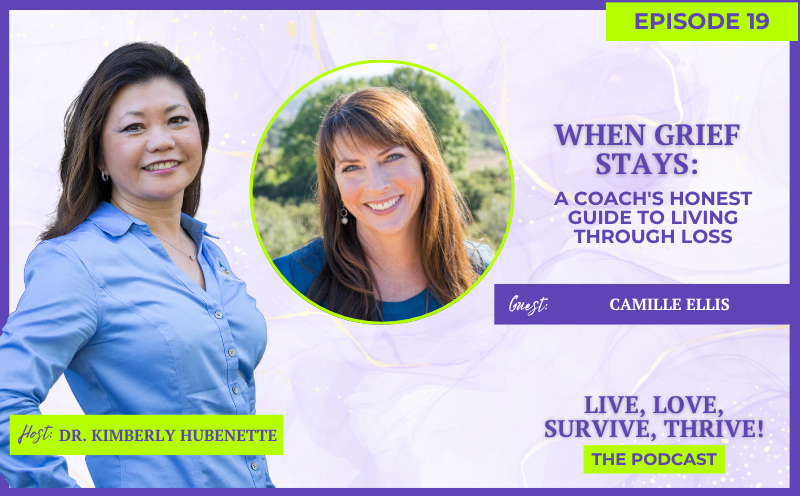
“When you’re really struggling, it’s because you’re in your own way… Don’t judge yourself when you do it; just notice it. You can change your storyline to create momentum and the results you want to create within your life.”
—Camille Ellis
Grief coaching offers practical tools to help you move through loss — not around it. Here’s what the process looks like and why the stories we tell matter most.
There is no finish line in grief. And according to Certified Grief And Life Coach Camille Ellis, that’s not a problem to solve — it’s simply the truth of what it means to have loved someone deeply.
Camille has spent the last 15 years helping people navigate loss in all its forms: the death of a child, the end of a long marriage, a health diagnosis, a career that disappears overnight. What she has found, working with hundreds of clients, is that the pain itself is rarely what keeps people stuck. It’s the story they build around it.
What Grief Coaching Actually Helps You Do
Grief coaching isn’t therapy, and Camille is careful to draw that line. Therapy does important work in processing the past. Coaching works in the present — giving you tools to catch yourself mid-spiral, name what’s happening, and make a different choice.
Her core technique is disarmingly simple: when you’re suffering, ask yourself what you were just thinking. Most people in grief aren’t aware of the specific thought driving their pain in any given moment. They feel the wave and assume it’s just grief. But beneath that wave, almost always, is a story — and stories can be examined.
Once the thought is on the table, Camille works with clients to ask: Is this completely true? What else is equally true that I’m not looking at? The goal isn’t forced positivity. It’s a more complete, more honest picture of the situation — one that includes both the loss and what remains.
Why the Stories We Tell Ourselves Matter So Much
Camille is direct about this: when we are suffering, the way we are thinking about our situation is doing most of the work. That’s not a judgment — it’s a practical observation she arrived at through her own grief, and one that every client she’s worked with has eventually recognized in themselves.
We tell ourselves we’ll never be okay again. That nothing will feel meaningful. That we are more alone than we actually are. These thoughts feel true because they come from inside us, and we tend to trust our own minds. But they are stories, not facts — and with the right tools, they can be questioned and reshaped.
This is where grief coaching moves from conversation into something actionable. Clients don’t just talk about their loss. They learn to catch the thought before it takes hold, to sit with grief without being swallowed by it, and to choose — deliberately, repeatedly — a perspective that gives them somewhere to go.
What Self-Care Looks Like When You’re Grieving
Camille’s daily practice isn’t elaborate. She wakes early, meditates, sets an intention for the day, and moves her body. On hard days, she asks herself one question: what do I most need right now? Sometimes it’s rest. Sometimes it’s fresh air. Sometimes it’s just acknowledging that today is difficult and that’s okay.
That question — simple as it sounds — is the foundation of the self-compassion she teaches. Grief takes a physical and emotional toll, and no one moves through it well while running on empty.
Episode Highlights:
03:34 Meet Camille Ellis: Certified Grief Coach and Life Coach
05:40 How 35 Years as a Stylist Became a Coaching Career
07:13 Navigating the Loss of Her Son: Where Her Philosophy Began
11:57 The Thought Pattern That Keeps Grieving People Stuck
13:44 Reframing Loss: The Technique She Used on Herself First
16:41 When Grief Lingers for Years — What’s Really Happening
22:45 Self-Love as a Daily Practice, Not a Wellness Slogan
28:18 What a Grief Coach Does That a Therapist Doesn’t
32:21 What Living, Loving, Surviving, and Thriving Really Means
34:10 How to Connect with Camille and Book a Free Session
Resources:
Books
📖Grid: Once in a Lifetime You Get to Start Over by Dr. Kimberly Hubenette
📖Live, Love, Survive, Thrive! by Dr. Kimberly Hubenette
Thank you for listening.
To keep my podcast alive,
Wanna buy my dog Dakota a bone?
Quotes:
10:09 “People don’t really realize that grief doesn’t come to an end. It’s always with you, and it’s with you because it’s a form of love, and if you didn’t have that love, you wouldn’t grieve.” —Camille Ellis
15:04 “If I can be more powerful because he [my son] existed, then I am extending what he gave to me, which is an extension of his life— and that to me is much more powerful than being sad and miserable and feeling what I lost versus what I gained.” —Camille Ellis
19:52 “Give yourself permission to look at new perspectives of the entire story, not just part of it. If you’re only looking at loss, you’re only going to feel sad things… but when you can look at the gain and the life and the privilege, it becomes a different story.” —Camille Ellis
28:55 “If we’re not taught the right tools, we truly don’t know how to take more action and build up the momentum we want in our lives. It’s human nature to see what we don’t have. It’s human nature to feel more negative than positive. So you have to work on training the way your patterns are in your head.” —Camille Ellis
32:35 “Every struggle is really just a lesson to become better… If you can look at life that way, then you can see that you will have more resilience, more capacity, and capability to do anything you choose to do, and it creates a momentum for you to be you and really embrace it and love it.” —Camille Ellis
34:29 “When you’re really struggling, it’s because you’re in your own way… Don’t judge yourself when you do it; just notice it. You can change your storyline to create momentum and the results you want to create within your life.” —Camille Ellis
Meet Camille:
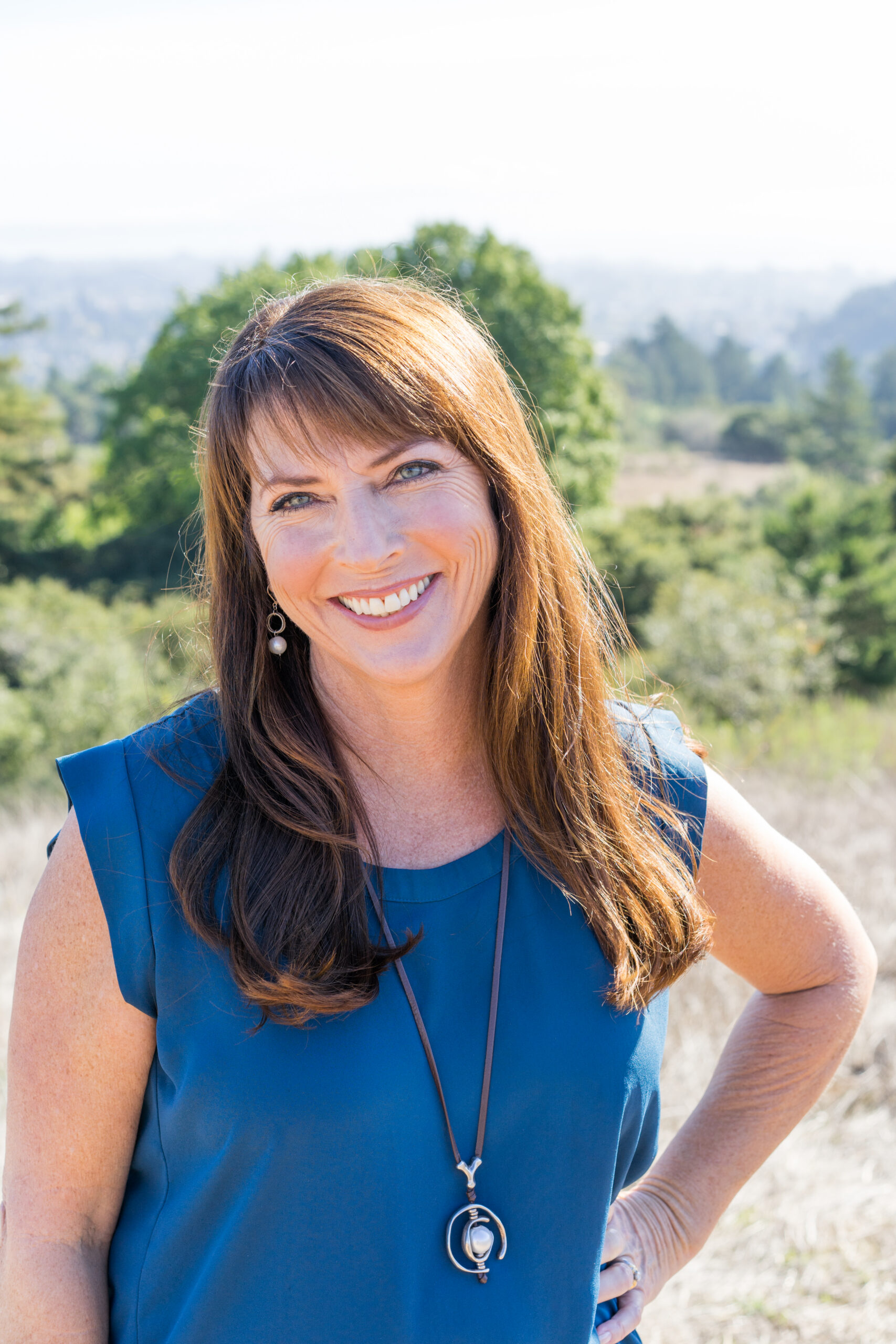
Camille Ellis is a Certified Life Coach, grief and trauma coach, speaker, and advocate for living fully after life’s greatest losses. After losing her 18-year-old son, Wes, to suicide, Camille made the courageous decision that grief would not define the rest of her life. Instead, she devoted herself to understanding the human mind, emotional healing, and the remarkable capacity we all have to transform pain into purpose.
Drawing from her own journey through profound loss, divorce, trauma, and reinvention, Camille has developed a compassionate coaching approach that helps people move beyond survival and create lives they genuinely love again. She believes that while grief changes us forever, it can also become a catalyst for greater love, wisdom, resilience, and joy.
With decades of experience helping people transform from the inside out, Camille empowers individuals to challenge limiting thought patterns, embrace a new identity, and discover meaning beyond tragedy. Her message is one of hope: healing is possible, life can be beautiful again, and our deepest wounds often become the source of our greatest purpose.
When she’s not coaching clients or speaking, Camille shares her insights through writing, podcasts, and workshops, inspiring others to find strength, peace, and possibility in the midst of life’s most difficult seasons.
Transcript:
Dr. Kimberly Hubenette: Good morning, everybody. Kimberly Hubenette here from Live, Love, Survive, Thrive, and you know today is a special day. We are celebrating some big things in June, as you know, my husband passed away seven years ago in June, and we also had our anniversary of where we met, and so forth, and so this is a big month for me personally, and then it’s also a Father’s Day today. So we’re interviewing on days that are special days, and so today I have a special guest, she’s a certified life and grief coach, and her name is Camille. I met Camille through the internet, and basically she has a great story to share, a little bit about her. I’m going to give you a little synopsis before I introduce her, and she can tell you a little bit more. Is that she’s a certified life coach and grief coach, including trauma coach, who helps people rebuild meaningful, purposeful lives after devastating loss. So she’s had the experience of the suicide of her 18 year old son, and then she also had an end of a 27 year old marriage and multiple life altering changes. So Camille combines life wisdom and practical coaching tools to help people move beyond survival and into transformation, so her conversations are real and they’re all and she says that she loves helping people and let’s introduce her and you know she can tell a little bit about herself. Hey Camille, how are you?
Camille Ellis: Good morning, I’m doing great today. How are you doing?
Dr. Kimberly Hubenette: Good. So when we spoke a little earlier, you were telling me about, you know, your career prior. You want to tell everybody a little bit about your prior history, and then how you came into this new life.
Camille Ellis: Sure. Well, it started out from the beginning of my adult years. I was a hair stylist and owned my own salon for 35 years. I really had a lot of creativity, so I loved doing hair, but after so many years, it became more of a relationship business, you know. My clients would come in and sit in my chair, and we’d get started working on their hair, or whatever we were doing, and they’d say, you know, I knew I needed to come in and talk to you. So it became more of a talk business, and helping clients achieve whatever it is they were struggling with, and different ways of looking at life. I did that for many years, and I loved it, and fortunately doing hair is very physical, and it had a lot of hard side effects, you know, frozen shoulders, and so forth. So I was getting a little bit tired of doing the hair, but I love the relationships. And then when my youngest son died in 2010 I found I was the universe brought me new clients, and they too had lost children, and I was helping them through their grief by just sharing what I did and how I helped myself, and it inspired me so much. I learned about coaching, and I decided I wanted to do that, because that is something I could do forever, as long as my brain is operating. I could help people do that, and it wouldn’t have the physical side effects of doing here. So I just started working on a way to get that done, and I did, and so here I am coaching people and helping them through some of the worst struggles in life and the deepest miseries, and I just find it to be so fulfilling, right? Because it’s really being of service in this life of mine.
Dr. Kimberly Hubenette: So you’ve been doing this for 15 years. Do you still do hair?
Camille Ellis: Yeah, of course I do. You know, it started when I did hair and coaching, and then the pandemic hit, and I decided to close my shop because I couldn’t work, and I had a wretched, wretched landlord. I was so scared and miserable, like everybody else, and my husband at the time said, ‘Why don’t you just close the shop and just do your coaching?” And I was so loyal to my clients, you know, I didn’t know how to do that. So what I did is I continued on with a few of my most favorite clients that I’d been working on for over 30 years, because I had one who was in her late years of life, and I didn’t want her to have to find a new stylist, you know, for the last few years, and so I thought, well, I’ll just keep doing her, and then it was, oh, but if I do her, I could also do her, or him, or whoever, you know, and so, yeah, it’s more like a hobby now that I care for some of my friends’ hair, basically.
Dr. Kimberly Hubenette: And you do it at your house,
Camille Ellis: Yeah.
Dr. Kimberly Hubenette: Oh, neat. I mean, I’ve been to a person’s house for my hair too, and you know, she had a little salon in her garage.
Camille Ellis: Right, right. Have proper ergonomics, you know? So, but it’s been good, and I’m glad that I can still have that relationship with those friends and clients. It’s really important to me, but coaching really is my passion.
Dr. Kimberly Hubenette: Oh, nice. So I know we talked about what it meant to you, and can you explain a little bit about the loss of your son and how it made you feel and catapult you into this coaching?
Camille Ellis: Well, it’s kind of a long story, I guess, because it’s a huge story. How does one do it. I’ll start with my son. He was a very challenging child. There was always something a little bit wrong in his head, and he was amazing at the same time, a great athlete, very popular. Everybody enjoyed him, but he also had a dark side, and when he went dark, he went really dark, and he was very difficult to be around. So, there was a lot of, I would say, called him a love-hate relationship, because the dark side was nearly impossible to deal with. Teachers gave up, coaches gave up, you know, because it got so dark. But I was his mom, and I could never give up, so I always had to be in it with him, and he taught me so much creativity. So that was part of my lesson in human behavior, and what more can we do, and just being really creative, because every, you know, practitioner I went to, therapists, doctors, they all told me how he was normal, and he was never normal, and as a mother, you know your children, you know there’s something quite wrong. When it’s wrong, it’s wrong, but we couldn’t put our finger on it ever.
So there wasn’t really any help for me with him, it was just all on me, patience, resilience, creativity, and lots of love. He was great, we were very connected, and we understood each other, we understood his battles together, even though there were times when I was at great loss of what to do and how to offer him what he needed as a mom. I had successes and I had failures, for sure. So, meanwhile, my life was still continuing, and I had other children, and I had other traumatic things happen, and I started learning how to cope with them, and I think my best teacher was Byron Katie’s work of learning how to love what is in life. I had my stepdaughter had lost her mobility, nearly died. It was traumatic, and I got shut out of her life being a stepmother, and it broke my heart so deeply. I didn’t know how to deal with it, and so Byron Katie’s work really helped me learn how to love what is, and learn that it didn’t work for me, but it worked for her, and all I had to do, my only responsibility with her, was to love her. So I just focused on loving my stepdaughter and accepting all the things that I wish I could have changed.
When my son ended his life, he was almost 19 years of age. And traumatic as that is, you’re always going to be sad. People don’t really realize that grief doesn’t come to an end. It’s always with you, and it’s with you because it’s a form of love, and if you didn’t have that love, you wouldn’t grieve. So you know it’s something to always try to remember when the pain hits and the wave is in you. It’s because that was a very loving relationship and a connection. I guess I can say when my son passed, I wasn’t surprised, but I was definitely in severe shock, like anybody would be with a loss like that. You go through all the spirals of crazy thinking, all the misery, and you go through moments of being numb and frozen and not knowing. But when I really sat with my grief and just grieved, and I thought all the horrible, horrible thoughts I could think, and they were thoughts of not being capable of being a mother to my other children, not being capable of even like connecting to my dog, my husband, my job, the shop that I was supposed to be running, and feeling like I was just going to be in this slippery, dirty slope of misery, and I was going to wallow there, and it was just all what I started observing about myself, and I’m going really fast with this. It did not move this quickly, but what I was really aware of is that all my thoughts were very selfish. It was all about me. I was never going to be happy. I was never going to smile again. And when I started hearing this, it was like, oh my god, I’m being a victim, and I don’t like being a victim. I like thriving and finding my way through life.
So I really started questioning my thoughts, and I could see that I was creating my own misery by the way I was thinking about it. I could be happy. I imagined, you know, what if you ran into a new batch of litter of puppies? Are you not going to be happy to see these puppies, you know? Or how about your grandchildren, whenever they arrive? Are you going to be happy? You know, so I can realize that I was lying to myself. Of course, I’m going to be happy. And as I sat in this misery and started questioning all my senses, I felt like I had more of a spiritual connection than a higher wisdom came to me and said you’re going to be better and I started laughing. It’s still very emotional for me because it was such a moving moment, like you’re going to be happier than you’ve ever been because of your sadness. You’re going to be a better mom, a better wife, a better dog owner. You know, you’re just going to be better everything you do, because you know so much more now. Your wisdom is so much broader, and that just made me laugh and cry at the same time. And it was so beautiful, and I was like, “You’re right, this is so true. I’m going to do that”, and I just started doing it, and I never gave up on that, and it was what I’m going to do for me, and for the service I provide to all the people in my life, not just my family, not just, you know, the kids in my future, it’s everybody, it’s the person on the street to the friend sitting in the room with me.
Dr. Kimberly Hubenette: How long did it take you? Was it like years or months or weeks?
Camille Ellis: Days. It took me days, but you have to remember I had a massive toolbox that I could pull out of, like I went right back to Byron Katie and said, How can I love this, and that’s a very hard concept for people to understand. How do you love something so painful? And for me it was, I kept saying, I lost my son, I lost my son, and I just flipped it into I had my son instead of losing him, so it was a gain, and that took a lot of weight and pressure off of my grief, and it became lighter, a little bit softer, and I saw my son’s life as a full existence, and such a gift that I was given. Now I had never planned on seeing his entire life, but I did, and then there was that moment of my son wants me to be powerful, he always wanted me to be strong and powerful, so I could manage his life and mine and everybody else’s. So now I know he also wants me to do that with his death for me and for everybody else I know, and I really feel like we are spiritually connected, me and my son, and that the message is, if I can be more powerful because he existed, then I am extending what he gave to me, which is an extension of his life, and that to me is much more powerful than being sad and miserable and feeling what I lost versus what I gained.
Dr. Kimberly Hubenette: I have a question for you about that. Does he ever like, is his presence around you at all, or do you believe in that, or what do you think about that?
Camille Ellis: Yes, I think he is with me all of the time. Some of the kids, and when I say that, you know, his friends and the siblings say the same thing, you know, like they feel on something will happen, and they’ll say, like, “Wes was with us today, or this or that happened.” So it’s fun, we share it as a family, but I also say, you know, like, if you’re grieving somebody, sit with them in spirit, you know, give yourself time to be with them, and just be open, open your heart. I’ve done this several times with my son, where I’m just with him, and he will come, and I will feel him, and it’s beautiful. It’s very emotional, of course, but I’m always so grateful, like, thanks for just letting me know you’re here, and sometimes it’s well, probably most of the time it’s because I am feeling him and grieving him and letting that be with me, and then he’ll just show up and just kind of be there. Other times it’s just almost like a vibration, you just know, and it’s all okay, and he’s fine.
Dr. Kimberly Hubenette: So losing a child, they say, is maybe even harder than losing a spouse, maybe, maybe not. There’s arguments about that, but this child, your son was, you know, part of you, inside of you, in a way, so I mean to me, I’m not a parent, but I can see and feel and talk to my patients and my clients also about the feelings, and some people just can’t get over it. Is there a tip or a trick to a mom or a dad that is really struggling, maybe it’s even been years, and they feel like they just can’t get out of it. Is it themselves or what do you think?
Camille Ellis: 100% themselves, it always is. Whenever we are suffering, it’s 100% us. So it’s really the stories you tell yourself, right? So, like, when I was in my deepest misery, I told myself terrible stories, like I would never be happy again, and life would never be the same, and, and I would always be miserable deep down inside. I was going to be miserable, and that there’s nothing like telling yourself a miserable story, right? We all do it throughout our lives. We tell ourselves how we’re not good enough, or nobody likes us. We don’t make enough money. All the terrible things we can tell ourselves, we do it. And when you’re grieving, that’s exactly what you’re doing. You’re only seeing your loss. And I just think that it’s really important to first of all surrender. You really gotta surrender to it, because there’s nothing we can do, and I really believe that lives begin and end exactly when they are supposed to, right? It just is what it is. And whatever you believe in, whatever higher power that is exactly true. We cannot control these things, so this is where your surrender comes in, and then you allow it, and you allow your grief, and it becomes like you’re floating right, and the feelings that come in and out of your body, and they’re just waiting there, and you’re just paying attention to yourself, right? So I know when I start feeling grief or anything, I immediately wonder, what was I just thinking? What did I just tell myself to feel so much grief, and if I can identify whatever it is I just thought, then I can start examining it and getting very curious, and this is what I do when I’m coaching, right? I’m doing the work for you, like you wouldn’t have to get curious with your thought. I pull the thought out because you probably not even realizing you’re thinking it. This is what most of us do. And then I just say, did you notice you just said this? Is this what you meant? Is this, you know, how does it make you feel? Like, let’s really look at that. What can we tell about this story that is equally true that lightens that a little bit, softens it a little bit, empowers you a little bit, something to just kind of flip it over and lighten it up. Give yourself permission to look at new perspectives of the entire story, not just part of it. So if you’re only looking at loss, you’re only going to feel sad things, right? More loss, more sad emotions, more grief. You’ll look at everything as being not enough, but when you can look at the gain and the life and the privilege, what if I never had my son? I would much rather have had him than never have had him. So it becomes a different story.
Dr. Kimberly Hubenette: Yeah, for 18 years you were lucky to have him in your life. You said those kind of things.
Camille Ellis: Well, it kind of for me, you know, put a lot together. For me, it kind of was the ending, you know, when you finish a really good book and it put it all together for you, that’s what a life is, right? So put everything together, and I knew my son was never meant to live any longer. I know he struggled in his life, and I was glad that he stayed as long as he did. Was really grateful for that, and I was really grateful and honored to be hi mom.
Dr. Kimberly Hubenette: And he’s helping you with your career now, all the things that has happened and it’s given you a tool. Do you think that a lot of your clients come to you for this type? I mean, do you have clients that were in the same situation as you?
Camille Ellis: Yes, there’s grief and everything. Yes, I’ve done a lot of coaching with parents who have lost their children. I’ve also coached a lot of people who are going through a divorce and they’re feeling a lot of grief and loss from that. There’s also grief when, and I think a lot of parents can relate to this, when your children get older and they’re not doing what you think they should be doing, or what you believe they would do, and they go through grief trying to control it. Maybe they have a substance problem, right? I mean, there’s grief that shows up, and so it’s just really working through that to understand, like, what is it that we believe is making ourselves so miserable. There’s grief with people who are giving a bad diagnosis with their own health and are looking at possibly dying. I’ve done that kind of coaching, even losing a career, right, and having to coach somebody into the new – it’s a new identity every single time. And so you’re really creating these new identities, and you just do it like by loving yourself and allowing yourself to do it. You don’t have to go backwards, you can go forward with all the information you have.
Dr. Kimberly Hubenette: I love it. I love what you just said. Creating a new identity by loving yourself.
Camille Ellis: Yeah, it really is. I think self-love. A lot of people don’t give themselves permission. They think that they shouldn’t maybe they shame themselves like they have to be whatever they believe they have to be, because of the terrible circumstance that they may not even be terrible, they may just be thinking it’s terrible.
Dr. Kimberly Hubenette: Is that what one of your mantras is, is to love yourself?
Camille Ellis: Well, I think it’s really important that we all love ourselves. Number one, how do we ever take care of anybody if we can’t take care of ourselves? And love is very important. We’re humans, and we all need love. It’s human nature. So, you know, on a really bad day, even I have bad days, I always just ask myself, what is it that I most need today? And let’s see if I can do that. Maybe it’s an activity, maybe it’s a day of rest, maybe it’s a soak in a bath. I don’t know, but it’s always like, what is it that I need today to love myself and feed my own soul, so that I can be better tomorrow or better this afternoon, or whatever the circumstance.
Dr. Kimberly Hubenette: Do you have special things that you do every single day, or is it every day a different thing?
Camille Ellis: Oh, no, I love my patterns. I think most of us do, but I’m very scheduled with what I do. I wake up early, I meditate, I read, I have intentional thoughts that I want for the day, and how my day to go.. like for you this morning, I’m like, oh, I really want to focus with great intentions on my interview with you today, and I look forward to that. Right, so it’s a very positive experience for me. But then I go for a walk and get some fresh air and enjoy the morning, because I am definitely a morning person, and really kind of fill out the rest of my day. I love to do stuff, so I’m not one who’s going to say I’m going to sit and read a book for the day. I would rather be moving. So I have usually a day full of different types of movement. It might be cleaning my house, or gardening, or going for a workout, or just a relaxing walk on the beach, since I live on the coast.
Dr. Kimberly Hubenette: Nice. I wanted to go back to, you know, your family. Do you feel like they were affected, and are they thriving also now? Are you helping them?
Camille Ellis: It’s a really good question. It’s a loaded question. Everybody is grieving, everybody was devastated. My oldest son was another form of grief for me, because he actually found his brother, and his brother hadn’t quite died yet, so he died in his brother’s arms. So that’s another loaded form of grief I had to carry because I knew he was traumatized in a way that nobody wants for anybody. And so what I thought was interesting, and I was very observant of myself when this happened, even though my son had literally just died, and I should be falling apart, screaming, crying, I wasn’t, I was so concerned for my other son, and I had to get to him because I was away. I was out of town when this happened, so I had to get, you know, a last-minute flight and get to my son, because she was so traumatized by this, and that became my focus. And once I knew we were all together, and I was there, like you know, a mother should be right, hovering over her babies and protecting them then I knew we would be okay. He struggled a lot. It’s an opinion, but I think he still has struggles, but he doesn’t want to share them with me, because he doesn’t want me to worry about him. He’s very protective of me. I’m very protective of him, right? So, this is how we become with our children, right? We want to make sure everybody’s happy, and our children don’t want us to worry about them, especially when they’re adults, and maybe even, especially as boys or men, they want you to believe they got it handled. I think I’m always going to worry about him and hope that he’s doing all right, knowing that he’ll never share everything with me, but he does share with his wife, and his wife will share with me, and so I have that little leeway of information, so I know he’s in really good hands.
Dr. Kimberly Hubenette: And you know one thing is he’s had kids, so that means he’s moved through that part, like he’s willing to have a child.
Camille Ellis: Right, yeah, and they had twins, so it’s, you know, double the impact, sort of thing, but it’s super fun, and they’re doing a great job, and I’m just really proud of him. I wish he could tell me everything, but I understand why he does not. He has people to tell, so he’s not without, you know, his support.
Dr. Kimberly Hubenette: So you’ve been doing this for a while now, coaching your clients when they had their hair done, and now you’re coaching others, and so you’re like a mama bear coaching. And what would you say that people can get out of a coach. Who needs a coach? What’s a coach all about?
Camille Ellis: Well, coaching is really showing you the tools and giving you the tools, teaching you the tools to help yourself, where, with like a lot of therapy, you’re really processing things, and you do process things with coaching, but it’s not therapy. So I think coaching and therapy work really well side by side. I love to teach my clients how to coach themselves, so they can really catch themselves where they’re getting hung up in life, and it’s holding them back or slowing them down. We all do it, I do it, you do it, we all do it, right? And if we’re not taught the right tools, we truly don’t know how to take more action and build up the momentum we want in our life. It’s human nature to see what we don’t have. It’s human nature to feel more negative than positive. So you have to work on training the way your patterns are in your head to try train them, right? Like after my divorce, I was sitting in my yard, and I thought I was lonely, and I sat there, and I thought, you know, I mean, the divorce was really hard, and I lost a lot of friends, and I felt nobody was reaching out to me, and so I had all the lonely thoughts of I don’t have any friends, and nobody cares, and I’m lonely, and I’m really sad about all of this, and then all of a sudden I caught myself again thinking these terrible thoughts and taking myself in a miserable way, and this is what you learn when you get coach, and I realized that I wasn’t lonely at all. I was actually where I really wanted to be, I was in a very peaceful plac. I wanted that, that’s why I divorced. It was like, so empowering to know, like, oh, I’m exactly what I created in this peaceful place, and not lonely at all, but that’s what my brain was offering me, and it’s funny when you catch your brain offering you a lot of bs, that’s not even true, but if you listen to it, you will believe it, because it’s your brain, but if you manage it, you can be like I did in my garden that day, and realized it was peaceful, and I embraced that peace and loved that moment. So now I said to myself, okay, my brain offers that again, I’m just going to step right into a peaceful way of living by choice, my choice, my choice. I’m going to choose peace, because that’s what I want. It’s very important to me.
Dr. Kimberly Hubenette: You’re very powerful when you speak.
Camille Ellis: Oh, thank you.
Dr. Kimberly Hubenette: And you know what, some of the listeners, they’re going to be on Spotify, they’re going to be on the podcast, they’re going to be on different platforms where they don’t see your beautiful face and your beautiful skin and your beautiful hair. I don’t want you to look at my hair, because you know you’re a hairstylist, right? But I mean, I look at you and I think, wow, you really are who you say you are, and what you do, and the devastating things that you’ve been through in your life, you can tell that you really have created a life for yourself that you feel comfortable with, and you created a new identity, and you love yourself, and you take care of yourself. And, ladies and gentlemen, I think it’s, you know, obvious that Camille, in her words, and even her presence, and her physical presence, and being, I mean, I feel like she has embraced life, empowered life, and is really thriving, because that’s what this is all about, you know. I interview people that, who have lived, loved, survived, and thrive, you know. And so I think that that’s you. What does live, love, survive, thrive mean to you?
Camille Ellis: For me, I mean, that really is living your best life. You’re living in your life, you are in the present moment, you are loving it, and you are coping with it. You are surviving any struggles you have, and you thrive from them, because every struggle is really just a lesson to become better, right? You get to learn new tools with every challenge you face, and if you can look at life that way, then you can see that you will have more resilience, more capacity, and capability to do anything you choose to do, and it creates a momentum for you to be you and really embrace it and love it.
Dr. Kimberly Hubenette: Are you only online for your clients, or do you see them in person also? How do they get you? How do they get to talk?
Camille Ellis: I work over Zoom, and they can contact me. My website is YourCoachCamille.com and you can also email me at YourCoachcamille@gmail.com and you can call me. My phone number is 831-246-1038
Dr. Kimberly Hubenette: You could also see it in the transcripts too, later on when we send out this podcast. Thank you so much, I mean, this has been really helpful for me, as well as learning something about you, and also for the listeners out there, those have that have you know, struggled with losing a child, this is especially calling to you. I think if you could get a hold of Camille, and you know, have a one on one with her, I mean, I’m sure that you would benefit from that, and you said that people that can get in touch with you, they could have a little one on one with you. Is that right?
Camille Ellis: Yes, I offer a free 30 minute mini session.
Dr. Kimberly Hubenette: Nice. Nice. Is there anything else that you would like to say to the audience, give them a tip or a thing that might help them today.
Camille Ellis: I think the biggest tip in life is when you’re really struggling, it’s because you’re in your own way, right? You’re doing something and it’s not going the way you want it, and you’re judging yourself, maybe you’re shaming yourself, maybe you’re having very selfish thoughts, like I did. Tthis is very normal. Please don’t judge yourself when you do it. Just notice it, journal it out, and you can even examine your journal and say, “Well, that’s not really true 100%.” So now you know you can change it. You can change your storyline to create moment and the results you want to create within your life.
Dr. Kimberly Hubenette: One last thing I always ask my interviewees. I love cooking and I love food, that’s what my Chinese part of my community is all about, cooking and eating. So, do you have a special recipe? It could be anything that you love to cook, and do you have a little recipe that you want to share with us?
Camille Ellis: Oh my gosh, well, I love to cook as well. I love to eat really whole organic foods. So, gardening and cooking are a great passion of mine, and I get to eat very, very well every single my life. I like to support really good farmers. I mean, it’s a passion of mine. So, when you say a recipe, I have probably 1000s of recipes, and they’re all amazing. So, I don’t know that I could pick one off the top of my head right now, but I think it’s really important to have a relationship with the food you eat, so that you get the most nutrients out of it, and you have in your enjoying it in the moment, your body will absorb it better because of the energy you’re giving it, and then if the resources go all the way back to the way it was produced and farmed, you’re also feeding the planet back with that really positive energy and helping yourself, so you’re going to be healthier, and you’re going to feel better, and so is the world we stand on, right? But I like all foods, so I don’t know that I could pick one right off the top of my head. My fallback, happy, feel-good food is always chicken, rice, and vegetables, and you know, I will always be happy with that.
Dr. Kimberly Hubenette: Nice, yeah. Okay, folks. Well, you’ve heard it today on Live, Love, Survive, Thrive and this is Dr. Kimberly Hubenette saying bye for now. We’ll see you in a couple weeks. And this is Camille Ellis saying bye as well. Bye. Stay tuned. Bye.