“We have to remember our loved one is gone, and that’s horrible. But we’re still here, and we still have work to do. We still have purpose, we still have value, and that’s to love our lives and help others love their lives as well.”
—Dianne Brazell
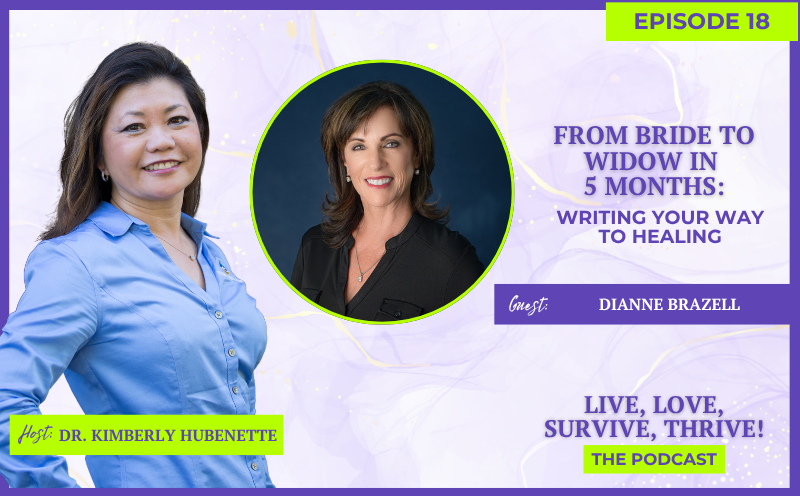
Educator and author Dianne Brazell married Paul, knowing he had cancer. Five months later, she was a widow. Here’s how creativity carried her through grief.
Dianne met her husband, Paul, in 2015. They had four healthy years together before cancer returned — first in his lung, then his brain and spinal column. She married him in the hospital so she could legally care for him. Five months later, he was gone.
Grief doesn’t always arrive on a predictable schedule. Sometimes it hits like a whiplash.
Writing Through What You Can’t Say Out Loud
Dianne has been a writer her whole life, but the letters she wrote to Paul the morning of his funeral became something she never planned: the foundation of her memoir. She wrote through numbness, through soldier-mode practicality, and eventually through the anger she almost kept private. That anger chapter, the one she considered cutting, is the one readers thank her for most. Because grief is not always soft. Sometimes, it’s furious, and it deserves a page too.
The People Who Kept Paul Present
Paul’s two sisters — Maria and Rosemary — became Dianne’s travel companions and steady anchors. A week in New York City around Paul’s November birthday. A two-week cruise along the Italian and French Riviera. They don’t compare grief notes. They just love each other through it. For Dianne, their presence means she didn’t lose Paul entirely. For them, she’s the person who was closest to him at the end. That exchange is its own kind of healing.
Learning to Be Your Own Best Friend
Dianne spent most of her life afraid of being alone. Seven years after Paul’s death, she’s retired, writing prolifically, traveling on her own schedule, and eating chili for dinner whenever she wants. She calls it the golden triangle: health, wealth, and time. More than that, she’s discovered that the person who knows her best and loves her best—is herself.
Her new book, Weaving Peace: Creating Your Next Act, walks grievers through healing by chapter: photography, movement, music, writing, and art. Not as therapy homework. As an invitation back into life.
Episode Highlights:
02:42 Meet Dianne: From Bride to Widow in 5 Months
07:44 Losing Paul
13:47 Early Stages of Grief and Coping Mechanisms
19:52 Coping by Serving Others
26:18 Learning to Love Alone and Balancing Life
32:12 Recipe: Creative Chili
Resources:
Books
📖Grid: Once in a Lifetime You Get to Start Over by Dr. Kimberly Hubenette
📖Live, Love, Survive, Thrive! by Dr. Kimberly Hubenette
Get Dianne’s Book:
📖Weaving Peace: A Memoir of My Time with Paul
📖Weaving Peace: Creating Your Next Act
Thank you for listening.
To keep my podcast alive,
Wanna buy my dog Dakota a bone?
Quotes:
09:13 “Writing is so healing for me, and I think it can be for others. A huge part of my healing was the writing.” —Dianne Brazell
12:04 “[Grief] never goes away, but we can make it smaller. We can learn to live around it, and that’s what I do.” —Dianne Brazell
15:30 “People feel guilty for feeling angry, but we do feel angry— we’re human.” —Dianne Brazell
17:09 “I’m writing, it found me, and it makes me feel so happy… For some reason, it does pour out.” —Dr. Kimberly Hubenette
18:43 “I don’t need to be afraid of being alone. I can enjoy spending time with a person who knows me best and loves me best— and that’s me.” —Dianne Brazell
25:39 “Now, when I feel sad, it’s a sweet sadness. It’s the poignancy of having loved and lost.” —Dianne Brazell
26:23 “We have to remember our loved one is gone, and that’s horrible. But we’re still here, and we still have work to do. We still have purpose, we still have value, and that’s to love our lives and help others love their lives as well.” —Dianne Brazell
30:26 “Creativity is spiritual. And if we’re healing our spirits through creativity, they both feed one another, and it’s just a happier way to be.” —Dianne Brazell
Meet Dianne:
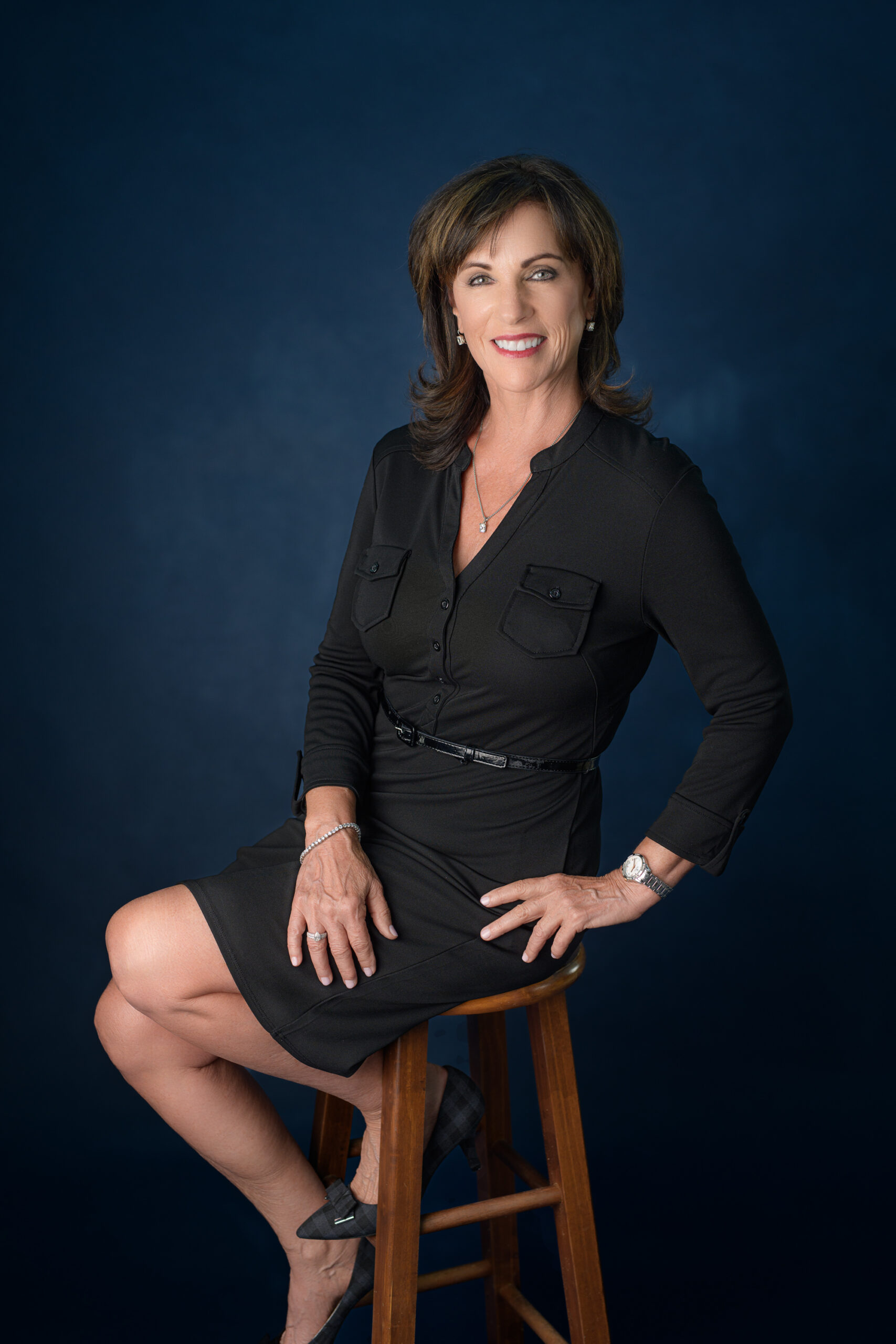
Dianne Brazell is a lifelong writer and a career educator who served for 30 years in Texas public schools. She currently works as an adjunct professor in the Urban Education Department at the University of Houston-Downtown, where she helps train future teachers of reading and writing.
Dianne loves photography, gardening, birds, healthy foods, keeping fit, teaching, and learning. She lives joyfully near her children, grandchildren, and friends in Spring, Texas.
Transcript:
Dr. Kimberly Hubenette: Good afternoon, everyone. This is Dr. Kimberly Hubenette of Live, Love, Survive, Thrive. And this is the next podcast episode. Actually, today I have a special guest that she and I – we just thought about this, and we discovered that we’re kind of around the same timeframe of where we lost our spouses, and she’s written a few books, and I’ve written a few books. She’s an educator, and I’m a dentist, but, you know, that we’re educators also. But we, I’ve enjoyed, you know, getting to know her on the back end, and now I wanted to introduce her to you all. This month is actually a special month, because this was the month that my Mark passed away on June the 29th. So this month is also the month that we got married. So this June month it has a lot of special days for me and special times that I reminisce, but I’m really excited to talk with our next guest. Her name is Diane Brazell. Is that how you say your last name, Brazell?
Dianne Brazell Yes, that’s right.
Dr. Kimberly Hubenette: And a little bit about her is that she also, it’s been seven years that she lost her Paul, and basically she’s written a few books, and her second book, came out in June the 12th, which is just this past week, so hopefully, you know, people are listening, and maybe they can get your book, but Dianne is a career educator who serves in Houston area schools and universities. Her work as a consultant, she assists teachers and administrators in implementing student-centered best practices. Dianne actually has served on multiple state and national committees and has presented at school districts serving service centers, and various state and national conferences. She has multiple publications, including articles, poems, and books. She currently speaks to groups about managing grief. Dianne loves photography, gardening, nature. nature, healthy foods,we’ll talk about that also today, and teaching and learning. She lives joyfully near her children, grandchildren, and friends in Spring, Texas. So, hello, Spring, Texas, out there.
Dianne Brazell Hello, back to you. Thanks so much, Dr. Kimberly. I’m pleased to be with you today.
Dr. Kimberly Hubenette: So anything else you want to share before we start our conversation?
Dianne Brazell I will just share that June is a special month for me as well. June 12 is actually my birthday, so the books I’ve launched, I’ve tried to launch on my birthday. It is also sadly the anniversary of my Paul’s first radiation treatment. So like you, there’s some bittersweetness with this month, but I’ve continued to learn ways to live joyfully around that loss, just as the rest of us, most of us in the list in the audience are trying to do, and so I’m happy to be of some service and some help if I can through our podcast today, and also through my books if listeners choose to to participate in that.
Dr. Kimberly Hubenette: Can you tell us as the journey starts, tell us about Paul.
Dianne Brazell Paul is one of seven Italians from Buffalo. He’s in the middle of his family, two girls and five boys. He moved to Houston in his 30s for work and remained there. So that’s how I met Paul, even though he’s a native Buffalonian. He was a Houstonian for the last half of his life. He loved to dance. He was a very smart. He was one of those people who was gifted in numbers and letters, so I could beat him on the jungle sometimes in the Houston Chronicle, but we usually tied, and I didn’t even try the number puzzle. So just a lot of fun. A great athlete, good sense of humor, love travel, but loved nothing more than his family,
Dr. Kimberly Hubenette: And you lost him to cancer, is that right?
Dianne Brazell Yes, I did.
Dr. Kimberly Hubenette: How long was that journey?
Dianne Brazell I met Paul in 2015 and he had just lost his kidney to cancer two months prior to that, but over our time together, which was four years, the cancer remained at bay. He was healthy the whole time until the December before he passed the following year, which would be December 2018. It came back in his lung, and then in May of 2019 it returned in his brain and spinal column. And so the actual journey of his passing was only five months long. He was very healthy, even with the lung situation until it invaded his brain and his spinal column, and that was five months from diagnosis to his passing. But the disease carries a prognosis of 90 days, so he outlived that particular version of cancer a little longer than anticipated, so it was a whirlwind. Dr. Kimberly, it was stunning. We just got married once he was diagnosed, so that I could be his wife and not his fiance in order to take care of him medically and have access legally to everything I would need to care for him. So, it went from bride to widow in five months. So, yeah, it was pretty overwhelming.
Dr. Kimberly Hubenette: You said that you had been together for about four years prior.
Dianne Brazell Yes, four years.
Dr. Kimberly Hubenette: What did the early stages of grief look like for you?
Dianne Brazell I was pretty numb for the first year, like I just shared with you guys. It happened so fast. Paul didn’t even have a will, so we were scrambling to get all that in place. And then once he had passed, I had to be in charge of his estate. I was the executrix of his estate. I have two stepsons who were 20 and 22, so I tend to switch into soldier mode whenever I’m under duress. So I had done that once he was diagnosed, just get the work done, and I really stayed in that for about the first year. He had a house, a separate house from my house, I had to manage that, take care of the boys, try to manage the finances. So I never really gave myself permission or time to grieve during that time, even any of it. So, in some ways I’m still processing, because it was such an awakening once I allowed myself to feel. But the thing that helped me, I’ve always been a writer. I started writing as a child, and I journal frequently, and I write poetry, and I had taken time to write during Paul’s illness a little bit, and then after he passed, I really obviously wasn’t ready to let him go, so I wrote him letters. The first letter was the morning of his funeral here in Houston. The second was a couple of days after that, and they space out over time, but those became the basis of my memoir, the letters that I wrote to Paul after his passing. And that really writing is so healing for me, and I think it can be for others. And so that was a huge part of my healing was the writing.
Dr. Kimberly Hubenette: I want to ask you. You mentioned that you had the two stepsons as the executor. It’s interesting that you were the executor and not one of them, I guess, because of the age?
Dianne Brazell They were so young. Yeah. The boys and I are still close. In fact, when I finished talking to you today, I’m going to have lunch with Patrick, my stepson, the older one. No, we love each other. That Italian family I was so blessed to join, are so loving, and just.. no, no, there was never a problem. And they walked through this with me. We went to the financial advisor together, and we set up accounts together, and we learned together. And being a teacher, I think, helps me with that. I love young people so much. And no, there’s honestly another gift from God, not one iota of any difficulty with that, because everything is transparent and straightforward, and you know we made decisions together about everything.
Dr. Kimberly Hubenette: And you also have kids, right?
Dianne Brazell I have three grown daughters. I do. So Paul and I came together, I am with three daughters, he with two sons. So, we’re kind of the Brady Bunch there, if you remember that old show. And the kids all get along, they all get along.
Dr. Kimberly Hubenette: That’s wonderful.
Dianne Brazell It’s just really a blessing.
Dr. Kimberly Hubenette: And what helped you move through the grief?Would you say that you’re at a point where you know my podcast is called Live, Love, Survive, Thrive. What part of the grieving process are you in at after seven years of practice now?
Dianne Brazell I think I’m thriving. I feel so at peace, you know, like you and I were speaking about before we began recording the podcast today, I am at such a peaceful place. It’s that beautiful golden triangle of health, wealth, and time. I’m retired from my public school career. I still do some university teachings from time to time, but I manage my own schedule. Any obligations I have, or obligations I have put on myself, so it’s rich, it’s beautiful. It allows me time for my relationships, which I treasure, time to write, which is so healing for me. And being at home, my spirit is so open, because I’m not having to go to work or deal with any stress at work, I’m just here wide open, and it’s absolutely wonderful, but that doesn’t mean I don’t have those moments at on an anniversary or when a photo pops up on your iPhone, and I’m struggling right now to talk about it. Yeah, June 12 every year, my birthday. There comes that last birthday with Paul, you know. So it never goes away. I know you tell your listeners this, but we can make it smaller. We can learn to live around it, and that’s what I do.
Dr. Kimberly Hubenette: Do you have any special habits or practices that you do, or you know people that support your transformation the most?
Dianne Brazell Honestly, I would say my sisters-in-law,. Paul has two sisters. Maria is about my age, and Rosemary is the baby of the family. Dia is about 10 years younger, and we’re in. We traveled together last year. Both girls and I spent a week in New York City in November around Paul’s birthday, which is around Thanksgiving. And then Maria and I did a two-week cruise together in September to the Italian and French Riviera, and we talk about Paul as things come up, but we don’t compare notes on how we’re doing. We just love each other through it. I think for me, certainly their presence in my life makes me feel like I didn’t lose them all the way, you know. He’s still with me through them and through the boys. And I think for them I’m the person who was closest to Paul, and they saw me care giving, and they saw how much we loved each other, so I think a little piece of him is with me when they see me. So I would definitely say those girls have really helped my healing, and of course, my own daughters are phenomenal, and just were right there the moment we got the diagnosis within hours, they were all three at the hospital with us and having those relationships and that love. I don’t know how people get through this without that kind of support.
Dr. Kimberly Hubenette: It sounds like you have a great family.
Dianne Brazell I do. I’m so blessed, and I don’t take it for granted at all.
Dr. Kimberly Hubenette: How has your pain turned into purpose? Are there ways you’re now serving others because of your journey?
Dianne Brazell I really think the books are helpful to people. I’m not trying to pitch my books here, but that answers the question. When I first wrote the memoir, that was supposed to just be for our family, because Paul was 62 when he passed, and he didn’t even have grandchildren yet. So it broke my heart to think this wonderful man was going to disappear from the earth and not a scrap of him to remain for the grandchildren who would come, so I started gathering up everything that I started the book. As I began to put the book together, I was trying to make myself small and make it about Paul, but I mean it’s my story too. So, in doing that, the caregiving voice was insistent, and I kept trying to push it down, because I don’t consider myself a caregiver. That’s not my natural go-to. I’m a teacher, but not so much a caregiver, like I’ll send you a card or flowers, but I don’t really want to, you know, be there for the scary part, but that voice was very strong, and also the testimonial to writing, because writing is what has healed me so much. So I realized I probably should share that book, even though it is so personal. It is deeply personal. It’s from my journals, it’s my poetry for Paul. There’s a chapter on anger where I just say mean stuff to him, and I never wanted anybody to see that, but that’s the chapter I’ve received the most feedback on, because people feel guilty for feeling angry, but we do feel angry, we’re human. And so, back to your original question, I’m rambling, I’m sorry. I really believe the books are helpful, and I’ve gotten some powerful feedback, and some thanks for writing the book. So I’m serving others through the book, and also I’m a great listener, and I’m very caring, and I just try to be available for family and friends, or even strangers. If I can lend a hand and help, that heals me too.
Dr. Kimberly Hubenette: So what does living fully mean to you right now?
Dianne Brazell Like I mentioned before, being on my own timetable. I love that so much. I wake up every day and I’ll have some obligations, but I also think, what fun thing do I want to do today? I mean, I have the luxury of that at my age, and the fact that I live alone, if I want to cook chili and eat it, I do that. If I want to eat out, I do it. So that’s huge for me. But the other big thing is serving others. I’m enjoying the writing so much. It’s when I sit down, the words just come, so it feels like this is what I’m supposed to be doing. So maybe that’s my gift for my loss. I don’t know. I’ve always written, but never so much as I’m writing now.
Dr. Kimberly Hubenette: One thing about me is that I never thought I was gonna write. My mom was an English major, so she would be the one that was always right, you know, proofreading my, you know, stuff for college and stuff, and that’s probably why I went into dentistry, because I didn’t want to write. Now, guess what? I’m writing, it found me, and it makes me feel so happy when I write about things like this, and I don’t know, for some reason, it does pour out. It does.
Dianne Brazell My mom was also a writer, and I think that’s why it was just natural to me to write. She wrote songs, she was a musician, and she also wrote poetry. And my brother is a musician and a writer by trade. So, in our family, that’s just kind of what we do. I never knew what a gift it was going to be. I thought I was just writing pretty stuff, that’s what I did early on, but now it’s just bringing life experience to it, like we can now. It makes it more meaningful, and it makes this so important to share as well.
Dr. Kimberly Hubenette: So one question for you, what’s one thing you’ve learned to love about yourself through this process?
Dianne Brazell I finally figured out that I’m my own best friend. I lived most of my life with my biggest fear being the fear of being alone, and as you can tell from what I’ve shared already, I’m anything but alone. But I thought I had to have a companion, a husband, a person that was mine to feel complete and feel like my life had meaning. But I’ve learned to really enjoy my own company and to savor it. I love my relationships, but the time alone has been so beneficial for me, so that’s what I’ve learned. I don’t need to be afraid of being alone. I can enjoy spending time with a person who knows me best and loves me best, and that’s me.
Dr. Kimberly Hubenette: That’s good. I always ask my listeners this, and I’m going to ask you the same question. What does live, love, survive, thrive mean to you in your season of life?
Dianne Brazell For me to feel like I’m thriving, one important thing is to find balance in stopping to smell the roses and seizing the day when to move quickly, when to go slowly, and when to just be still, and I don’t always get it right, because I tend to live in fast forward, like we women do, with multitasking, with raising children, with work, and so forth, but this is my sweet time, when I can do that, I can balance my time. A second thing that’s huge that I’ve pretty much been good at always is having an attitude of gratitude. You can tell just from the time we’ve spent together this morning how blessed I am with relationships and with health, with travel, all these things that, and I sometimes wonder why do I have this blessing? Why, you know, people struggle so much. It, I know that I’m meant to do something with those blessings, not just keep them to myself. So, that leads to my third important piece of living, loving, surviving, and thriving, and that service to others. As a career teacher, as a parent, serving others has always been important to me. It’s my livelihood, it’s how my relationships grow and thrive. I was sponsor of an honor society when I was an administrator in high school, and the motto of that, the Beta Club, is what it’s called. It’s like a national honor society, is let us lead by serving others. And I think that’s a fabulous little motto, and my youngest daughter called that to my attention when she was in my office one day, she was about 10 years old, and she said, “Mama, I really like that, and that’s sort of become her motto, her mantra as well. So, living fully, thriving those three things: balance, gratitude, and service.
Dr. Kimberly Hubenette: I know that you’re retired now, but did your work that you did prior to writing books and so forth, was it kind of associated with what you do now or not really at all?
Dianne Brazell Absolutely, yes. When I was a classroom teacher, I taught high school English. When I was a college professor, I taught in the urban education department, and I taught future teachers, so I’ve been paying it forward joyfully, always. So, yes, I love words and language. I love poetry most of all, next to chocolate. So, absolutely, yes, my work and my everything is around words and around people for me.
Dr. Kimberly Hubenette: Seven years, seven years. Walk me through the first year versus the seventh year. I mean, how was it emotionally different from now? I mean, how often would you just break down versus the fifth year versus the seventh year? Because for me, I don’t know about you, but there’s sometimes where I feel guilty that I can’t even remember his voice, how it sounded, because I don’t have a recording of his voice for anywhere that I can find. I mean, I’ve seen like videos and stuff, but he never talked on his videos. He would just, like, you know, video himself riding his motorcycle, or, you know, doing these other things, and I really have, like, very sparse voice blurps of him, I mean, I don’t even know why, but he never even put his voice on his voicemail.
Dianne Brazell So, first, let me say that Paul also rode a motorcycle. We have a lot in common, Dr. Kimberly. Similar to what you just shared. I have one voice message that’s still on my phone, and it’s the saddest message, because he was in hospital two or three months before he died, and he was crying because his son, Anthony, had called and upset, and he needed me to come back to the hospital. He needed to see me, so I don’t listen to that one, but I can’t delete it. Anthony, my stepson, the younger videotaped our wedding celebration that we had actually in the hospital in August, because we didn’t have a moment to do anything, but you know, just be legally married. So he does have that, and I need to get that from him. But I share what you’re saying, if I just try to recall his voice in my own head, it’s really difficult to do that. I can remember his touch, his smell, his movements, but his voice escapes me, and the voice is the one thing that’s so personal that I miss so much.
Year one, year one was a bumpy ride. I was having to do things financially and legally that I had no background with. Luckily, my oldest daughter is an attorney, so she was able to help a lot with the legal challenges, but I was so hyper-focused on managing the will, the estate, the boys, that I only cried when I got caught off guard. I have a little vignette in the first book that talks about when I was washing dishes one day, and I picked up the Dawn dishwashing liquid bottle, and the cap was twisted and almost falling off, and I would get on to Paul so badly, and I would say, Why do you twist the top off just clean up? We, so we would argue over that, not in a bad way, but just like.. and when I saw that lid, I lost it because I realized that when that was emptied and I threw the bottle away as I must, that would be the last scrap of him in that kitchen, and that things like that would just undo me. So, yeah, that wrote the vignette about that. It’s called Not First but Last, because you know people will caution us. Oh, the first are hard, the first Christmas, the first birthday, but I’m saying no, alas, or the hard things. So that again, I coped by writing, but yeah, that first year was a roller coaster. I was a little soldier, a little zombie, riding a motor coaster for that first year.
I would say year five. I was in a pretty good place by year five. The estate, everything was managed, the boys were doing well. Anthony had graduated college, so we were at a breathing place there. More good days than bad days, still the little getting caught off guard. And now when I feel sad, it’s a sweet sadness. It’s the poignancy of having loved and lost, not the ripped apart feeling of I’m only half myself anymore, grown back into myself as time has passed with the love and support of my family and friends, with writing. I wouldn’t say the pain is gone, but it’s gone from a nine or 10 down to most days of one or two, and when it spikes, it’s a five or six. It doesn’t spike back up to nine or 10 anymore. So, I hope that is encouraging to our listeners and our viewers to know that it doesn’t go away, but you can learn to manage it, and we’re still here. We have to remember our loved one is gone, and that’s horrible. But we’re still here, and we still have work to do. We still have purpose. We still have value, and that’s to love our lives and help others love their lives as well.
Dr. Kimberly Hubenette: Asked you this prior, have you found any relationships again, are you gonna do that, or are you happy the way you are with, you know, any new loves or not really?
Dianne Brazell Here’s where I am with that. As I shared with you earlier, the first relationship I entered into after I lost Paul, about 18 months after his passing, I look back on that, and I remember the good times, because we traveled, we had a really good time. I was with this person for two years, but this person was dishonest and a betrayer. So, I’ll let you fill in those blanks. That was devastating to me. I was still so vulnerable and so weak from, you know, my loss, and I really thought this is my blessing for that suffering. He’s going to be wonderful, and he was wonderful in some ways, but you’re familiar with the term gaslighting, that’s what happened in that relationship with me, it was devastating, so I’m over that. I’ve dated off and on since then, but I haven’t found anyone that I want to connect myself to in any sort of permanent way. So, yeah, I don’t know, Dr. Kimberly. I would love to have a person. Maybe I want to have good conversations with someone who sees the world mostly in the way I do, not exactly the way I do, but that we can have common values and a common interest to a certain point, because I’m a people person, I love people so much, and I definitely am open to new love, if that should find me, but I’m not seeking it, it’s going to have to find me, but I’m here. I’m here, listeners.
Dr. Kimberly Hubenette: So what was the name of your first book, and what’s the name of your second book?
Dianne Brazell My first book is called Weaving Peace, a memoir of my time with Paul. I had that translated into Spanish, because so many people who are dear to me have Spanish as their first language, and I wanted the book to be easy and accessible for them to get to. And then the book I just launched on my birthday this year is called Weaving Peace: Creating Your Next Act, and it’s tips for using creativity to help you manage your grief.
Dr. Kimberly Hubenette: Can you give the listeners one little tip that isn’t might be in your book?
Dianne Brazell Absolutely. It’s not a secret. I want everybody to know all of it right now. In the introduction, I give instructions for how to write your own little vignettes and stories, and I show the readers how to use, if they find a sentence in my book or a paragraph that they like, they can do mimic writing with that by lifting my content out of putting theirs in to just mimic that grammatic structure. So I’m giving them writing lessons in the intro, which I think is awesome. And then each chapter focuses on a different form of creativity. It’s not fancy stuff, it’s stuff we do every day. First one talks about healing through photography for our photos and things we can do with our photos for ourselves and our loved ones. There’s another one, like the chapter, it’s tied to the to the original memoir. So chapter seven is about anger again, but it’s about way that I helped rid myself of anger, and that’s mostly through movement, through using your physical body to manage that. So each chapter focuses on healing through a different. One is healing through writing, healing through art, healing through music. So it’s really, it’s fun, it’s uplifting.
Dianne Brazell So this one is the first one, was my story with Paul, and this is my story after Paul. This is how I’m managing. This is how I’m thriving. In year seven is from embracing creativity, because creativity is spiritual, right? And if we’re healing our spirits through creativity, they both feed one another, and it’s just a happier way to be. And all the things that I’m sharing are things you probably are already doing, but I’m just offering you ways to enhance that, whether it’s flower arranging or what you do with your photos, or when you go to the theater, or what you do with art, or how to write. So, I’ll stop now. I get really excited about it, because I know it’s going to be so helpful.
Dr. Kimberly Hubenette: Wow, that’s a neat peak of your, of your book. How can the listeners get a hold of Dianne?
Dianne Brazell They can reach me through Facebook, just look at for Dianne Brazell. You can reach me through my website, which is on Canva. I think this is going to be in the notes for our from our talk today. They can see that I’m on Instagram. They can reach out to me through Gmail. I’m happy to hear from people. I’m a nice person, and I love to help. I just saw those little teeth in your background, Dr. Kimberly. That’s so cute. The writing dentist, I love it. Yet any of those ways, so definitely have you share my Gmail if you want to. However, they can get to me. I’m happy to lend an ear. Anything that I can do to help, that’s why we’re here. I believe we’re here to help one another, lift one another up, and I want to do it.
Dr. Kimberly Hubenette: Yeah, and so if they are interested, you have a Kindle, right, that you could share with them, a Kindle book?
Dianne Brazell My book is free. The memoir about Paul is free on Audible for people who have that subscription, so that’s already free for them. If I can figure out a way to make that book, the ebook, give it to them, I will. I’m just not a techno genius, so I’m happy to share that. If I can find a way to do it, I just have it. I don’t know how.
Dr. Kimberly Hubenette: What’s your website?
Dianne Brazell It’s on Canva. It’s Diane Brazell., lt me– I don’t even have it handy here. It’s going to be in the notes. It’s the Canva website. So they can see all about me and where I’ll be next, and a little blurb about my books, my bio, some pictures of Paul, pictures of Paul and me, some pictures of me at a book signing, so if they want to see that, they can, and I have a QR code, I should get that to you somehow. But yeah, I’m available.
Dr. Kimberly Hubenette: It was so nice to get to know you, Dianne. What I asked all my people this, do you have a favorite recipe or food that you love to eat that you have a quick recipe to talk to and share with our audience?
Dianne Brazell I will make creative chili. I just made that up while we’re talking. I love to make chili with really lean ground turkey. I use the 93 seven balance, it’s 93% lean. I use a lot of spices: cumin, paprika, chili powder, oregano, garlic. I cut up chipotle peppers, that’s the canned ones, put that in there, jalapenos, onion, and the trick – don’t tell anyone. The trick is to blacken your seasonings, after you brown the meat and drain it, push the meat over to the side. I use a Dutch oven. I put all my seasonings down and blacken them for about two minutes and stir them around, and then I roll the meat back around in it before I add tomato sauce, and that really makes the meat, and you know, turkey needs seasoning, it really a little salt. Also, it really makes the meat take on the character of those seasonings, and it’s delicious, and it’s a little bit different every time, because I don’t measure, I just do like my mama, and just kind of dump it in there, so it has a little different personality every time I make it, and then I top it with grated cheddar, maybe sometimes with some avocado, maybe some sour cream, just whatever I’m in the mood for, and it is such a treat, and it’s very helpful for you if you skip the cheese, but you know, a little cheese never hurt anybody. But yeah, that’s my favorite thing to do now, is to make that really lean turkey chili.
Dr. Kimberly Hubenette: Oh, nice.
Dianne Brazell I see you’re hungry now.
Dr. Kimberly Hubenette: Yeah, I am. My brother is like, loves to cook, and so I always have to like listen to him tell me, oh, I’m not a good cook, but you know what, I might cook that for him, and maybe it’ll be good.
Dianne Brazell I’ll have to send you some estimates on how much of what I put in there.
Dr. Kimberly Hubenette: Yeah.
Dianne Brazell So have a little blue print.
Dr. Kimberly Hubenette: Listeners, this was a wonderful time to share with Dianne, and it was great to get to know you, and you know, in the summertime I always do three wellness retreats, and maybe when you’re out in California, if you ever come to California, you can come to one of our wellness retreats. It’s an outdoor retreat that I have, where we do hiking, and we do the five senses: smell, taste, hearing, seeing, breathing, and we go out do a little hike journey, show them how to either fish or hike or something, and then also do some journaling, and so forth. So I do that we had one in May, I just had one in June, July, and August, because these are the great months to come out. So, if you’re ever in Sonoma County, look us up.
Dianne Brazell That sounds fabulous, and that’s a great time to get out of the Houston heat as well.
Dr. Kimberly Hubenette: That’s right.
Dianne Brazell No, I would love to do that. Thank you for mentioning it. That sounds wonderful to me.
Dr. Kimberly Hubenette: So, guests and listeners, this was Live, Love, Survive, Thrive, and I welcome you to listen to our podcast twice a month. Come on out and listen, or share with your friends and family. We’d love to hear from you. So, please message me, and we’ll see you soon. This was Live Love Survive Thrive. Thank you all. Thank you, Dianne. And we’ll see you next time.
Dianne Brazell Okay. Goodbye.