“Grief does not have a timeline. The intensity and the frequency of it can change, but it will always be there. And so, finding ways to acknowledge it and honor it is an important part of the grief process. And then community— because the only way we truly heal is being in connection with others that make us feel safe and make us feel loved.”
—Laura Todd
Grief after losing a parent doesn’t follow a timeline. Therapist Laura Todd shares her story and how community heals us.
Grief After Losing a Parent: Why It Has No Timeline
Grief after losing a parent doesn’t resolve on a schedule, no matter how much time has passed. That’s the central lesson therapist Laura Todd shares from her own experience: losing her mother to stage four breast cancer at 24, then feeling that same grief resurface years later during her postpartum period.
Laura’s mother was diagnosed while Laura was finishing college. For four years, the family managed treatment, medication, and hope. Then a routine hospital stay to monitor kidney function turned into devastating news: her mother had four weeks left. She passed away that same week, surrounded by a family scrambling to process the news together.
Grief Doesn’t End — It Resurfaces
Laura describes grief as something that never fully leaves; it just changes intensity and frequency. She felt it again while planning her wedding without her mother, and again — more intensely — during postpartum anxiety after her first child was born, isolated further by the pandemic. Each milestone her mother would have witnessed became a fresh wave of loss.
Even Therapists Need Their Own Support
One of the more striking moments in Laura’s story is professional: despite being trained in grief therapy herself, she tried to “treat” her own grief alone — until her supervisor told her she was burning out and hadn’t actually processed her mother’s death. She eventually sought her own therapist, twice, at two different life stages.
Healing Through Community
Laura credits her husband, siblings, and lifelong family friends for carrying her through the hardest periods — not by fixing her grief, but by staying present through it. That experience directly shaped her career: she now runs a perinatal therapy practice supporting mothers who feel isolated, whether from grief, distance from family, or simply the overwhelm of new motherhood.
Grief after losing a parent isn’t something to “get over.” It’s something to carry differently, with support, over time: https://tinyurl.com/Live-Love-Survive-Thrive
Episode Highlights:
04:32 Meet Laura Todd: Losing Her Mom Too Soon
08:56 How Grief Reshaped Her Family Dynamics
11:37 Her Father’s Grief and Finding a New Family Rhythm
20:05 Becoming a Perinatal Therapist After Loss
24:24 The Belief She Had to Let Go of to Heal
26:42 The People Who Carried Her Through Grief
30:49 Seeing Her Mother in Herself and Her Sons
34:51 Her #1 Grief Tip: There Is No Timeline
36:48 A Family Recipe That Keeps Her Mom’s Memory Alive
Resources:
Books
Get Kim’s Books
📖Grid: Once in a Lifetime You Get to Start Over by Dr. Kimberly Hubenette
📖Live, Love, Survive, Thrive! by Dr. Kimberly Hubenette
Thank you for listening.
To keep my podcast alive,
Wanna buy my dog Dakota a bone?
Quotes:
04:37 “So much about grief is sharing grief with others who can also understand that experience and not feel so alone and isolated in that experience.” —Laura Todd
21:47 “While I don’t want to be frivolous with our money and our finances, I don’t want us to be so conservative that we don’t live our life, that we don’t go and do fun things with our children and make memories. Because we don’t know how long we’ll get to be with them.” —Laura Todd
24:24 “I had to let go of doing it all myself. Therapists are really good about giving other people support and not necessarily taking their own advice for themselves.” —Laura Todd
25:54 “As a dentist, I can totally give anesthetic for others, but when it comes to myself, I’m scared. You could be a specialist in something, and you might not be able to do it yourself to treat it yourself. It’s good to have therapy with somebody else and work your stuff with somebody else.” —Dr. Kimberly Hubenette
30:17 “The ability to connect with my clients and see them in their own healing— that brings me so much joy, that’s why I love doing this work, and that is the meaning in my life.” —Laura Todd
34:15 “If I really want to feel like I am living the life I want to live and getting to love my kids the way that I want to love them, I need to give myself grace and I need to slow down, and that’s the only way I’m going to survive through this very chaotic period of my life, but also feel like I’m thriving in it too.” —Laura Todd
34:56 “Grief does not have a timeline. The intensity and the frequency of it can change, but it will always be there. And so, finding ways to acknowledge it and honor it is an important part of the grief process. And then community— because the only way we truly heal is being in connection with others that make us feel safe and make us feel loved.” —Laura Todd
35:58 “Life is short. Life can be challenging. Life can be happy and joyous at the same time. And it’s up to us to decide whether or not we’re going to live and keep living for our families, and also be that whole person that we know we can be even without a loved one who was lost.” —Dr. Kimberly Hubenette
Meet Laura:
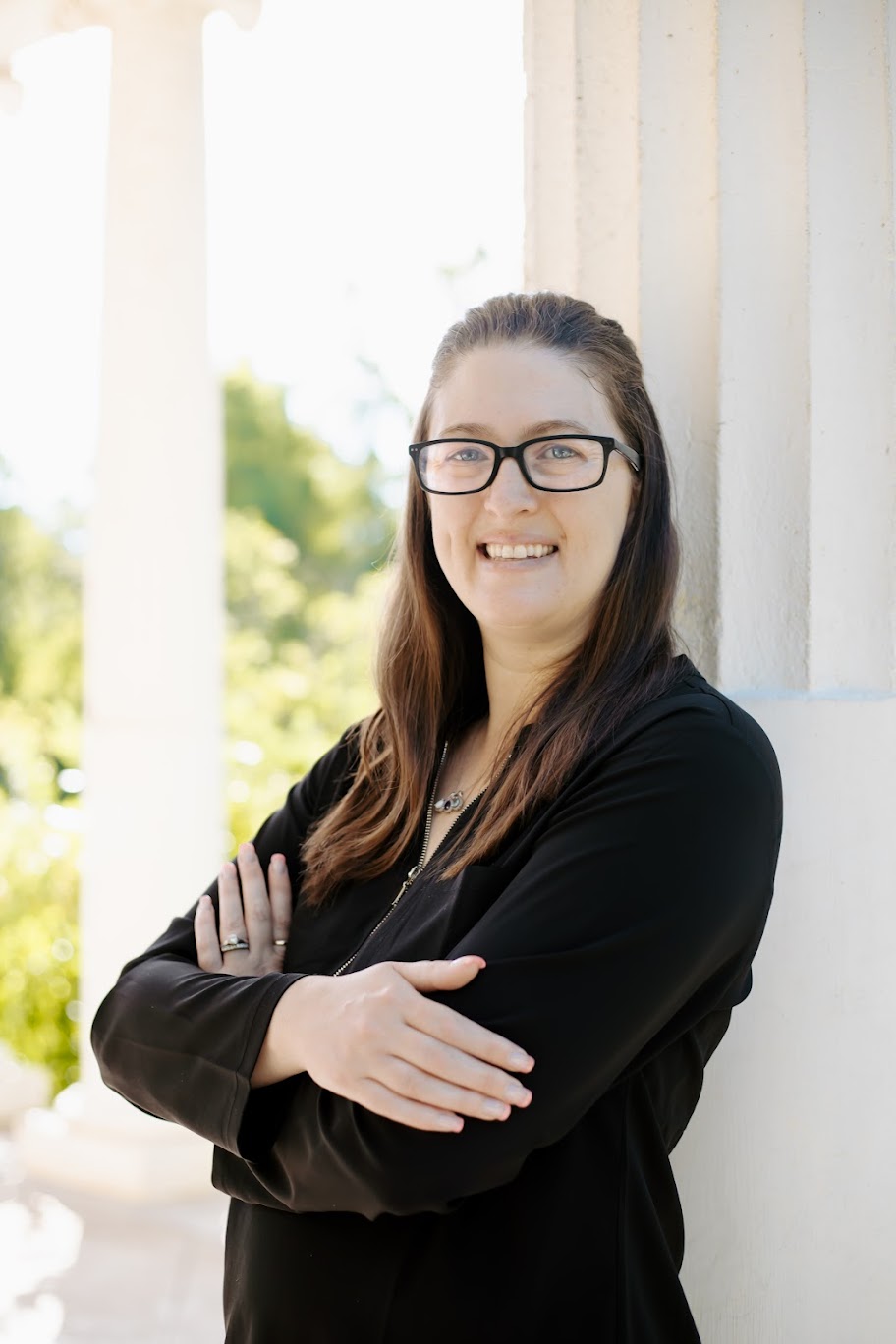
Laura Todd is a Certified Perinatal Mental Health Therapist and Infant & Early Childhood Mental Health Specialist. She supports parents through the profound transition to parenthood, helping them move from surviving the mental load to feeling grounded in their bond with their child. With expertise in perinatal mental health, infant‑parent development, and early childhood relational therapy, Laura creates a safe, non‑judgmental space where families can thrive. Her approach blends professional training with lived experience as a mother, emphasizing nervous system regulation, connection, and long‑term family well‑being.
Transcript:
Dr. Kimberly Hubenette: Hello, everybody. This is Dr. Kimberly Hubenette of Live, Love, Survive, Thrive, and you know this is summertime, and I spent my day out in the wilderness today. I took my dog Dakota out for a nice hike, and instead of going to the water that we usually do, we just hiked around the Anadale Park area in my area. And you know, I noticed that she just likes to go to her regular routine, and she was looking for the water, looking for the water, but I had to give her a different routine But anyway, we had our monthly wellness retreat last week, and we had a lot of fun. And I’m enjoying the fact that people came from all over to come and learn how to trap shoot this time, like every time that we have a wellness retreat, we do something a little bit different. And last time we did fishing, I taught everybody how to do fly fishing, and the time before that we did some archery, and now this time around there were some people that wanted to do the clay pigeon shoot, so we did that, and that was a lot of fun. So today, I wanted to introduce to you a person that I met, and she is a really neat person. Laura Todd is her name, and you know, with all of the guests, we have some interesting story or correlation to grief, and hers is pretty pertinent. I mean, she lost her mom when she was in her early 20s, and I think that catapulted her to the life that she has now. Laura Todd, let me introduce her, and then I’ll let her introduce herself as well. She’s a licensed therapist specializing in Perinatal, Infant, and Early Childhood Mental Health. She’s the founder and owner of Early Bonds Therapy in the Silicon Valley, which is in California, also. She was inspired to open her practice after her own struggles with postpartum anxiety and grief at becoming a mother without her mother. So let’s welcome Laura to the show. Hi, Laura.
Laura Todd Hi. Thank you so much for having me.
Dr. Kimberly Hubenette: Yeah. Thank you for coming on and willing to share your story. I know it’s really rough at times, and things happen, and sometimes you can’t control when it happen, but tell us a little bit about your story.
Laura Todd I would love to, and just really honored that again. You’re having me on here to to share this story because I know so much about grief is sharing grief with others who can also understand that experience and not feel so alone and isolated in that experience. So I’m really glad I can come here and share my story so that other people can not feel so alone in their own experience. So as you mentioned, I lost my mom in about my early to mid 20s when I graduated from college in 2011. That’s when she was diagnosed with stage four breast cancer. She had breast cancer in both her breasts, and we also later learned that it had spread to her liver and her spine. And so, for the next four years, she, you know, was in and out of treatment. A lot of, you know, radiation, chemotherapy, a lot of medication because it was an estrogen-fed cancer, if I remember correctly. And so she actually never went into menopause in her late 50s, early 60s, because they kept trying to kickstart her into menopause so that her estrogen would go down and maybe stop feeding the cancer and they just never could get it to do that. My mom would send us emails every time, updating us on her estrogen numbers to the whole family, and you know we’re just trying all these things, trying to you know manage it as best we could, try to get whatever treatment we could get her to help reduce the spread. I can’t remember the name of the medication, but she was on a medication that there were concerns about kidney infection or damage to the kidney, so they had to really monitor her kidney function. She started showing some symptoms that there might be something wrong with her kidneys. And I remember like one morning she just she noticed the symptom be like, okay, they told me that I need to go to the doctor if this happens. So she went to the hospital. They admitted her. They took her off that medication. They monitored her for four days. Everything looked fine. Unfortunately, in the four days that she was in the hospital being monitored for this kidney problem, the cancer that was inside her liver just spread super quickly, and basically, we were told after being released from the hospital that she had four weeks to live, which was a very you know sudden thing to to be told. You know, having a mom who was doing pretty good for the most part in dealing with her cancer and trying to get through it, we made all the necessary phone calls. She started planning out her funeral with our pastor because that’s just the kind of mom she was, that’s the kind of person she was. And we got that information on a Tuesday. I have three older siblings at the time; we’re all local, and so we had planned to all gather together on that Saturday. I was living at home at the time, so I was already there and around. And unfortunately, that Friday night, she basically went into a coma. My dad and I tried to move her to make her comfortable because we thought maybe just her breathing was uncomfortable. But then the next morning, when it became clear that she was not waking up. We had to make some decisions about how to deal with my siblings, who were all driving in at that point to come see mom and like kind of spend the day with her and with all of my nephews at the time. And so my dad and they are and I are there basically strategically trying to figure out how to deal with this so that we don’t call anybody and send them into a crash because we’re giving them this horrible news, and also dealing with my nephews who were coming in and like their parents, you know, my sister and my brother, you know, having to hear this news. During those morning hours as we’re getting ready for this, my mom does actually pass away, my dad was with her. I did not want to be with her as her youngest child. I just couldn’t. I didn’t want to be in the room. And so the plan was: I would take my nephews when my siblings arrived, and my dad would tell each of my siblings individually. And that’s essentially what happened. I took my sister’s son. I took him outside. She was the first one to arrive. My dad talked to my sister. I don’t know how that conversation went. I’m sure my sister was emotional. And then my brother came with his eye flickly. My sister-in-law could take. We sort of directed her to come towards me with their son. And my dad talked to my brother, and then my other brother came in, my dad talked to him, and that’s essentially kind of how we this whole process started of the grief of losing our mom very suddenly, and the grief that kind of snowballed after that in terms of processing. You know, obviously the funeral, telling a lot of people who had all like recently talked to our mom, and thought she was well, and you know we didn’t get a chance to have my mom call them before she passed away, and so had to make all those phone calls and just things like all the the practical things getting dealt with, all the emotional things getting dealt with, and we all went through our own grief process, and in some ways it made me closer to my siblings. In some ways it has changed family dynamics because our mom was the emotional center of our family, and I think a lot of people can relate to moms being the emotional center. You know, being at the age that I was when I lost my mom, I knew that I was going to have to deal with a lot of milestones that I expected my mom to be at, that she wasn’t going to be at. So at the time, I wasn’t married. I was dating the man who would eventually become my husband, and so having to like plan my wedding without her there, without getting to go dress shopping with her, without getting to, like, hear her judgmental calls about how I should do my wedding, which I know everybody kind of experiences with their mom. So, like even the negative things that I know would have stressed me out about having her at my wedding, I missed that I didn’t get to have that. Having to go through the grief in that process, and then becoming a mom about three years later, and the grief really hitting me again really strongly in my postpartum because I didn’t have my mom there to kind of help me through my early motherhood period. This was also second wave COVID, so a lot of isolation already in society, and so that’s why I mentioned I struggled a lot with postpartum anxiety and grief at the same time while trying to take care of a baby and a newborn, and yeah, and just having to figure out how I navigate even to this day now with two kids, the continued grief process that comes up for me as my children are growing up, the milestones that they’re hitting that my mom’s never gonna see. There have been six other grandchildren now that have been born that she didn’t get to meet, and dealing with that grief because I know how much she wanted to be a grandmother and how involved she would have been as a grandmother, and so this is just sort of to say in terms of my story that’s really pertinent: grief has no timeline. It comes up randomly. It comes at moments that I expect it to, and just navigating with as much grace and care for myself as I can of navigating this part of my life without my mom in a time that I would have expected at least to have her around.
Dr. Kimberly Hubenette: Now you said you had some sisters. Did they help you at all in that time?
Laura Todd Yeah. So I have an older sister, and I have two older brothers. My eldest brother is married, and I’m very close with my sister-in-law. My sister and sister-in-law helped as best they could with my postpartum. It was a lot of texting in the middle of the night. Luckily, my sister-in-law, like never sleeps, so she had three kids at the time, and so she was always pretty available, but it’s not the same as one having your mom, but also having someone in person because they had their own kids that they were caring for, and you know, again, concerns about COVID. My sister doesn’t live; I mean, she lives close. She’s about an hour and a half to two hours away, so it’s doable, but it is a lot. And you know, again, she has her own family, and so I think if things were different, maybe they would have been able to come more, or at least a little bit. But you know, with the way that was with COVID and concerns about their kids getting sick, and I totally understand. I did not fault them at all for being concerned about also like giving my baby like any sort of exposure. You know, older kids that are going to school and around other kids, and even with all the precautions, you know, you just you don’t want to expose a newborn to any of that. And so they tried to help the best they could with the tools and resources that they had available to them.
Dr. Kimberly Hubenette: What about your father in all this? Did he remarry? Did he, you know, like totally out of it? Because I know my dad. When my mom passed away, my dad just kind of lost it, like he lost all sense of emotional, like he really shut down. Yeah, used to do everything.
Laura Todd Yes, and I think that’s true for a lot of parents of that generation. My parents had known each other since middle school. They were high school sweethearts. They dated through college. My parents are a year apart in age, so my mom actually graduated college early so that they could literally get married that August after they graduated college. So my dad had known my mother for the majority of his life. I mentioned she lived until 62. So my dad was 63. So they knew each other for many, many years. So yes, it was a huge devastation to him. My mom was very concerned about how my dad would cope, and you know, again, my mom’s personality kind of gave directives to all of us for different things, and one of them being like, look out for your dad because he will not know what to do, and I don’t want him to isolate himself because, again, she was the emotional center. She was the social coordinator of the family, and I lived with my dad, and so I stayed living with him probably a little bit longer than I probably would have planned to, just because I did not want him to feel alone. We have a very large house that is too big for one person, like it’s meant to be a family, you know, house with lots of kids in it, and it’s also got a lot of stairs, which is not good for a someone going into their senior years. So yeah, so it was definitely tough for him, you know, as it was for all of us in the early years. He did eventually start dating sooner than I think any of us felt comfortable with, and they did get remarried. They got married a year after I got married, and then at some point, I forget how many years later, sometime after COVID, I want to say like 2022, 2023, they moved out of that home and have now moved into a different home, that’s their home. My dad is an engineer. If you know anything about Silicon Valley and engineers, they are not the most empathetic people. I love my dad. My dad is there for practical purposes. He’s really, really good with practical. He is not that great at the emotional stuff, and he will admit to that willingly. So I think he just didn’t really know how to support me postpartum. Like he didn’t know how to show up in a way that my mom would have been able to show up. This was something I also struggled with. The woman that he had married never had kids, and so also just doesn’t know how to be around small children, and so it was tricky to again navigate that feeling like my parents weren’t there the way I wanted them to be, the grandparents that I wanted them to be, and that was a sort of different version of the grief that I had to go through as well.
Dr. Kimberly Hubenette: And so, do you still celebrate like Christmases and Thanksgivings with your siblings and your dad and his new wife, or is it a little different?
Laura Todd: I mean, it’s a little different. I mean, I would generally say our family again, because my mother was the social creature that she’s kind of always sort of pushed for us to get together for every holiday when we were sort of more than happy to, more than with our significant others’ families: other than my oldest brother, his wife’s family is also very local, so they tend to have like just multiple holiday celebrations. But we still celebrate Christmas together every year. We celebrate the kids’ birthdays every year. Like everybody, as much as they can get together whenever the nieces and nephews have a birthday, will go– my brother, who’s closest in age to me, is the third sibling of ours, moved away for graduate school, and is now a professor in another state. So he’s just not around for as many of the things as he used to be, but he comes out every summer and every Christmas. So, you know, Christmas is probably the only time when all of us are actually present consistently. Thanksgiving is generally more by individual families at this point. I think it’s just that there are so many of us. It’s hard to, like, get all of us together in one place and to find a place that can fit all of us, and right now my sister’s house is the only place that can do that, and I don’t think it’s fair to put that pressure on her for every single major holiday. So we try our best. Luckily, like I said, with my oldest brother and my sister being relatively close, like I can go to my brother’s house for like a dinner. They invite us, so they’re like a five-minute drive from us, so you know it’s very easy for us to go over and have dinner with him and his kids. They just had their fourth child who is months younger than my youngest, so we get the babies together and have them play together a lot. And you know we go out and see my sister whenever we can. We’re gonna go out in August because she just had a litter of puppies with one of her dogs. So we’re gonna go and do a little like puppy visit. So we try to get together whenever we can, as much as we can.
Dr. Kimberly Hubenette: Yeah, you know, folks, let’s think about this because it happens more than you think. You know, one parent dies, the other parent is still there, and maybe they get married and maybe they don’t, but even with my family, my parents-they were high school sweethearts also, and they were together for 45 years they were married. And my dad-he got remarried within a year and a half, I believe. And you know, it’s been 18 years that my mom passed away, and my dad is there as, you know, my dad. And you know, there’s times when he’s not the same emotionally as my mom used to be. And you are correct in that that that does happen. And I love my dad, and he does what he can to be with our family, but we on as a family we do not get together with my father for Christmas or Thanksgiving, but my brother and I get together for Christmas and Thanksgiving, and so it’s just a little bit different. And if things you want to keep your family together as much as possible. And obviously, when there’s somebody new in the dynamics, that’s not your mom, you know. Like either they try or they don’t try, or they, you know. There’s all walks of life, and you just have to say, “Hey, our family is our family, and however we get together, we’re going to get together, and we’re going to try to, you know, stay close,” and we do. You know, there’s in a different way, but we still do. So I don’t know. It kind of hits home, kind of the same as what you’re saying. Back to you, though. You know how has your experience with grief reshaped your view of life, your purpose, and even your identity.
Laura Todd I mean, it definitely shaped how I changed career paths a little bit in the fact that I started focusing on perinatal mental health and working with moms more directly. Before I became a mom, I was working for the county as a birth-to-five therapist, and while obviously when you’re working with that younger child, a parent has to be in a primary caregiver has to be. You can’t really do it without them because of the attachment. But we didn’t really focus on like any mental health that the parents were going through. That was not what the county was paying us for, even though it was very much needed in those circumstances. But after going through like the isolation in my postpartum and my postpartum anxiety, I was like, I don’t want any other mom to feel the way that I felt when I was postpartum with my first. I’m feeling so alone. And so when I decided to open my private practice, I was like, I’m going to focus on moms. I want to focus on supporting them, knowing that there is support out there for them, even if they, you know, haven’t lost their mom or lost their parent, we have so many people in Silicon Valley who immigrated into the area, and so even if their parents are alive and want to be involved, they’re, you know, across the world and are not necessarily like right there with them, and so wanting to help them like find community and find support as their therapist and connecting them with other people that also want to get support for themselves during the postpartum period and as mothers with their little ones really changed the focus of my career for that experience. So that’s kind of the most obvious version of that answer. I think the way that it has changed my perspective on life has certainly been, and I have told my husband this: that while I don’t want to be like frivolous with our money and our finances, like I do want us to stay secure and and have money for retirement, you know, and things like that, I don’t want us to be so conservative that that we don’t live our life, that we don’t go and do fun things; that we don’t go and experience things with our children that can make memories. Because we just we don’t know how long we’ll get to be with them. Because I had the assumption that I was going to at least have, you know, another decade, two decades with my mom at the very least, and I didn’t. You know, both of my sets of grandparents lived well into their late 80s and 90s. So you know, I still had a grandfather alive when my mom passed away. It was her dad who was still alive, so he had to experience losing a child before him when he was 90, 91, 92, which like you don’t expect, you know, at least at his age, either. And so I think that’s also like a big thing that has really changed my perspective about how I’m raising my own children to just really make sure that we are giving them positive experiences in their lives and memories together, while we know we have the time with them.
Dr. Kimberly Hubenette: And are you close to his side of the family at all?
Laura Todd My husband’s family? I’m close with his cousin, who is essentially like nine months younger than him. We sort of joke that he’s my brother-in-law because he doesn’t have any siblings, and so him and his wife don’t have like in-laws on his side, and so we became like in-laws. And they also live about five minutes away from us. That’s cool. I love her too. She’s like one of my dearest, bestest friends. She is also-they don’t have any nieces or nephews again on either her side and obviously on his side. So they’ve sort of taken on our children as their nephews, and so they love spending time with them. And yeah, so we’re very very close with at least that the member of his family. He has a much smaller family than mine, so there’s less people to bond with. But you know, he’s got a brother who’s just significantly younger than us and at a just different stage of life. So you know, we love him. We always want to support him, but he’s just in a different phase of life and lives a little bit further away. So we just don’t see him as much. You know, he’s out having fun with his friends, and doesn’t have a family that is not married yet. Just got engaged, so we’re very excited about his now fiance coming into the family, but just we have two young kids. He’s in a different stage of life, so we just don’t see him as often.
Dr. Kimberly Hubenette: So, what was one belief you had to let go of in order to grow?
Laura Todd I had to really let go of doing it all myself, that I could like power through it all by myself, which is an odd thing for a therapist to believe. But I think therapists are really good about giving other people support and not necessarily taking their own advice for themselves, and so I thought, especially early on after my mom died, they’re like, “Oh, I’m a therapist. I’ve done grief therapy. You know, I’ve helped kids through grief. Like, I got this. I can treat myself through grief.” And some number of years going through that, my supervisor at one point was like, “You can’t be doing this anymore. Like you are burning yourself out in this job. You are not taking care of yourself. I still think you haven’t processed the grief of your mom,” because I literally started this job months before my mom passed away. So they’d pretty much known me. I was like four months into this job when my mom passed away. So very real out of my career there, and they thought that I had not really done a good job of processing the grief of my mom. And I think they were right, and so I really had to let go that I could power through the grief and just like not have it affect me. And so I did have to get like my own therapist and talk to her about my grief. I’ve actually had two therapists talk about. I had a grief therapist before I had kids, kind of help me go through that a little bit, and then I had another therapist again post my first kid that helped me with like the postpartum and the grief in that stage too, when it kind of came up again.
Dr. Kimberly Hubenette: It’s interesting you say that because a lot of my listeners know that I’m a dentist, but some may not. As a dentist, I can totally give anesthetic for others. I can do dentistry for others, but when it comes to myself, I’m scared. Yeah, it works both ways. You could be a specialist of something, and you might not be able to do it yourself to treat it yourself. It’s good to go to have a therapy with somebody else and work your stuff with somebody else. YouSo another question that I have is, what habits or people supported you during your transformation the most?
Laura Todd I mean, definitely my husband. Like, am so appreciative at how he has navigated my entire journey of grief. Because, like I mentioned, we had only been dating about six months since when my mom died, and so I was grateful that he got to meet her and get to know her, but he had to go through a lot with me, very very early on. He has navigated that with such support and such understanding, and just such-I’ll say-wisdom to just know like when to let me be in the space that I am, and when to kind of nudge me and say, “Hey, like you need to go take care of this. You need to go take care of yourself,” and always does it in like the kindest way possible. So by far, he has been the biggest supporter of my grief journey and how I’ve navigated it and getting me to navigate it rather than avoid it. You know, definitely my siblings, particularly my sister. You know, my sister and I are very very close. We’re very similar in our sort of processing of grief of my mom, my brothers are great too. You know, I love my brothers. They just went through it differently. You know, they had their own experiences of it that was just a little bit different, and so I think it just really helped that I had my sister there to really again help me through postpartum, but also just help me through our anger and our frustration and our sadness over losing our mom. And then I also have my godparents who were happen to be our next door neighbors too, growing up. So they’ve known me my entire life, and they’ve been such a support to our family, particularly when we became parents. They have shown up in a way that I never thought that they would show up. Not that they wouldn’t be supportive, but they’ve just gone above and beyond. You know, babysitting our kids. You know, inviting us over for dinner. You know, having fun toys for them to play with at their house when they’re over, feeding us like just bringing over food just because they’ve just been such a support, and they’ve had their own grief of losing my mom because my mom was you know their best friend you know they were close for many many years and obviously that was a big loss for them too and so we really bonded over that grief and and they’ve really shown up for our family through that grief. So yeah definitely a lot of those people have really helped me through this grief process that has been my community through that.
Dr. Kimberly Hubenette: So, on a lighter note, you know, how do you stay connected to joy and meaning, and even on the hard days that you have?
Laura Todd My boys, my two beautiful children, are a really great way to stay connected to joy because I don’t think I have ever seen happier children in my entire life, and I may be biased because I am their mom. But even when I’ve had really hard days or really hard moments, or just like really get emotional about my mom when I’ve had those like grief waves just hit me, they just suck. They just like suck me out of it because they just have so much love and life and joy in their own world that it’s easy to just kind of fall into the joy with them, and so that really, really helps on my hard days. Is just to have them just happy and bouncing around and wanting to play trains, or you know, play dinosaurs, or play in the bath, or you know, just whatever thing that they’re just having fun with that day, and and so it’s really easy to find joy in that again. The other one is honestly my clients. I love the work that I fundamentally do, even if it’s hard, and even if it’s emotional, because it triggers me. Because sometimes I’ve dealt with really really hard cases, but the ability to connect with my clients and see them in their own healing just that brings me so much joy, and that’s like why I love doing this work. And that is the meaning in my life of supporting parents, finding healthy relationships with their little children and their own babies, and feeling like they can be the parents that they want to bring me so much joy in seeing a family that is happy together.
Dr. Kimberly Hubenette: Would you say that you are a little bit like your mother, or were you opposite of your mother?
Laura Todd It’s funny because growing up, people said my sister was most like my mom, and they, you know, as all moms and daughters at some point butt heads. They really butt heads in their teenage years because I think, they saw a lot of each other in each other, and I know as a mom now, when I see things of myself and my kids, it makes me anxious. You know, no one has really said that about me until recently. You know, people that knew my mom and now see me as a mom are like, “You are so much like your mom”, and I think there is definitely some truth to that now, in a way that maybe there wasn’t as obvious growing up. I am a very extroverted person. My mom would say that she is not, even though she presented as extroverted because she was so involved with things. But like I was very much a performer, and she was just like, I could never do what you do, like that would just be terrifying to me, even though she was a great public speaker, she just never was like into performing, but loved supporting us in our like performance journey. So I think as a mom, absolutely like there are parts of her that I see come out, and I’m like, oh, that’s what mom used to do. Okay, yeah, she’s definitely coming out in different ways,
Dr. Kimberly Hubenette: And I hope that that makes you feel connected to her too, you know
Laura Todd It does. Yeah, it really does. One thing that has been hitting me hard recently, in like a really loving way, is when I was pregnant with both of my children, you know, we found out early that they were both boys, perfectly happy being a boy mom, like love it. But you know, there’s also some grief because there’s sort of the assumptions that you make of like, oh, you’re not going to get you to this, you’re not going to get you to that. This is what your life is going to be like with boys. Is what your life’s going to be like with girls. That you know, you get a lot of that messaging from people, and you get those thoughts too. But my oldest, who is almost five, really has a very creative streak in him that very much aligns with like what my mom was always supporting me in doing, you know, he loves dance, he loves theater, he loves music, and so I’m actually getting to share with him and things that my mom shared with me, her love of dance, her love of musical theater, and so it’s really making me feel very connected to her, especially because my oldest looks a lot like her. There are like facial features that he has that are hers, and so that has brought me a lot of joy in like connecting with him and feel like I’m connecting with her again. So like you can hear him getting emotional about it because he had his first dance recital a couple of weeks ago, and I sobbed hysterically while he was dancing because he had so much joy on his face, and I remember being like that when I got to do my dance recitals, and how much my mom was excited to see me do that. So it was like this very like trickle down of like generational like joy being passed down, and so that made me really happy to have these experiences with him right now, and feeling like my mom’s kind of alive in that.
Dr. Kimberly Hubenette: So with our listeners, and you know, thinking about the podcast theme, what does live, love, survive, thrive mean to you in this season of your life?
Laura Todd It means a lot of like giving grace to myself during hard periods and trying to prioritize what needs to be the focus, rather than rush everything, rather than just push through everything, so that I can be not only like a better therapist to my clients, but also just a better mother. That if I really want to feel like I am living the life I want to live and getting to love my kids the way that I want to love them, I need to give myself grace and I need to slow down, and that’s the only way I’m going to survive through this very chaotic period of my life, but also feel like I’m thriving in it too.
Dr. Kimberly Hubenette: Being a therapist, is there any like one tip or two tips that you could give our listeners so that you know they can maybe use that to help themselves out of their little grief problem?
Laura Todd Yeah, I mean, my biggest thing that I always tell people going through grief is grief is not does not have a timeline. The intensity and the frequency of it can change, but it will always be there. And so, finding ways to acknowledge it, honor it, is really important part of the grief process. And then community, because that is honestly the only way we truly heal is being in connection with others that make us feel safe and make us feel loved.
Dr. Kimberly Hubenette: Yeah. You know, listeners, i think the total theme of today’s episode is we’re all the same. Life can be challlenging. Life can be happy and joyous at the same time. And it’s up to us to decde to whethere or not we’re going to live and keep living for our families and share with them and grow with them and help our kids, and also be that whole person that we know that can be even without a loved one that was lost. Well, on a lighter note, i wanted o ask, what favorite recipe or food that you love that brings you joy and do you want to share with our audience.
Laura Todd My mom always made like four pies every Thanksgiving because we all liked a different one, and so in order to accommodate everyone, I think it was like three pies that we all loved, and then she just made a fourth because it was her favorite, and she was like, “I’m making three, might as well make a fourth.” And so it’s this like very lighter version of a pumpkin pie that you like whip in like sugar and egg whites too to make it just like lighter and fluffier, and you bake it in a ginger snap crust, and that’s like what makes it so good because it’s like a very sort of mild sweet like custard, and then it’s like this really cinnamony, spicy sort of gingery crust. And so I make that every year, pretty much every year for Thanksgiving. I think the one time I didn’t make it was I was a month postpartum with my first, so I was like, “We’re not going to do that this year.” But yeah, that’s the recipe I like to share with people.
Dr. Kimberly Hubenette: Yum, yummy, yummy. Yeah, well, I really appreciate you sharing and being so vulnerable with your story. And I’m sure maybe others and our listeners might have some questions for you later on too. So how is it that we can or they can come and get to know you better? Is there? Do you have a website? Do you have any information that you could give our listeners today?
Laura Todd So I do have a website. It’s just my name and my license. So it’s LauraToddLPCC.com. I’m also on social media. I’m pretty much on any social media app as @the_infant_therapist. I’m probably most active on Instagram, but they can also find me there if they want to get a hold of me that way too.
Dr. Kimberly Hubenette: Great. Well, listeners, it was great to have Laura Todd here on The podcast, and why don’t you have a chance listen and go look her up? And if you have questions for her, feel free to give her a DM. I’m sure she’ll appreciate that. So this was Live, Love, Survive, Thrive, and I’m your host, Dr. Kimberly Hubenette. Make it a great day, and we’ll see you next time. Bye for now.