
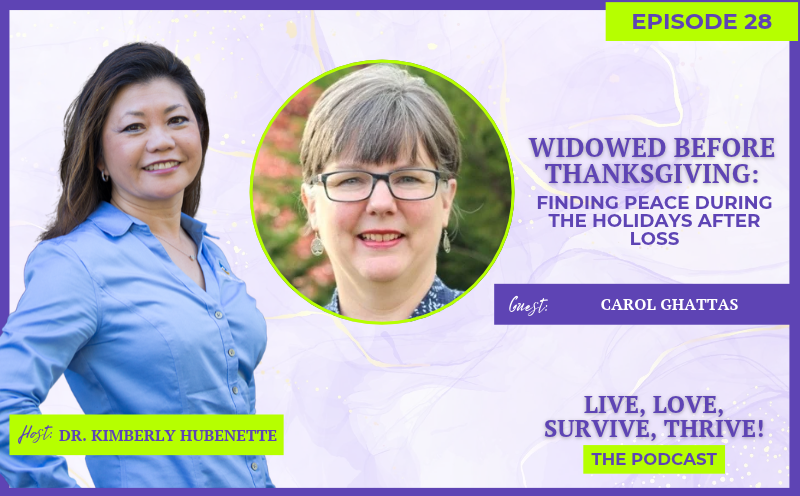
“Grief is not where we stay. It’s a part of what our life experience is, but it doesn’t define us. We move, and we become because we’ve learned and grown through the process.”
—Carol Ghattas
Grief during the holidays hits differently when traditions and family gatherings shift. A widow of 11 years shares honest, faith-rooted tools for finding peace.
Grief During the Holidays: One Widow’s Honest Story
Grief during the holidays rarely announces itself politely. For many people, the season that’s supposed to feel warm instead feels heavy, disorienting, or lonely — especially when a major loss happened around this exact time of year.
Carol Ghattas knows this firsthand. The day before Thanksgiving, her husband of 25 years died suddenly of a heart attack while she was at work. Within the following year, she also lost her mother, father, and sister-in-law. Three losses, stacked closely together, during a season built around family gathering.
Staying Busy Isn’t the Same as Healing
In the early days, Ghattas found that returning to work gave her structure and forward motion. But roughly three years later, she found herself breaking down in tears with no clear trigger. She hadn’t actually processed her father’s death — she had simply stayed too busy to feel it. That delayed grief is common, and it’s a reminder that “functioning” and “healing” aren’t always the same thing.
Holiday Traditions Can Change Without Losing Meaning
One of the most practical insights from this conversation is permission: permission to scale back decorations, permission to spend a holiday alone, or permission to celebrate on a completely different date. Ghattas and her family have celebrated Christmas in January. There’s no rulebook that says grief has to look a certain way in December.
Small Moments Carry Real Comfort
Ghattas also describes finding unexpected comfort in ordinary details — birds bathing in a puddle outside her kitchen window became, for her, a quiet reminder of provision and care. That idea shaped her Advent devotional, “When You Don’t Feel Like Celebrating,” which explores comfort through the small, overlooked images found throughout the book of Isaiah.
The Takeaway
Grief during the holidays doesn’t need to be hidden, rushed, or explained away. It can be acknowledged, worked through in small pieces, and met with flexibility rather than pressure.
Episode Highlights:
02:12 Meet Carol Ghattas: Losing Her Husband Before Thanksgiving
05:21 When Three Losses Hit in One Year
07:25 Why Isolation Is a Normal Grief Response
09:39 How Journaling Turned Into a Grief Blog
11:03 Grief, Faith, and Judgment on Social Media
18:04 Her Book: When You Don’t Feel Like Celebrating
26:13 Holiday Grief Tips: Flexibility Over Tradition
33:52 What “Live, Love, Survive, Thrive” Means to Carol
36:23 New Hobbies: Puzzles, Pickleball, and Healing
40:29 Final Words of Comfort for Grieving Listeners
Resources:
Books
📖 When You Don’t Feel Like Celebrating: A 31-Day Advent Devotional by Carol Ghattas
Get Kim’s Books
📖Grid: Once in a Lifetime You Get to Start Over by Dr. Kimberly Hubenette
📖Live, Love, Survive, Thrive! by Dr. Kimberly Hubenette
Thank you for listening.
To keep my podcast alive,
Wanna buy my dog Dakota a bone?
Quotes:
05:45 “Grief shows up. You never know when it’s going to happen, but it can affect how we look at the holidays and how we look at life.” —Carol Ghattas
09:06 “We all tend to isolate ourselves in grief. You can have lots of friends and family, and yet you say no more than you say yes, and that’s just a natural response to grief. But we cannot just ignore people. We need people in our lives during those times of loss.” —Carol Ghattas
19:08 “It is in the little things that sometimes God speaks the loudest to us in our grief.” —Carol Ghattas
22:10“Everybody has two things in common: we’re born, and then we pass away; it’s the journey that’s different in between.” —Dr. Kimberly Hubenette
26:59 “Everybody has to find what they can say yes to and what they can say no to, because sometimes, those family situations don’t just trigger us; they trigger other people. That doesn’t mean we shouldn’t be together. I think we do need to be together and to remember well the people that have left.” —Carol Ghattas
32:48 “You’re continuing to live after grief. We don’t want to stop. Life continues…Love others, but also take love and accept love from others, and that’s what helped me a great deal during my grief journey.” —Carol Ghattas
34:49 “Grief is not where we stay. It’s a part of what our life experience is, but it doesn’t define us. We move, and we become because we’ve learned and grown through the process.” —Carol Ghattas
39:00 “If you are struggling with grief, remember that there is a God who loves you, and He cares for you, and He sees you. I think being seen in our grief is very important.” —Carol Ghattas
Meet Carol:
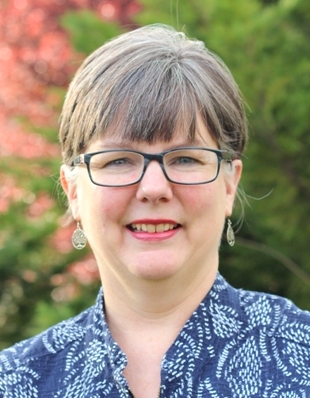
With over thirty years in missions, Carol Ghattas writes and speaks from experience. Her cross-cultural ministry is not confined to one region, country, or people group. Ghattas has worked among Laotians, West Africans, and Arabs. Carol co-authored with her late husband, Raouf, A Christian Guide to the Qur’an: Building Bridges in Muslim Evangelism. She has written four novels under the pen name Um Daoud and A Life Surrendered: Raouf W. Ghattas, a book about her husband’s life and work. When Doors Close: Changing Course in Missions Without Losing Your Way, Not in Kansas Anymore: Finding Home in Cross-Cultural Service, and When Serving Gets Tough were written specifically for cross-cultural workers. Her two latest works, When You Don’t Feel Like Celebrating: A 31-Day Advent Devotional and Archived by Death, a cozy mystery, reveal the wide range of her writing. Ghattas has contributed to numerous works on missions and Islam, is a contract writer for Missions Mosaic magazine, and is an active blogger.
Transcript:
Dr. Kimberly Hubenette: Hi, everybody. This is Dr. Kimberly Hubenette of Live, Love, Survive, Thrive, welcoming our guest today. Her name is Carol Ghattas, and you know, since this is a holiday type of a season coming up, there’s a lot of stress involved in this. Sometimes people don’t want to go get asked to things. Sometimes they think that they’re being asked just to be feeling sorry for themselves or something like that, and you know what? I don’t know if that’s true or not, but I know that friends and family really want us to be part of their lives still, and I know sometimes for me, when my husband passed away, I felt disconnected for a long time, and then slowly but surely it got better. And you know, as life goes on, it’s been eight years since my husband Mark passed away. I kind of got more distant from his family, but I wish I would have stayed more close in a way. But sometimes they don’t feel comfortable either with being close to me because maybe I trigger a response that, you know, I don’t know. Anyway, this is going to be interesting interview with Carol that will shed light upon this, and she’s written a book about it, but tell us, Carol, and welcome, Carol, and let’s talk about your losses and tell us about your experiences.
Carol Ghattas: Well, thank you. It’s so good to be with you, and I am from Tennessee, and I have been a widow now for almost 11 years. It will be 11 in November. My husband and I were married for 25 years, and I always knew there was a possibility of my being an early widow. He was 18 years older than I was, so there was a age gap between us, and so that kind of always hung over in the relationship. But we have 25 wonderful years together and had two sons during that time and had a wonderful life in ministry and and life together. And then we were in the states and we had come back from service overseas in ministry, and the day before Thanksgiving, my sons had come home from college. They were both in college at that time. We had enjoyed a wonderful meal at home, and I went to work the next morning. My husband and I spoke that morning and talked, and I went on to work. And I called him later and didn’t hear anything from him. So I finally woke up, called my son, my oldest, and woke him up. And I said, “Go find your dad. I don’t know where he is. And he found him out in the backyard. He’d been working, and he just died of a massive heart attack. And so we lost him very quickly, and it was sudden. He had had an episode a year prior, so there was something there. But he was in good health, still running, still doing well. But it was still a very sudden loss for us, and so that was the day before Thanksgiving. So lots of things related to the holidays for me, but also just a reminder that, you know, grief shows up. You never know when it’s going to happen, but it can affect how we look at the holidays and how we look at life.
Dr. Kimberly Hubenette: And you were somewhere else, is that right?
Carol Ghattas: Well, we had been living in overseas in ministry, but we had come back to the United States a few years prior to this, so we were retiring, and I was working for the time being but he had retired full time from ministry. So that day, though, you were somewhere else. Yes, I was at the library working. Yes. Oh, jeez. Yeah. So my sons found him and called the ambulance, yeah, which is hard, which was very hard, you know, to know that your children go through something, and you don’t know how, you know, working how to process that with them. So, and then we had his funeral on Sunday, and they went back to school the next day because they were having finals coming up, so all that was very difficult for them and for me as well.
Dr. Kimberly Hubenette: Well, you describe you know that is the most devastating loss, but you also describe two other losses.
Carol Ghattas: Yes, my mother passed away many years earlier, about 20 years prior to that, on New Year’s Day, which is also again holidays are always weird for me because of that. And then after my husband passed away, six months after that, my father passed away, and then my brother, his wife passed away the following February. So we had three big losses right there together, all at the same time.
Dr. Kimberly Hubenette:
You know, it’s really interesting that you say three big losses all at the same time. And some people say, “Oh, it’s a coincidence, but things happen in three.” I don’t know about if really things happen in three, but it’s interesting to hear that three things happened to you.
Carol Ghattas: I just think that we experience loss often. I mean, when my mother passed away, there wasn’t a three in that one, you know. So I think loss comes and goes. It’s part of life. This just happened to happen at the same time, and I think also for my brother and me both to experience loss within a short period of time, we were able to encourage and pour into each other and talk to each other. And we’ve actually now, after 10 years for almost both of us, we’re writing a book together about grief that will come out soon, but yeah, just that processing together has helped us work through things that maybe I wouldn’t have been able to work through without him having also experienced loss.
Dr. Kimberly Hubenette: Well, you’re lucky you have a lot of family around you and your ministry. You know, sometimes people feel all alone, and they don’t have a big family, or their family’s far away, and maybe their spouse or their child or whoever passed away was the only person that was closest to them. Can you speak upon that?
Carol Ghattas: Well, I do think that whether you have a family with you or friends close by or not, we all tend to isolate ourselves in grief. You know, you can have lots of friends and family, and yet you say no more than you say yes, and that’s just a natural response to grief, I believe. I did the same thing. You kind of pull back from people, but what helped me, and I think what does help other people as well, is I was able to continue working, and that made me get up. It made me get out of bed. It gave me, you know, eight hours of the day where I wasn’t totally just thinking about my loss, and I think that is helpful for people that if they have something they can pour into for a period, especially in those early days, to help them to keep moving forward. I think that’s important, and also we cannot, you know, just ignore people. We need people in our lives during those times of loss, and I was so grateful that some people would do things that I wasn’t necessarily close to earlier, you know, before that, but because of my loss, they would send a card or they would reach out, and that means a lot, even if you’re not actively seeking it, the Lord is so good has been in my life to really bring people to me to help me when I needed it.
Dr. Kimberly Hubenette: So, would you say your mission in life changed after the loss of your husband, or are you still doing the same path that you were doing together?
Carol Ghattas: Yes and no. I still very much focus on what we did in ministry and missions. I’m a writer, so I love to write, and I feel like that much of my role in these years since Rolf has gone is to pour into others related to mission life. But I also, as far as grief has gone, I began. You know, I would post some things on Facebook, and then it moved into a blog where I spoke about grief because I was journaling. I was two people gave me journals. My sister and my boss both gave me a journal during that time, and I used those to write, you know, down what was going on in my mind and what I was thinking, and that helped me then. As I began to also just, people were saying, “Oh, you know, your blog is is very helpful for me. So I thought, okay, this is a way God can use me to pour into others, to help them see how He helped me during my journey, and then I can write it to others. And so, yes, in some ways it has redirected in different ways, but it’s all about pouring into others for me.
Dr. Kimberly Hubenette: Yeah, so I have a thought about that, and you know, when my husband passed away, everything was so fresh and new, and I was, you know, sometimes emotions that you have change from day to day, and you know you’re in ministry, so and you still do social media. There’s a place for social media and ministry as well. And from what I see, sometimes on these platforms, people get into these rants. I would say, does that affect you and your way that you minister to people if they say that you know, oh, maybe you’re too happy one day, or why are you sad, or you know, grieving should be like sadness. What do you feel about the emotional support of others on a platform like that.
Carol Ghattas: Well, I do think that my experience is my experience, and your experience is yours. And I try very hard to make sure that people know that we’re all on a different path in this grief walk. Grief affects people in completely unique and different ways. So, one, I can’t judge a person based on what they’re going through because I don’t know what their life was like before the grief hit. And a lot of it for me, I’m not much of a ranter because I think a lot for me is my relationship with God, and that’s what I really try to point people to is that, you know, I find my peace and my comfort in the Lord and in Scripture. So people are all over the place when it comes to grief because of their spiritual background, because of their faith or lack thereof, how long they’ve been grieving or not. So I just try to be a listener when it comes to things like that, and not to react to someone else’s emotion, and I don’t let it get to me if someone reacts to what I’m expressing as well.
Dr. Kimberly Hubenette: Yeah, that’s a good thing. You know, again, when my husband was in hospice, and you know, at first because he had a double lung transplant that lasted 21 years, and at that point he was pretty much atheist, saying, “Why would God do this to me and give me bad lungs and have me go through all this?” But one thing that happened was that he took the Lord into his life at the last two weeks of being here on Earth. I was so proud of him because he accepted Jesus Christ into his life. Things changed for him, and he was at peace for the past, you know, the last two weeks is that common for somebody to do that? But I really think that he wanted to even prior, he just didn’t know how, and at that point he had gone through so much suffering before that he just felt like this is the way. And even after he passed, we did a ceremony that, you know, somebody was him like positioned as him, and they did the ceremony of, you know, after his death, which is a I’m not exactly sure if it’s only for that one faith, but our neighbors are part of a community that they do that. So, anyway, to make a long story short, he did accept God into his life two weeks before, and I don’t think it was from being scared of going to heaven or to hell. I just think that he understood at the end of his life that this was what he needed.
Carol Ghattas: I think that for people that you know are suffering, that have pain, illness prior to death, a lot of it is like you said he went through that time of anger, being angry, you know how could a loving God allow me to go through this? And so, a lot of it is just they they turn from God or are just mad because of that. And then sometimes it’s control. You know, we don’t want to give our lives to the Lord and to Christ because that means I’m not in control of my life, and to do that means I want the Lord to be in control of my life, and ultimately He is in control of our destiny eternally. So I’m so glad that He did give His life to the Lord and knew that peace, because in the end, that’s what it’s all about: is having that peace that this is not the end, that there is an eternal life with Christ after death, and that helps those then that are mourning when they know that their loved one has peace and has had a relationship with Christ. Then they have more peace and comfort after their loss, and that’s what makes all the difference for me. Because I have seen people that have gone, that have died, and I’ve seen their families mourn without Christ, and it’s it’s so hard. It’s very hard. So He makes all the difference, really, for us, for eternity here on earth, and for eternity, so that gives much comfort. But it’s it’s very common for people to to hold off and to not want you know anything to do with God because suffering is hard, but suffering is a part of our fallen world and what we’re living with.
Dr. Kimberly Hubenette: Can you tell us more about a couple of the tools in your book? And, you know, you did write a book. You wrote several books, but what is the one that you want to share with us today about the holidays?
Carol Ghattas: So I did write a book. It’s called “When You Don’t Feel Like Celebrating,” and it’s about it’s just a 31 day Advent devotional that goes through the prophecies of Isaiah related to, and it relates then how we look to the Lord for comfort during our grief journey. What I found in this and this interesting journey through the prophecies of Isaiah and through this book, was it is in the little things that sometimes God speaks the loudest to us in our grief. I remember one day looking out the window of my kitchen, and there was a puddle on the pavement, and there were birds playing and drinking out of this puddle. They were having a big old time having a bath, and it was a very simple, you know, thing that you would not normally look at. But I thought, wow, is that not God’s wonderful provision for the birds to provide even a puddle that they can find enjoyment in and refreshment in, and that’s what I found all throughout the book of Isaiah. It was simple little things, like a stump, a child, a branch-all these prophecies begin with with the letter A, a branch, a child, a stump. Simple things that maybe you wouldn’t notice, but then God used them to do great things and to bring His will about, and so that’s what comforted me, and I pray that it comforts others.
Dr. Kimberly Hubenette: Now, does somebody have to be in faith, or do they have to have accepted the Lord and be in faith to read your book?
Carol Ghattas: Absolutely not. No, no. Anybody can read it. Anybody can read it. But I think that’s what’s so amazing about God’s word is that it does speak to you wherever you are in your faith journey. And the thing about the prophecies of Isaiah and the words that God spoke through him, where they were spoken to a very rebellious people. Israel at that time was rebelling and rejecting God completely. They were looking to idols, they were looking to other countries and kings to provide for them, and so he still spoke to them, and he still loved them, and that’s what I think anybody reading this will see: that it doesn’t matter where you stand with God, but it’s important to see what God is saying to you.
Dr. Kimberly Hubenette: And how can they reach you for that?
Carol Ghattas: So they can find the book, you know, online anywhere, or they can go to my website at life inexile.net, and they can find a list of my books and my book there, so they can find it there online.
Dr. Kimberly Hubenette: I have a question for you about you and your family. Back when you started, you wouldn’t say that it’s a grief journey just from your husband because your mom passed away and your sister-in-law passed away. I tell people everybody has things in common. Two things in common: we’re born and then we pass away, and then it’s the journey that’s different in between. But everybody suffers loss, and it’s how you cope with it, or how you deal with it, or are you saying that you have to call it coping, or are you learning from it?
Carol Ghattas: Oh yeah, I never call it coping. I don’t know that I’ve been a very good coper, but I do strive to learn, and I think that is something that I have learned because of my faith. I want to say, God, what are you teaching me in this struggle? Today is not a good day. Why is it a bad day? You know, why am I having so much trouble today more than yesterday, for me, about three years after my husband passed away and my dad, I was doing fairly well. I was working full time. I was working at the church that my husband and I had planted and pastored, and carrying a big load. And I found myself after three years just breaking out in tears for no reason, and I was like, “What is going on with me? Something is happening, and so I had to step back and say no to some things and say, “Okay, what is happening? And I realized I really because I kept myself so busy, I did not really grieve. I had not grieved the loss of my father, especially after my husband. It was just too much on top of things. So I do think it’s not coping as much. It’s just learning. Okay, where am I? And stopping. And sometimes you have to say no to some things in order to listen and to see what is going on, why are things changing in my attitude or emotions at that point,
Dr. Kimberly Hubenette: You’re a coach, sort of, right?
Carol Ghattas: I mentor some people, yes.
Dr. Kimberly Hubenette: And the way that you know when people contact you, they’re looking for direction, or are they just looking for your book or, you know, how do you help people that come and reach out to you?
Carol Ghattas: Well, I’m happy to answer any questions that they might have. So that’s always, you know, a given. I’m very open for people asking questions and seeking information. So yes, that’s pretty much it. Just really emailing, encouraging them, maybe pointing them to a specific book if they have a question about ministry or about grief or what it might ever might be.
Dr. Kimberly Hubenette: And you said that your whole life has been with ministry, and so, are you still traveling?
Carol Ghattas: No, I’m not traveling now. I really, after I retired from the library in 2023 after 12 years, I couldn’t believe I worked that long. But I really stepped back so I could focus on writing and any speaking opportunities I might have, but that’s where I believe right now that my ministry is in writing, providing resources for others to help them on their journey. So I think that’s where the Lord uses me the most: just helping others, whether it’s in ministry or in the grief journey, to walk that road with integrity.
Dr. Kimberly Hubenette: So, on the holiday season is a very, very pressured situation for folks. What are a few tips that you can give them to help them get through this cycle of time?
Carol Ghattas: It’s really been interesting since my brother and I have been talking about our grief journeys a lot. For him, with younger, he had younger children after his wife passed, and it was very important for him to maintain kind of the holiday season. You know, continue to decorate for a few years, just to help his children continue to enjoy that time; he didn’t want to make it so bland that everybody was depressed. For me, it’s really been different because my sons are out of the house, and we didn’t have a whole lot of tradition as far as around holidays, and now my sons are married, so they spend time with their in-laws. So, for me personally, I keep it very minimal what I decorate with. For instance, I just have a tree up and and some a nativity scene. But I think everybody has to find what they can say yes to and what they can say no to, because sometimes, like you said, those family situations don’t just trigger us; they trigger the other people. That doesn’t mean we shouldn’t be together. I think we do need to be together and to remember well the people that have left. But also, there are times I’ve spent, you know, Christmas alone now, and it’s it’s a weird feeling the first time it was very hard, but now I’ve kind of gotten used to that unknown of whether I’ll have you know the holiday with anybody, or maybe my children and I celebrated in January this last year. So I’m try to be flexible and not allow it to make me sadder than it should be because that’s a reality of life. If Raoul and I, you know, were empty nesters, it would still look the same. You know, we may not have Christmas with our children, so I try not to weigh it like that, but try to be flexible about what needs to be done.
Dr. Kimberly Hubenette: And you know that’s true with me too. I don’t have kids, so what I’ve been doing now is I’ve been hosting foreign exchange students. So this is the third year that I’ve had a foreign exchange student. So far, I’ve hosted somebody from France, Italy, and Spain, and this year my foreign exchange student is from France. So now I get to learn things about the French culture, and then you know last year I went to go visit my Spain girl, and I’m gonna go visit my Italy girl hopefully soon. But, you know, it’s you know sharing, being a mentor for people really helps me, and sharing my life with somebody else and opening up my world to somebody else, you know.
Carol Ghattas: Yeah, I love that. That’s such a good example of how we can pour into others, and that helps you also so much in the holiday season because you’ve got someone else to love on and to encourage during that time because they’re lonely, they’re lonely. They’re away from home and stuff. I think that’s a great example. A lot of people volunteer during the holidays, you know, whether they go and work with a homeless shelter or something during the holidays. You know, pouring into others is really helpful for us.
Dr. Kimberly Hubenette: Well, so folks, just the listeners and everybody that’s listening to our podcast show today, there are few things that we can do during the holidays, and there are a few things that we can do during the rest of the years too. Like examples are, you know. Volunteering for things, being open to doing things, but different ways. You know, maybe celebrating a different day, like Carol was saying, being open to celebrating Christmas in January, or having Thanksgiving on Wednesday instead of a Thursday, or those kind of things, and really, hopefully, you will say yes to invite, and hopefully you won’t feel like left out, or you could even make your own celebration and gathering. Maybe you could invite a couple people over, or those kind of things. I mean, there’s no right or wrong. You could also go to a candlelight ceremony, or think about this also, there’s so many things that you could do on the internet, like they have Zoom types of, you know, groups that you could jump on. There are platforms such as like Evite. There are platforms such as Eventbrite, you know, that are sometimes free. Those resources are great. Sometimes, maybe even if somebody invites you to church, go to church. Even if you’re not really religious, hey, I go to Christmas. I go to Easter. I go to you know just whenever I go to a new town, like when I went to Spain. I went to like three or four different cathedrals just to go in, you know, and light a candle and just be present. I mean, it’s so invigorating to see past history as well. As long as you’re open to being not alone, there are so many things that you could do to be present in this world, and I encourage you, and I’m sure Carol encourages you too, to do those kind of things. You know, Carol, so back on the subject with you and your books and so forth. How does Live, Love, Survive, Thrive, my podcast name invoke emotion into your life. Tell us how and why you decided to come onto my show.
Carol Ghattas: Well, I love that tagline. I love the way that it’s all of it is positive. You’re continuing to live after grief. We don’t want to stop. Life continues, and loving is all that pouring out into others. That means I’m going to look outside myself and love others, but also take love and accept love from others, and that’s what helped me a great deal during my grief journey that people had poured into me and loved on me in very special ways, and to honor that, and to encourage that, and to thank them for loving you and helping you during, especially those early days and years. And then surviving is a reminder that we do get through this. This is a journey that we become. We are able to press on. We have a survival tendency as humans to press on, and to get through things doesn’t mean we forget our loved one, but the grief process is something that you can get through and survive. And then that last word, thrive, is just so powerful because that is our goal. I want to thrive again, and just a reminder that you can thrive, and it’s okay to be joyful, and it’s okay to enjoy the holidays, and not to feel guilty that your loved one has passed and you’re supposed to feel sad. Yes, you miss them, but there’s a point where you are able to enjoy them and to really thrive during those holiday seasons and those momentous, you know, birthdays, whatever it might look like. You can continue to thrive and make a difference and pour then into others and grow in your own life and work, and so I love it. It’s just all very positive, and a reminder that grief is not where we stay. It’s a part of what our life experience is, but it doesn’t define us. We move and we become because we’ve learned and grown through the process.
Dr. Kimberly Hubenette: Do you have a hobby that you’ve done or is new to you since your husband passed away?
Carol Ghattas: I think the the biggest hobby I have these last few years one as I do puzzles. I have always enjoyed jigsaw puzzles and I work them during the holidays usually, but now I bought myself a puzzle table, and I love to work a puzzle in the early evening. It just kind of works my mind in a different way, and I enjoy that. It makes me look for things. It’s a good activity for me. And then lately, I have also started because my children were getting onto me about using weights, and so I go to a weight class now, and also started playing pickleball. So these are new things for me because, as an introvert, you know, I don’t get out with, you know, strange groups very often, but this is a new thing for me, and I love it. It’s helped me, you know, physically and emotionally. I think it’s been very good, so I’ve enjoyed it. It’s been fun.
Dr. Kimberly Hubenette: That’s great. And you know, I always ask my listeners, and I always ask my interviewers, to think about what is a very good food, or your favorite food, or, you know, a recipe that you love. Can you share it with our audience?
Carol Ghattas: Sure. Well, I think for me, one of my favorite foods. I’ve always loved barbecue ribs, and that’s kind of my, you know, comfort food. I don’t eat them very often now, but they sure are good. That’s kind of my a favorite for me. But one of my favorite recipes that I enjoy cooking for my boys is one I learned in West Africa. It’s sauce Darcey. It’s a peanut sauce, and you make chicken or beef and cook it with onions and garlic, and you add some tomatoes in there, and then you add peanut butter. Stir peanut butter into it at the end, and use it. Eat it over rice, and then you can do like a curry. You add hot sauce; it’s a spicy meal, and then you can add like curry toppings, like coconut or apple or whatever you might want to put on top. And that’s kind of one of our go-to meals that I cook for my boys.
Dr. Kimberly Hubenette: That sounds amazing. Now, do you have grandchildren yet?
Carol Ghattas: I do. I have three now, and I have two more coming next month, both daughter in laws are pregnant.
Dr. Kimberly Hubenette: Cycle of life, right?
Carol Ghattas: It is. It is. Yeah, it is. They’re a blessing.
Dr. Kimberly Hubenette: I wrote a book about the cycle of life, but it wasn’t, you know, exactly like that. It was just a cycle of life with, you know, animals and what happened after a grief journey experience of a person that lost their loved one in a wildfire, and they went out to the wilderness and they survived on the land, and they had a chicken to talk to, and a bird to talk to, and a dog to talk to, and, you know, wild squirrel to talk to. But it was like a cycle of life. So it’s been really, really a pleasure to talk to you today. Is there any other final thoughts that you want to share with our listeners?
Carol Ghattas: Well, I think I’ve really enjoyed talking with you as well, Kimberly, and it’s been so good. I think finally, the only thought I would leave is that if you’re struggling with grief, remember that there is a God who loves you, and He cares for you, and He sees you. I think being seen in our grief is very important to know that He does see you, and He loves you, and cares for you. And I pray that you can find peace and comfort as you walk through these days of grief.
Dr. Kimberly Hubenette: Thank you. That was wonderful and beautiful. Thank you. I wanted to say thank you, Carol, to share her day with us today, and hopefully, if you’re listening and you have some struggles with the holidays or just any season, just give us a call. I’m on DM. You could DM me on Facebook or Instagram, or Carol has her website, and we’re gonna post that as well, and listen and look for. Book as well. Okay, thank you all for listening, and see you next time on Live, Love, Survive, Thrive. Make it a great day. Bye.