“Life is life, and sometimes it sucks, and we can figure things out together with people who care about us.”
—Randi-Lee Bowslaugh
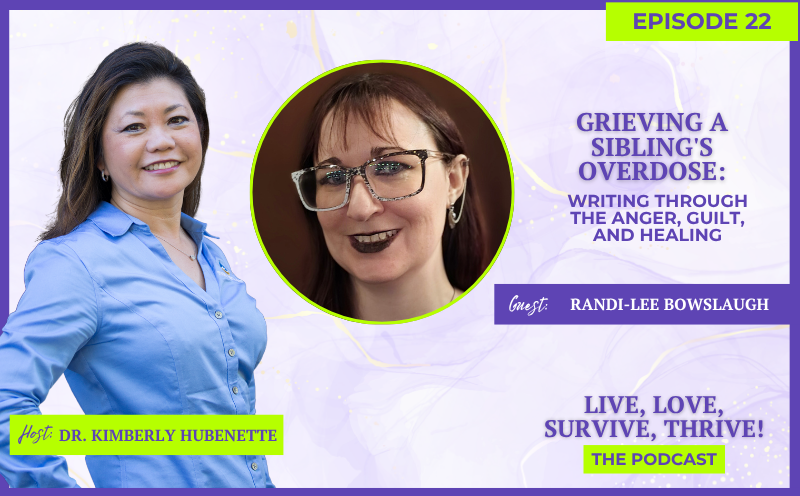
Grieving a sibling’s overdose taught Randi-Lee Bowslaugh that healing means anger, guilt, and hope together, and how writing became her path to purpose.
Grieving a Sibling’s Overdose: Finding Purpose Again
Grieving a sibling’s overdose isn’t like other kinds of loss. There’s sadness, yes — but there’s also anger, guilt, and a complicated kind of dread that builds for years before the day it actually happens. Author and mental health advocate Randi-Lee Bowslaugh knows this firsthand. Her brother died of a drug overdose in 2020, and the way she processed it reshaped her work, her writing, and her sense of purpose.
The Call That Changed Everything
Randi-Lee was standing in line at a pool store on an ordinary sunny day when she got the news. She had to be the one to tell her mother — a moment she never expected to carry. Even though her brother’s addiction had made his death feel inevitable for years, the actual day still landed as a shock.
Grief Comes With Anger and Guilt Too
When addiction is part of the story, grief gets more complicated. Randi-Lee describes the hope that comes with loving someone struggling with substance use — the belief that they’ll choose sobriety one day — and how that hope dies alongside them. Anger and guilt followed close behind the sadness, along with the hardest part: clearing out his belongings and realizing his entire life fit into a single Bible and one drawing.
Turning Pain Into a Book, and Now a Movie
Rather than sit with the grief privately, Randi-Lee wrote “Goodbye Too Soon” and published it exactly one year after her brother’s death. The book has since been re-released with deeper reflections from years of therapy, and it’s now being adapted into an independent film, with Randi-Lee playing herself.
Her story doesn’t offer easy answers, but it does offer something rarer: an honest look at what grieving addiction loss actually feels like, and proof that a painful story can still become something useful to someone else.
To hear Randi-Lee’s full conversation with Dr. Kimberly Hubenette, listen to the episode below: https://tinyurl.com/Live-Love-Survive-Thrive
Episode Highlights:
04:25 Facing The Day She Learned Her Brother Died
08:09 Telling Her Mom: A Moment She Never Expected
11:30 The Anger and Guilt Unique to Addiction Grief
13:40 Writing “Goodbye Too Soon” on His Death Anniversary
21:14 Turning Pain Into Purpose Through Her Podcast
23:12 Coping Tools: Therapy, Yoga, and Journaling
25:46 Diagnosed with Autism Later in Life
31:14 Adapting Her Brother’s Story Into a Movie
38:07 How to Support the Film and Follow Her Journey
Resources:
Books
Get Randi-Lee’s Books:
📖 Goodbye Too Soon: A Family’s Loss by Drug Overdose
📖 A Mother’s Truth: Raising a Unique Child
Get Kim’s Books
📖Grid: Once in a Lifetime You Get to Start Over by Dr. Kimberly Hubenette
📖Live, Love, Survive, Thrive! by Dr. Kimberly Hubenette
Thank you for listening.
To keep my podcast alive,
Wanna buy my dog Dakota a bone?
Quotes:
10:22 “It never really hits you until it happens.” –Dr. Kimberly Hubenette
11:05 “Sometimes, there are people who feel embarrassed to keep on crying and apologizing. But there’s no apology. If that’s the way you’re going to express yourself, that’s the way you’re going to express yourself.” —Dr. Kimberly Hubenette
11:56 “When somebody is in an addictive lifestyle, when you love them, you have a hope that they’re going to choose something different… And once they’re dead, that hope is gone. And there’s some anger there, and then you mix in some guilt as well.” —Randi-Lee Bowslaugh
22:49 “There are two things in life: we’re born and we die, and in between is our own personal journey.” —Dr. Kimberly Hubenette
25:13 “Life is life, and sometimes it sucks, and we can figure things out together with people who care about us.” —Randi-Lee Bowslaugh
32:52 “My brother’s death, going and cleaning out his room and seeing lots and lots of needles everywhere, garbage… And there was a Bible that my aunt had given him, and one picture that he had drawn— and that hit hard. That was very difficult to be part of.” —Randi-Lee Bowslaugh
Meet Randi:
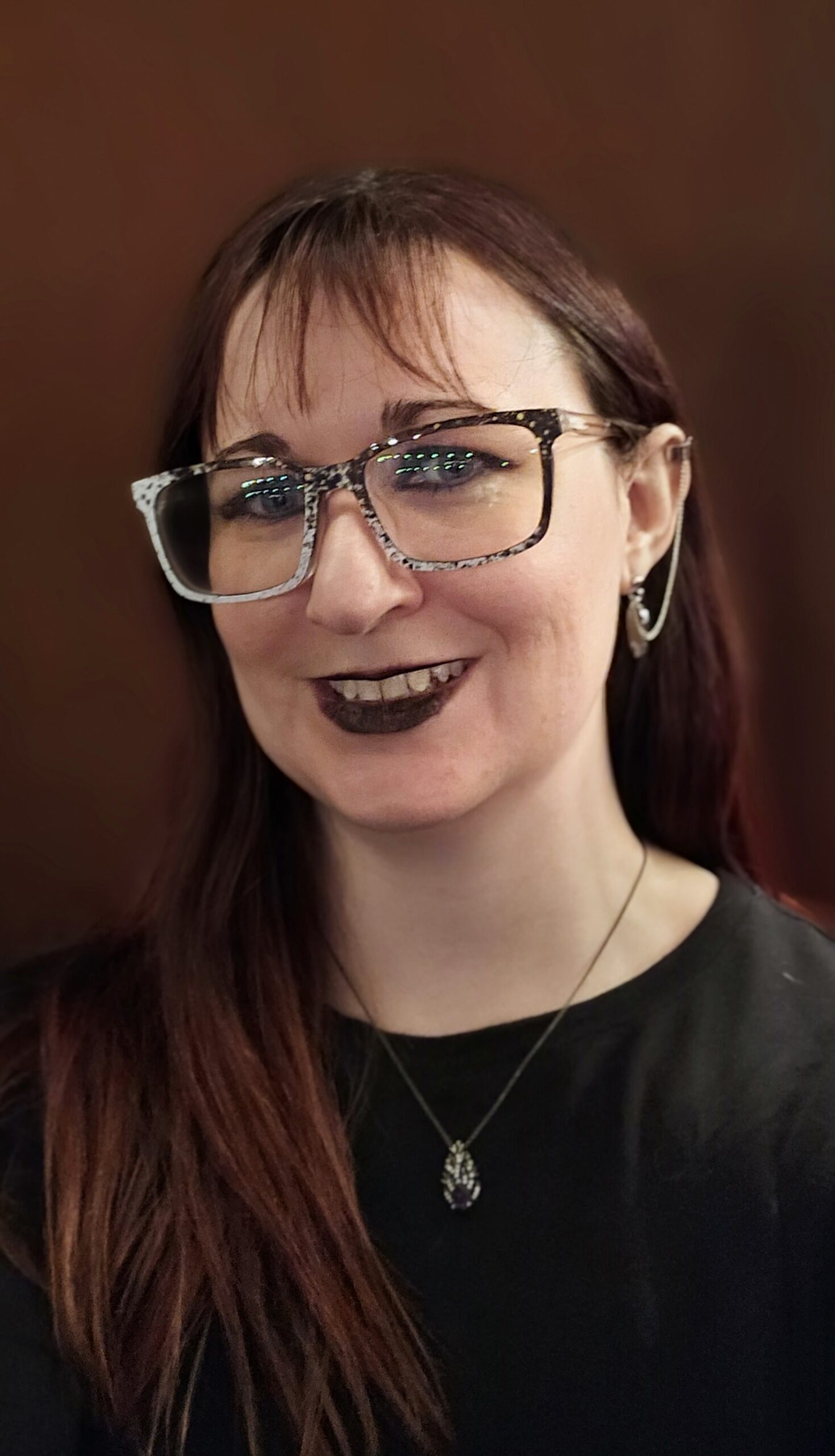
Randi-Lee is an outspoken advocate for mental health, a YouTube host of the Write or Die Show, and a public speaker. She is the mother of two grown children, a grandmother, and a wife. She has dealt with depression for more than half her life and was diagnosed late in life with Autism and CPTSD. She wants others to have the tools they need to keep going.
Randi-Lee graduated from Niagara College for Community and Justice Services and completed a placement at a Drug and Alcohol Recovery House. She worked in social services for six years before becoming an author and focusing on speaking out.
She has represented Team Canada twice in kickboxing, earning a silver medal in 2016. She took a year’s break after having cancer. She returned as a kickboxing coach, personal trainer, and yoga instructor until chronic pain made it difficult. She continues to fight to regain her life.
Her motto is never to let “too tired keep her down”, and she wants others to know they are not alone.
Transcript:
Dr. Kimberly Hubenette: Hey, I’m all! Welcome again to Live, Love, Survive, Thrive. I’m Dr. Kimberly Hubenette, and we are talking today to a gal that I just met, and we talked a little bit about this. Now, you know, everybody has a story, and everybody that we interview here has a correlation to living, loving, surviving, thriving, as well as how does that correlate to a death of a loved one or a death of a pet or something like that. So today I am so blessed that I found and met Randi. She is a really interesting gal that I just met, and I’m going to share with you a little bit about what we talked about. So she is actually working on a movie theme, and basically she says she’s an outspoken advocate for mental health, a YouTube host of Write or Die show, and a public speaker. She’s a mother of two, and a grandmother and a wife. She has dealt with depression for more than half of her life, and she was diagnosed late in life with autism, CPTSD, and she could tell you more about that. And she wants to have the tools and the needs to help people to move on. She graduated from Niagara College of Community and Justice Services and completed a placement at a drug and alcohol recovery house. So she’s also worked in social services, and she’s been an author. Oh, the other thing is interesting. She represented the Canadian team for kickboxing twice, and earned a silver medal in 2016. Now that’s kind of cool. So you’ve done all of this stuff, yoga expert, you know, chronic pain, personal coach, and you’re also an author and a podcaster too. My gosh, there’s so many things. Is there anything Randi can’t do?
Randi-Lee Bowslaugh: Catch a ball. Last time I played baseball, I caught it with my face.
Dr. Kimberly Hubenette: Oh my gosh, this is so exciting to hear. I mean, you know, Randi, I know I brushed a few things, but you know, tell me how it was that you were attracted to being on this podcast because I know there’s some personal things too.
Randi-Lee Bowslaugh: Yeah, well, I love the live, love, survive, thrive because I mean it sums up my life. I always like to say life is a roller coaster, and that’s basically what live, love, survive, thrive. It feels like stages of okay, I’m living, and sometimes living means really difficult times. I mean, you’ve mentioned a few things in my bio there with depression and being diagnosed with autism, but I also had to live through cancer, and I had to live through my kid having a lot of meltdowns because she was diagnosed with autism long before I was as a kid. And my brother, he died by drug overdose. So a lot of oh my goodnesses in my life. But you learn to love through it, survive through it, and then eventually feel like you get to the thriving side of things. So I feel like your terms there all sum up a roller coaster life perfectly.
Dr. Kimberly Hubenette: You know, when did your brother pass away from the drug overdose?
Randi-Lee Bowslaugh: Five years ago.
Dr. Kimberly Hubenette: Okay, so was he an adult, or
Randi-Lee Bowslaugh: Yes, yeah. So he would have been. I want to say it was he was 37.
Dr. Kimberly Hubenette: How did that make you feel? Were you expecting it, or was it just like all of a sudden that happened?
Randi-Lee Bowslaugh: So yes and no, right? So he was doing drugs since he was a teenager. He was four years older than me, so I can remember days that I would see him doing things at the time, and I’m like, “Well, I don’t know what you’re doing.” He was doing drugs. I just didn’t know what it was because I was I was so much younger than him, and pretty sheltered in comparison. And as he, as we grew up together, I mean, he was in and out of jail. He was doing all the bad things he could to basically get the drugs. So it wasn’t unexpected because even every time there was a newspaper article or something where they’d find a dead body. I was like, “Oh, I wonder if that’s Brandon”, because the living lifestyle that he was in, it was pretty obvious it was going to end this way. However, the day it actually happened, that was a shock. So it was during COVID, and I was just standing in line at the pool store. So we had to actually stand outside in order to have six feet apart, and I’m just standing there-a bright, sunny, gorgeous, beautiful day. I just stopped real quick to get the pool water checked because we just opened it, and then I was heading off to one of my personal training clients to her house to do some work, and I get this this text. Well, first I get a phone call from my aunt saying, I saw a Facebook message saying Brandon’s dead. I’m like, what? What are you talking about? And there had been rumors before that went on on Facebook saying, oh, this person said that, and they’re not. They’re just people saying things. So I was like, okay, let me let me see. And then I look at my phone again, and I have this message from his ex girlfriend who he was still friends with, and she was the one actually that was like, “yeah, he is, he’s gone. I’m bawling my eyes out.” It’s like, oh my gosh! So I call her. She tells me everything that happened. She gives me the phone number to talk to the person that was actually on scene because it had just happened. Like the police were there currently. So I call them. The police are so very businesslike. They were just like, “I’m sorry to let you know that your brother is dead. Okay, well, so then of course I start crying standing outside. I’m like, I’m crying. I text my client. I’m like, I can’t come. This is what happens. She’s like, Oh my gosh, of course. Like, don’t come. But it was coming back to your question. How did I feel? It was this complete mix of emotions because yes, I expected him to one day die by drug overdose, but in that moment, absolutely not.
Dr. Kimberly Hubenette: And what about your parents? Were they around, or were they already passed?
Randi-Lee Bowslaugh: So we have different dads, but his dad is out of the picture. I actually had never met him. That’s a whole other traumatic story for him probably led to some of the drug abuse, but my mom-it was so surreal because I was the one that had to tell her. So when I was talking to my brother’s ex, she was saying, you know, the police are trying to get a hold of your mom to tell her, but nobody can get a hold of her. It’s like, well, she’s at work. She doesn’t answer her phone when she’s at work. Like unless you call her directly on a work line, but nobody really knows what that is except me. And so I was like, I will. Yeah, of course I’ll tell her. So silly me. At the time, I’m thinking, okay, great. I’m going to be so proactive. I called her. I said, Mom, when you get home, don’t answer the phone. Don’t look at your phone. Put it away. Obviously, something like that, what I’ve never done before, put her in this kind of panic mode, which was not my intention. I just didn’t want her to hear it from somebody else. So I get home, and I walk in the door. She’s she’s doing dishes, and I just pat the stool beside me. I’m like, “Mom, mom, sit down, sit down, and I’m like trying not to cry. I’d kind of slightly composed myself. Sit down, and she goes, “No, because as soon as I sit down, you’re going to say something bad, but you need to sit. No, it felt like years had went by, and honestly, it was like three or four steps from the the sink to the stool, but it felt like eternity. As soon as her butt like hit the seat, I was like Brandon’s dead. That’s it. Just those two words. I couldn’t say anything else. I couldn’t explain what happened. Just that, and then we both started bawling. And then after a good crying session, then I explained everything that I knew, which wasn’t much, but it was more than she knew. And that was, yeah, also something I never expected to have to be the one to do.
Dr. Kimberly Hubenette: Right, because how do you know who is going to say it? You right? I think that when my husband passed away, it was kind of a chronic thing where I already knew, and he was already, you know, on hospice, and wasn’t eating and so forth. So we knew, like it was inevitable, but it never really hits you until it happens. Like no matter what, like if it’s chronic or if it’s just right now and you didn’t weren’t expecting it, there’s always this sense of like, ah, what do you do?of
Randi-Lee Bowslaugh: It was kind of empty. Okay, I know there’s stuff I need to do or things, people I need to tell, but like, kind of a lost feeling,
Dr. Kimberly Hubenette: Lost, lost. No matter what, and you know it’s okay to feel this way. I mean, we have to like just say like to people. Well, it’s normal. I mean, people think, “Oh my gosh! I mean, sometimes there’s people that feel like they’re embarrassed, but to keep on crying and crying and crying and say apologizing, but there’s no apology. I mean, if that’s the way you’re going to express yourself, that’s the way you’re going to express yourself, right?
Randi-Lee Bowslaugh: Exactly. Yeah, and you’re gonna I find, I know I did, and I think a lot of people experience the same thing. You express yourself in many different ways over the course of many different days, like with Brandon’s death, because it was again expected and yet unexpected. There was the obvious grief, the obvious sadness that encompasses losing someone, but there was also anger. There was definitely I was pissed off at him because, again, yes, I figured he would end that way, but there was there’s always a hope when somebody is in an addictive lifestyle. When you love them, you have a hope that they’re going to choose something different. That they’re going to wake up and say, “I decide to get sober today. I’ve realized I have a problem, like something, right? And once they’re dead, well, that hope is gone. And yeah, there’s some anger there, and then you mix in that some guilt as well. Could I have said something different. Should I have said something different? What if things didn’t go this way, right? And there’s all this what ifs. Ultimately, I mean, it’s their life, and yes, you can support them and love them, but it is a decision that they have to come to on their own. But there, you go through all of those cycles, especially like with my mom, and I had to listen to her go. Oh, well, was I an okay mom? Did I do this? And like she’s she’s going through our childhood. I’m like, I mean, I I don’t know what else to tell you. And I was expected. I’m the strong one in my family, so I was expected to make a lot of decisions. So I went with my mom to the funeral home, and they’re asking us questions, and I look at her, and she’s just like lost-that complete grief lostness. And I was like, “Yep, okay, we’ll do this, or “Yep, that sounds good. These flowers, sure, because she didn’t have a lot going on; like her mind was just gone. I couldn’t imagine the grief of losing a child. Very different, I suppose, in losing a sibling, and so it was you are going to experience every kind of emotion, and then when you feel a happy moment, it’s like, wait, but I lost somebody. Am I allowed to feel happy right now? And yes, you are. And then in the next second, you also feel sad again.
Dr. Kimberly Hubenette: So you know, being the sibling, what stages did you look like for you? What helped you move through it?
Randi-Lee Bowslaugh: So, writing the book “Goodbye Too Soon” was a big help, and therapy was a big one. And my husband-he listened to all of my nonsense, of course. And animals, animals are fantastic. Loving on them, but I would say the the biggest things were yeah writing the book. Goodbye too soon. I wrote it very shortly after his death and published it on the one year anniversary of his death. And it the purpose of the book was to show that people with addiction are people, and though we love them, they still might die, and we’re going to go through all of this grief stuff. So it’s a lot in there. Recently, my publicist suggested that I re-release the book with new content because of the movie, and so that just came back out last month, june 20 because it would have been his birthday, so that’s why I picked june 20. I dug way deeper because through that five years between the first book and the well four years really from the published day, but through that time I was able to go to therapy and learn a little bit more, do some introspection and all that stuff. So the book delves so deeper into helping people, coping strategies wise, and understanding some of that grief, like we talked about, you are going to have so many emotions. And going deeper into that for that book, which then helped me really write the script for the movie that will eventually come out.
Dr. Kimberly Hubenette: Wow, that’s amazing! You know, you are an inspiration because all the things that have happened to you, you know, just seems like everything is working out for you.
Randi-Lee Bowslaugh: A lot of therapy, lots of antidepressants, and from therapy, realizing who I am as a person and cutting out people that don’t support me. I realize that there was a lot of people in my life that I’m like, why was I friends with this person for so long? When really, when I look back, they were just kind of holding me down, not wanting to let me kind of choose my own path or whatever. You know how you support a friend. I look back and go, oh no, why? Why did it take me so long to realize? But I definitely I could not have done that without a lot of therapy and actually my husband. But I don’t want him to hear that I’m saying nice things about him.
Dr. Kimberly Hubenette: So was this your first book?
Randi-Lee Bowslaugh: No. So I published my first book in 2018, which was called Thoughts of a Wanderer, book of poetry that I wrote when I was super depressed as a teenager because it’s all about mental health. And then from there, I’ve written quite a few other books. I did one called A Mother’s Truth, which was about raising my kid with autism, embracing me about depression, and then I did some kids’ books because mental health is hard and we got to make it fun sometimes. So I have some kids’ books, Woofie the Dog, where my kid actually does the pictures for those. There’s two published Woofie books right now that she did the pictures. The third one’s written, and she’s taking forever to do the pictures. But it’s a nice little project together. And Neo’s Forever Home, Diamond the Cat. It’s a theme. I really like to do animals.
Dr. Kimberly Hubenette: I see. I love animals too. I’ve had three dogs in my adult life, and then in my childhood life, I had like a few cats, a few dogs, and you know, I’ve grown as a pet owner from not really knowing because my parents were not really that great with pets, and we would keep the dogs outside. I didn’t know any better. And then the little ones, you know, I had one little Chihuahua that they let inside, and then we had a bunch of feral cats that we were feeding and all this kind of stuff. But now, as an adult, my late husband was the one that taught me how to really love an animal as a family member. You know, and at first I was like, “Oh my God, this big dog’s going to be in my house.” Well, I’ve had, you know, a lab, a pit bull mix, and now I have another pit bull mix, and I just love them. You know, they’re like my family; they get to be everywhere with me, and obviously I train her, but I also have a dog psychologist that I take her to, so that I talk to her, and I, you know, I stretch her out and talk to her by with my hands and all this kind of interesting things. When my husband passed away in 2019, he had a dog named Roscoe. Roscoe was his dog, like every day, he’d be sitting by his side, and when my husband passed away, Roscoe was so depressed. That’s when I found the dog psychologist, and he kept looking at me, staring at me, and then I sat in Mark’s chair one day, and he was looking at me like, “What the hell are you doing, sitting in my that chair?” You know what I mean. And then I just knew I had to find something for him, and so I took him to the dog psychologist, and he got happier, but he never like really, you know, recovered. He died from a sad heart, a depressed heart
Randi-Lee Bowslaugh: It breaks it breaks my heart for animals. So we have two dogs. I was about to say three. So we um had Freddie. He was a black lab. He died in April, and oh my gosh, it’s just so heartbreaking. And so as I think about getting older, I’m like I don’t want to have a dog when I’m like 75 or whatever because when I die, I don’t want them to be sad because I know how sad I am when they die, and I can sort of understand it. And oh, so when it was Freddie’s time because you could tell, and oh my gosh, it’s so heartbreaking. But when it was, we did it at home, so we had the vets come to the house, and they did. They were the kindest people. Oh my goodness, it was so sweet. And in that way, after when it was all said and done, we let the other two dogs. So we have a shepherd husky, so nice big. He’s the puppy of the house, and then we have Daphne, who grew up with Freddie the whole time. They came from the same dog trainer because Freddie was actually my daughter’s service dog, and Daphne fell in love with Freddie when they were there, like they were just the best of friends. So we say Daphne was our freebie because nobody else wanted her. They kept returning her because she was so loud. Oh my gosh, all the time, and they have these tiny little claws and all the time. But she’s she’s a sweetheart. So we got her along with Freddie just because they were such close friends. So she’s 13 now. That’s that’s how old Freddy was. 13, and that is just like three. He’s just he’s just a pup, and so afterwards we let them come downstairs so they could sniff Freddy and understand that he didn’t just disappear; he died, and it was so hard. I mean, the whole thing was heartbreaking. But then watching, I mean, Daphne was kind of oblivious. She’s not the smartest dog, but Zen, you could tell that it was yeah it’s so heartbreaking. I mean you’re going through your own grief and then you know kid is crying, husband’s crying, dogs if they could cry they’re crying. Yeah, yeah.
Dr. Kimberly Hubenette: You know the other question that I had is how has your pain turned into purpose, and are there ways now that you’re serving others because of your journey?
Randi-Lee Bowslaugh: Yes. Well, I mean, I think I summed that question up already a bunch, but I will always talk more about my books. So I would say the big thing of turning my pain into a purpose is writing what I write, and this is why I do nonfiction because I feel like now knowing what I know, heck, I wish somebody would have told me this stuff a long time ago. So I figure if I share my story, then other people will go, “Oh, I’m not all by myself. Other people have dealt with this and felt this way.” It’s the same reason I started my my podcast, so Write or Die show, and it started. Well, we’ve been going for five years now. Actually, it’s just pretty cool, and just like you, it’s just a conversation that I have with people, and they share their mental health journey, and I learn lots and interject, and it’s a lot of fun to talk to people from all over the world because you can really see that mental health, which includes grieving, mental health affects absolutely everybody. Does not matter where you live, how old you are, none of that. And it’s really nice to know that everyone experiences something similar. I mean, it sucks sometimes to deal with the stuff we have to deal with, but it’s really nice to know that it’s a worldwide thing, a human experience that we can all share, no matter where we are.
Dr. Kimberly Hubenette: Yeah, I always tell people there’s two things in life: we’re born and we die, and in between is our own personal journey.
Randi-Lee Bowslaugh: Exactly, and it’s I love that human experience that we can all share together.
Dr. Kimberly Hubenette: So, is there anything like what practices or habits or something that you want to share that helped you transform?
Randi-Lee Bowslaugh: Yeah, like I said, therapy, but more importantly, being honest in your sessions. I didn’t realize how many people held back when they actually went to their sessions? Because I mean, I’m paying a lot of money to go this person. Why would I lie? It happens a lot. So a big practice is preparing yourself to be completely open. Don’t waste their time. Don’t waste your money before you’re ready to actually be open with them. And then yoga, yoga is a great one. Actually, after my brother died, I remember doing this because it was like it was June, and I was well May. It was May. It was a gorgeous day out, and I remember I was in the backyard. I was doing yoga, and I just start crying. I’m in Down Dog, and I’m just bawling my eyes out because it just it releases everything. So yoga is a really helpful one, and I mean writing. You don’t have to necessarily write a book that you publish, but journaling has been proven. There’s lots of research to back it up, and I would say of my 300 guests, 90% of them say journal. Journaling is such a big help, and so that’s again, I go back to that. It’s huge, and animals, pets, pets are the best. So walking the dogs because it gets you into nature, especially, like, I love my cats. They’re very snuggly. They’re also very bossy. But when you have a dog or say a horse, because I also ride horses, they force you to be outside. So you’re getting the love of an animal, which is always helps your happy hormones. But also, you’re forced into nature, and nature also releases those happy hormones. And you’re forced to move. You’re forced to be active, whether you’re just say grooming a horse or you’re actually walking the dog. You’re forced to physically move your body, and again, that happy. So it’s like the trifecta of them is so important. So that’s the best one I would say. And then the biggest part of it all is accepting that life is life, and sometimes it sucks, and we can figure things out together with people who care about you, and there’s always going to be at least one person, and that person might end up being an animal, but there’s somebody out there.
Dr. Kimberly Hubenette: You know, I have a question for you, and this might be odd, but you know, you said you have autism. You’ve been diagnosed with that. What is it that is your autism, because looking at you, talking to you, and you know, I don’t see it.
Randi-Lee Bowslaugh: I’m really good at masking, right? Super good. I can hold it together for a good hour conversation. So, for instance, I have my little fidget down below when I’m playing with things, and I’m rocking back and forth in my chair. That helps me focus on what you’re actually saying. If I was to sit here and I don’t usually look at the screen, which sometimes you can tell on camera and sometimes you can’t, but usually I’m looking off in the air or down, like I don’t usually look at people, which is another pretty big one. Just you can’t tell as much on on screens, and social cues is a really really big one for me. So again, you’re asking me nice direct questions, which I love. But some people sometimes in interviews or in life, very broad questions are asked. I don’t know how to answer a broad question. I need a specific question and specific direction on what to do. And again, going through lots of therapy and learning, and I mean, growing up in the ’90s, you figured out how to fit in, or you got made fun of. So I’m really great at masking, but if you were to hang out with me for longer than an hour, you would eventually see it.
Dr. Kimberly Hubenette: Because they say, okay, there’s high functioning and low functioning. You know, I’m just saying that, I didn’t know this about you. I wouldn’t even.
Randi-Lee Bowslaugh: And that’s why I like to share it because it’s such an array. So I personally hate the terms low and high functioning, and I’ve hated them long, long before my diagnosis because people would use it to describe my daughter as well, and they would be, “Well, she’s high functioning.” I’m like, “That’s because you’re having a conversation, and yep, she can definitely talk to you. But if you get to know her, she’s actually very low functioning skills wise, like life skills wise.” So I always like to think of it as multiple scales. So, like you have your social skills, and then you have your life skills, your hygiene skills, friendship skill, like everything is different, and within each of those skills, you could be somewhere on there. So you might have one thing that’s really high and one thing that’s much lower. So there isn’t one overarching lower high. Technically, my diagnosis lands me in moderate, but yeah, it’s very specific to each skill in it. And autism to look at it, a lot of times we think of like hand flapping or potentially either overly intelligent, like Rain man, or really, really not smart at all, but majority of autistic people are just kind of in the middle. We’re just here, but we have trouble identifying certain social cues, or keeping up with everybody else, or noise. Noise is a big one. So I was I was actually at a business meeting the other day, and they’re passing the microphone around, and then this one person gets on the mic, and his voice is just booming, and I immediately cover my ears, which looks really rude. However, it was so loud, I was like, “No, I have to.” So I keep these, they’re called loops, like the brand, and so when I’m somewhere that’s really loud, like we were at a restaurant the one day, and a live band started halfway through our meal. We try to avoid restaurants if they have a live band. We didn’t know what was happening, so halfway through they started. So I get them out and I put them in instead of holding my ears. I’ve learned that that looks really rude, but if I have the little things that I put them in, it calms all the noise right down. So as you get older, you just learn those coping strategies to make it look like you’re not autistic. When really on the inside, you’re just holding it all together until the moment you can go, okay, I’m just with my husband now. I can just let it out.
Dr. Kimberly Hubenette: Yeah, because you know you got married; you have a kid. You’re doing these books. You’re coaching. You’re doing yoga. You’re gonna make a movie. That is exciting. You’re my hero. I want to do all that.
Randi-Lee Bowslaugh: My goodness. Oh, thank you.
Dr. Kimberly Hubenette: Yeah. Oh. Wow, amazing! So, what does live, love, survive, thrive entail for you these days? And is the book all of your books are they nonfiction or fiction?
Randi-Lee Bowslaugh: Majority are nonfiction? I do have one scary stories, which is definitely fiction, and then I mean the kids’ books, but all the kids’ books kind of land in the world of nonfiction too, but for kids
Dr. Kimberly Hubenette: Because it helps the the person get into the story, and I just land it, right? You know, I wrote a couple books, and the first one also it was sort of about me, but not really about me. And I, you know, embellish certain things. And one day at my dental office, a patient came in and he says, “Hi, Sophia. And I was like thinking, “Who the heck does he think I am?”
Randi-Lee Bowslaugh: Is that your character?
Dr. Kimberly Hubenette: It was my character? I was like, “Oh my God, he’s telling me he read my book. You know, it took me a while to just like flip and go, “Oh, oh, you know. Oh, neat.
Randi-Lee Bowslaugh: Yeah, with turning the book into a movie. So the book is very. This is what happened, matter of factly. Whereas the movie, because it’s going on the screen and you want to keep people’s attention for it, there’s certain scenes that I’ve changed and adapted. So, like the theme is all there, and it all follows kind of what happened. But you have to make it a little bit more entertaining and emotional when people are viewing it, as opposed to reading something that they know is nonfiction. So, yeah, I’ve got a few of that. I actually I asked my kid. I was like, “Hey, what you want your name to be in the movie?” So she picked her own name.
Dr. Kimberly Hubenette: Okay, so it is about what? Can you tell us what it’s about?
Randi-Lee Bowslaugh: It is about my brother’s death by drug overdose, and it goes through the entire grieving process of experiencing loss of somebody by drug addiction, because I mean loss is lost. But I feel like with the drug addiction part, there was this other whole component of you were supposed to get better, but then you didn’t get better, and what happened? And there’s this guilt and all of that. So it is about that, and it follows right from when I get told. So remember how I said I was in waiting in line at the pool store. So I’ve changed it where I’m walking the dog. So like a little changes like that because it’s just it’s gonna be logistically easier to film that than trying to find a store and and people to wait in line and all that. So originally when I started the script, Freddy was the dog I had in mind because he was so well trained. But since he is no longer with us, Zen is going to take over the role. He’s a little bit crazier, so we’ll see how that goes. But he’s going to take over the role, and so yeah, just little adaptations like that. But it is definitely about my brother’s death, going and cleaning out his room and seeing needles, lots and lots of needles everywhere, garbage. When somebody dies, and you go to clean out their their stuff, their stuff, right? And there was there wasn’t what we took out of his room. What was you know decent was a Bible that my aunt had given him, and one picture that he had drawn. My brother was an amazing artist. Like I don’t know, it skipped me because my kid can draw, my brother could draw, my mom can draw. I don’t. I can write, and so that was it. That’s what we took from his entire life. It boiled down to a singular Bible and a singular picture, and just everything else was garbage. Because like there was clothes and stuff, but they were so dirty and holes and stuff. Everything was garbage, and that hit hard. That was very difficult to to be part of. So that’s a huge scene in the movie because it was such a shock, and I actually I had a bit of a meltdown. I left because it was me, my mom, my aunt, and my grandpa that were there that day, and I call my husband, and I’m just like, “There’s nothing here. It’s all garbage. How is his life just garbage?” And I just kind of, I kind of went on, and he’s like, just listening, just being very patient, listening to me and crying and all that stuff. So yes, the movie is going to reflect lots of that, which I mean, I think your audience would love because it’s all you know, living through, surviving and thriving at the end.
Dr. Kimberly Hubenette: Are you going to be in it?
Randi-Lee Bowslaugh: I am. I think I debated going back and forth about it, but in the end, because our budget is, it’s going to be much easier if I do a part, which I’ll probably play myself because I think it will be easiest. And yeah, so I am going to be in it. I tried to convince my best friend to play her role, but she’s like, “I don’t think I want to see myself on camera. I’m like, “Okay, you can just be the cameraman then.” So you have a cameraman, you have the locations, you have your cast members, you have your dog that’s going to be in.
Dr. Kimberly Hubenette: When is this thing gonna start working? When are you gonna start filming?
Randi-Lee Bowslaugh: So the goal is to film it probably late September, early October. That way, the weather’s still decent outside because there’s a lot of outside scenes. So we’re finishing up the storyboarding of the script probably this weekend, actually. So my best friend is actually she’s helping me a lot. She’s my creative director. I keep calling her. I’m like, I keep giving her different names, but I really like that one. Creative director.
Dr. Kimberly Hubenette: So are you the editor, the author, the–
Randi-Lee Bowslaugh: Director, the screenwriter. And this is what independent films often are. Is one person has a lot of hats.
Dr. Kimberly Hubenette: How are you going to find it?
Randi-Lee Bowslaugh: So first, we are going to do a premiere here where I live. So I live in the Niagara region of Ontario, Canada. So we’ll be doing a film premiere. I’m aiming for a week in May. Can’t remember the exact week, but it’s Canadian Mental Health Awareness Week. So I really want to do it that week because it lines up nicely. And then after that, we want to do some film festivals, and then ideally, after, you know, all of that, it will be available widely. We haven’t worked out the exact distribution. I mean, I don’t know if somehow we can get it picked up somewhere because a lot of streaming platforms are now picking up more independent films. I don’t know if we’re going to do that, or we’ll release it on YouTube, or I’m not 100% sure, but if anybody wants to follow along for the journey, I’m definitely sharing all the updates.
Dr. Kimberly Hubenette: How can we find you?
Randi-Lee Bowslaugh: So honestly, if you Google my name, Randi-Lee Bowslaugh, I am like the first three pages. My website, though, my website is rbwriting.ca. I’m on YouTube, Instagram, Facebook, TikTok, all under my name, . So super easy to find.
Dr. Kimberly Hubenette: I think I’m going to start following you because I want to see it I think the listeners would love to watch it also, you know, I never told you this, but I actually do have a brother that’s been in and out of rehab four times. And I always think, oh my god, this gonna be the day, or is he okay, or what have you and it hits home. Hasn’t happened yet, you know,
Randi-Lee Bowslaugh: So definitely follow along because I will be sharing every update as we go for sure.
Dr. Kimberly Hubenette: Is there anything else that we have not touched upon that you would like to share with the audience?
Randi-Lee Bowslaugh: Well, just on this line of shameless self-promotion, a little bit. I would, if you do venture over to my website, there is a tab that says movie, and there is opportunities. If you know, this resonated with anybody, there is opportunities to support the movie, and you get like little credits in the movie and stuff. So, just throwing it out there because again our budget is that big so any help is always appreciated.
Dr. Kimberly Hubenette: What are you looking to accumulate for this? What’s a budget like this work?
Randi-Lee Bowslaugh: So we did two budgets because I have put in a grant application to the Canada Council for the Arts, although I don’t know, and I’m not going to bank on it because I’ve never written a grant application before, so who knows if it’s everything they want? So we did a low end budget of 3000. If we can get that, we can just squeak by and get it done. It will just be a lot more, you know, blood, sweat, and tears. And then anything anything really above that would just make the process much easier. So, like, say we hit the five grand mark, the editing equipment will be that much better because we can actually outsource at that point. Whereas prior to that, we’re gonna have to try and learn how to do it ourselves. Which, I mean, I learned how to edit and format and publish a book. So, how hard can maybe be?
Dr. Kimberly Hubenette: Well, you know, my office is in Sonoma, and they do have a Sonoma Film Festival.
Randi-Lee Bowslaugh: Oh, well, then I might have to put it in that once it’s all ready and good to go.
Dr. Kimberly Hubenette: There you go. One last thing before we go, I always ask my listeners, “What’s your favorite food or recipe that you’d like to share with our audience?
Randi-Lee Bowslaugh: Yeah, so I’ve been pondering this for a while when you told me that you always end with it because I hate cooking.
Dr. Kimberly Hubenette: Oh, you do. Well, with your favorite food that you would love to go.
Randi-Lee Bowslaugh: So, my favorite food though is lasagna, and because I am gluten free, it is so hard to find a good one but I often travel to the states because you guys have them in Walmart, and I can just buy some frozen lasagnas there. There are a few places here that you can pre-order, and they’re delicious. But then I have to think ahead to pre-order. So lasagna, it was actually what we had at our wedding.
Dr. Kimberly Hubenette: Okay, so yeah, you know, I think I had a really good lasagna recipe, but sometimes those noodles are a little bit weird if they’re not, you know, wheat. But some of them are good. I will tell you that.
Randi-Lee Bowslaugh: Yeah, I like the rice noodles. There’s this rice noodle at the Zayers grocery store we go to, which is really good for pasta. I have made homemade gluten-free lasagna many, many moons ago. Actually, before we even bought this house, so I’m talking over a decade ago, and it was delicious. I just really hate cooking, so putting it all together, I just really hate it.
Dr. Kimberly Hubenette: Yeah. So, what is a part of a normal lasagna that is gluten besides the noodle?
Randi-Lee Bowslaugh: That’s pretty much it. Everything else is is generally naturally gluten free. It’s just the noodle that you’d have to switch out,
Dr. Kimberly Hubenette: Rice noodle or some other thing. Well, that sounds yummy, and it’s dinner time. So, hmm, what am I going to eat tonight? Maybe I’ll make myself a lasagna or something.
Randi-Lee Bowslaugh: Perfect.
Dr. Kimberly Hubenette: Well, it was so great to meet you and get to know you, and I’m going to start following you, Miss Randii. Well, thank you so much, and I totally appreciate you spending your hour with us. And I hope you have a great weekend. And listeners, please feel free to follow Miss Randi on her journey, and go and get a book or two, and make it a great day. Live, love, survive, thrive. Bye for now. See you next time.